

18th Century Mahogany Credenza
An 18th century mahogany credenza brings structural elegance to a dining room, offering rich timber tones and enduring utility.
18th Century Mahogany Credenza
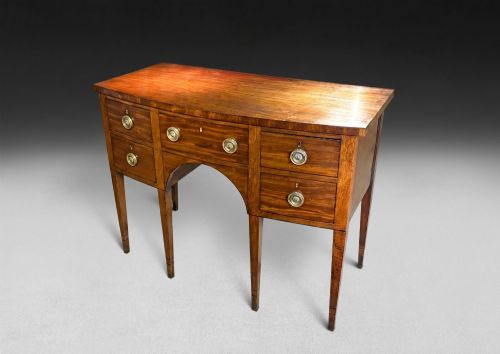
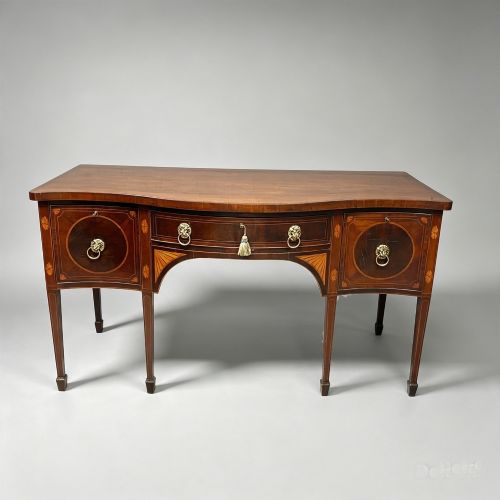
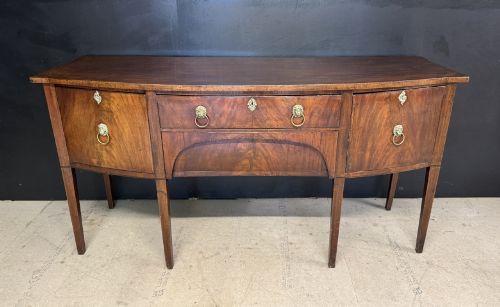
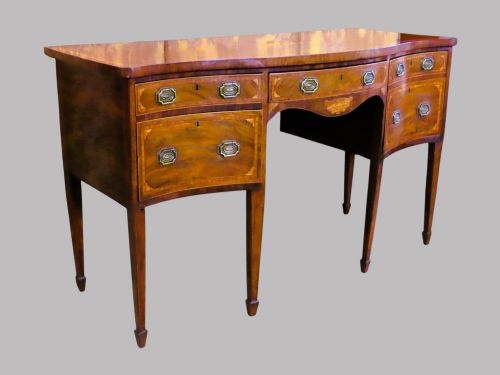
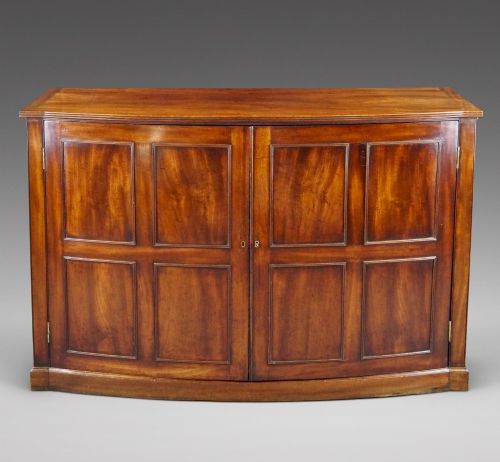
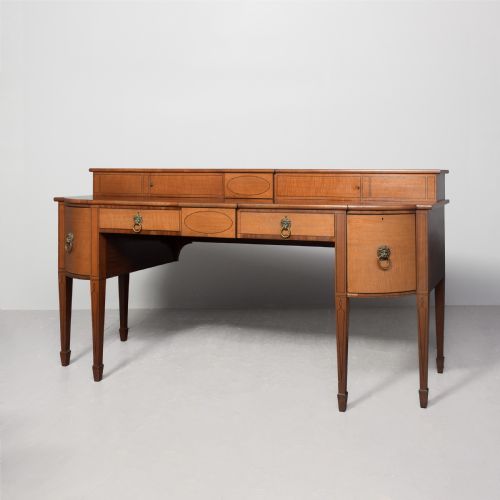
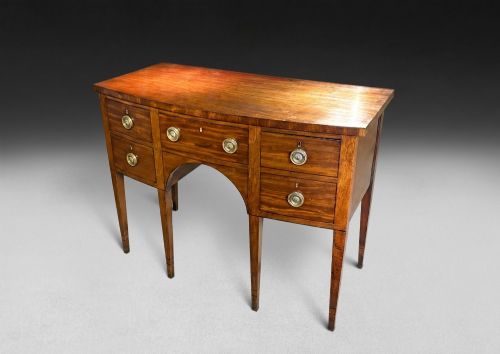
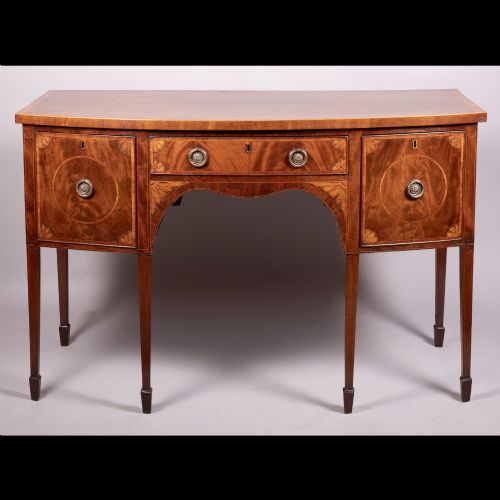
When buyers search for an 18th century mahogany credenza, they typically encounter Georgian dining room pieces such as sideboards, sideboards and buffets, and servers. The listings on this page span the 18th century, the George III period, the Sheraton style, and 18th century Dutch influences.
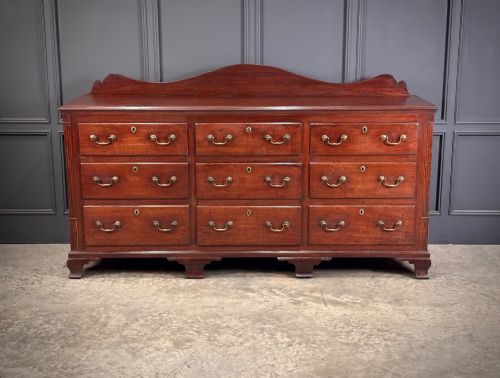
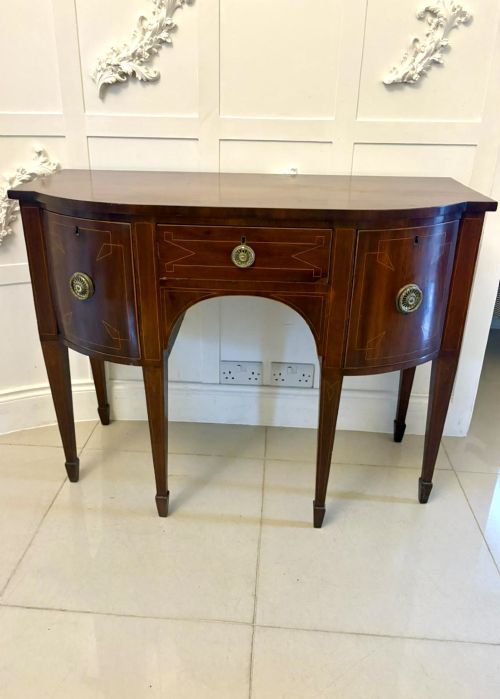
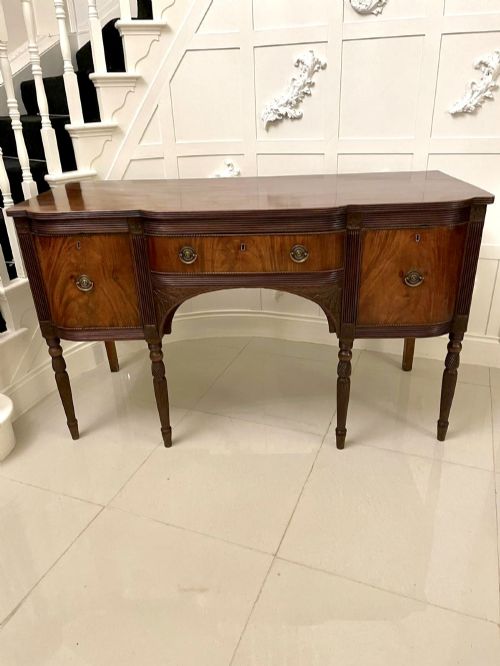
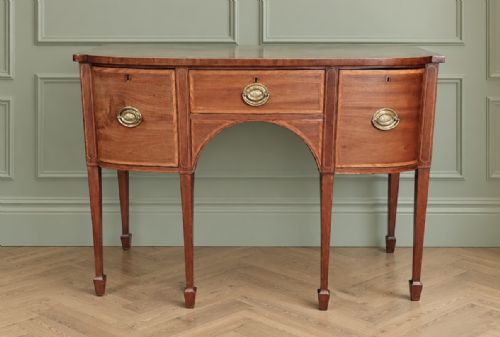
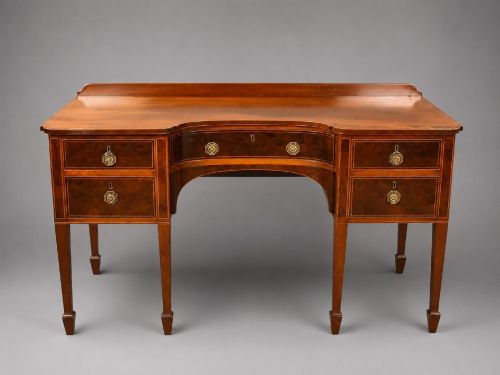
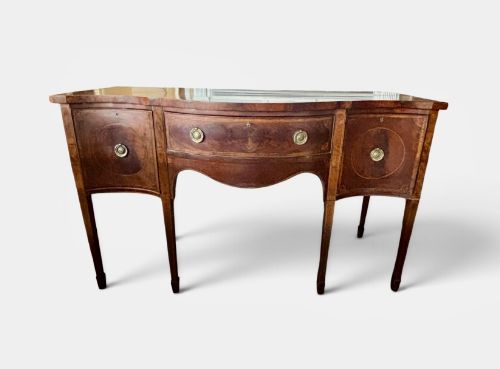
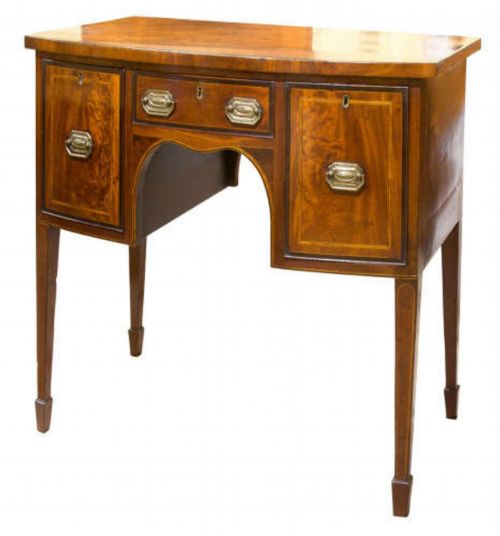
The most common forms appearing here are bow-fronted sideboards, serpentine sideboards, and breakfront sideboards. Pieces range from large Scottish stage-back sideboards to small bow-front designs and side cabinets.
Makers and cabinetmakers of these eras utilised solid timbers and figured veneers to create functional storage pieces with distinct frontal shapes. Buyers find bank of drawers and storage cupboard formats alongside standard dining room servers.
Materials and construction techniques
Cabinetmakers constructed these pieces primarily using solid mahogany and flame mahogany veneer over secondary timbers. The warm grain patterns of the wood define the visual character of each item.
Inlay and stringing techniques incorporate contrasting timbers such as satinwood, boxwood, and purpleheart. These delicate lines outline drawers, tabletops, and curved fronts to accentuate the geometric form.
Structural hardware relies on brass fittings, handles, and pulls that complement the dark tones of the polished mahogany. Joinery methods of the period ensure stability across serpentine, bow-front, and straight formats.
Current listings feature mahogany, brass, boxwood, and satinwood across Georgian and 19th century periods.
Distinctions in quality and execution
The sophistication of the silhouette heavily influences the standing of a piece, with complex serpentine and bow-front shapes requiring advanced carpentry skills compared to straight designs. Figured mahogany and flame veneers display varying degrees of natural grain movement and depth.
The precision and delicacy of boxwood and satinwood inlay work set finer examples apart from plainer counterparts. Subtle details such as purpleheart banding or well-executed boxwood stringing indicate higher workshop standards during the George III and Sheraton periods.
The 18th Century Mahogany Credenza Glossary
- Serpentine
- A front shape featuring a central convex curve flanked by two concave curves. This design requires expert woodworking to follow the undulating line smoothly.
- Bow-front
- A convex curved front that projects outward in a smooth arc. This shape gained popularity during the late Georgian period for sideboards and storage pieces.
- Flame mahogany
- A veneer cut from the branch junction of the mahogany tree that produces a distinctive flame-like pattern. Cabinetmakers prized this timber for central drawer fronts.
- Stringing
- Thin inlaid lines of contrasting wood used to create decorative borders on furniture surfaces. Boxwood and satinwood are common choices for this technique.
- Breakfront
- A piece of furniture where the central section projects forward from the outer sections. This configuration adds architectural depth to large sideboards and cabinets.
18th Century Mahogany Credenza: Frequently Asked Questions
How do I identify George III furniture?
George III pieces date from the reign of King George III, spanning the mid-to-late 18th century and early 19th century. They often display classical proportions, mahogany construction, and refined inlay.
Characteristics include tapered legs, brass hardware, and Sheraton or Hepplewhite stylistic influences depending on the exact decade of manufacture.
Where were these sideboards used?
These pieces served primarily in formal dining rooms for storing silverware, linen, and serving dishes. Large sideboards accommodated elaborate dining arrangements in substantial British households.
Smaller bow-front and cabinet formats suited more compact rooms while maintaining practical storage capabilities.
How should I care for mahogany?
Maintain mahogany furniture by keeping it away from direct sunlight and heat sources to prevent the wood from drying out. Regular dusting with a soft, dry cloth preserves the polished finish.
Apply quality furniture wax sparingly when the timber appears dry, following the direction of the natural grain.