


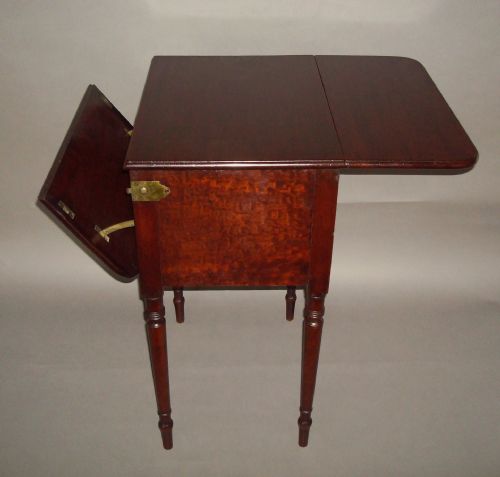
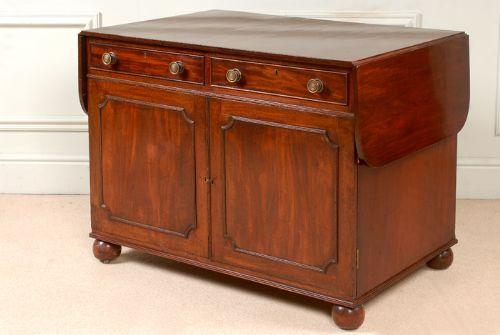
Antique Drop Leaf Cupboard
An antique drop leaf cupboard offers folding flaps and enclosed storage, combining compact proportions with the rich warmth of period timbers.
Antique Drop Leaf Cupboard
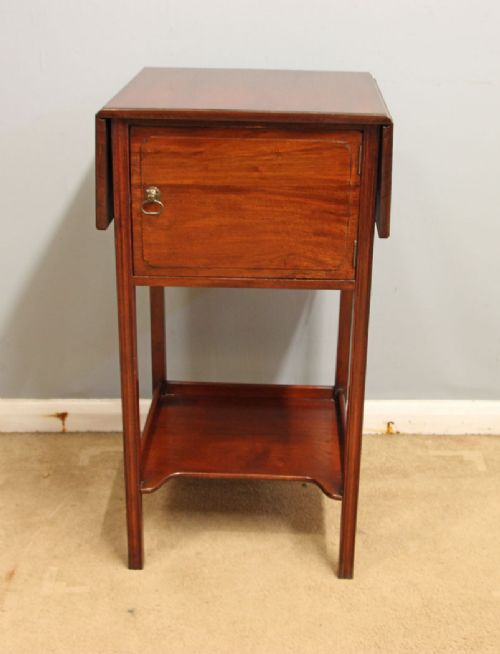
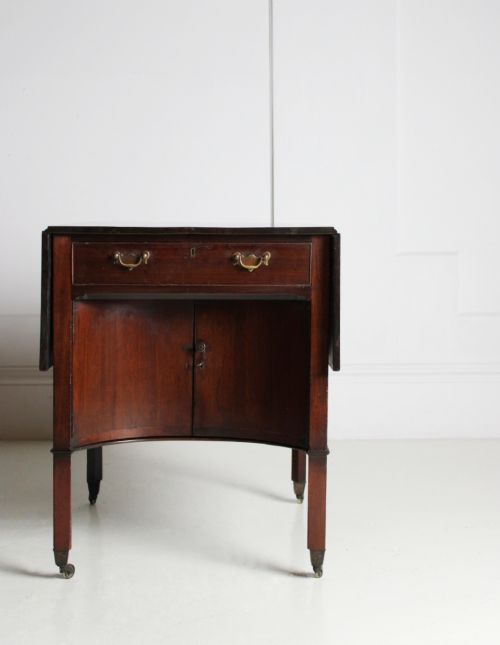
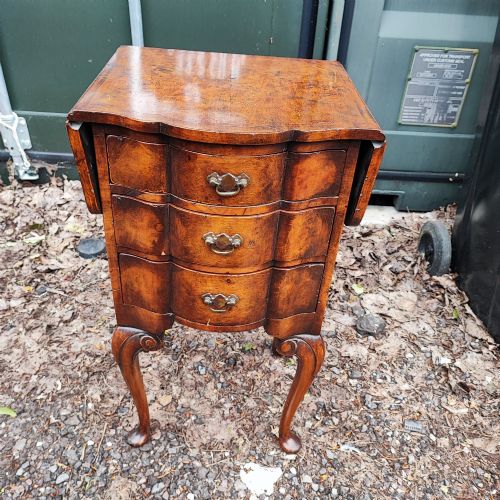
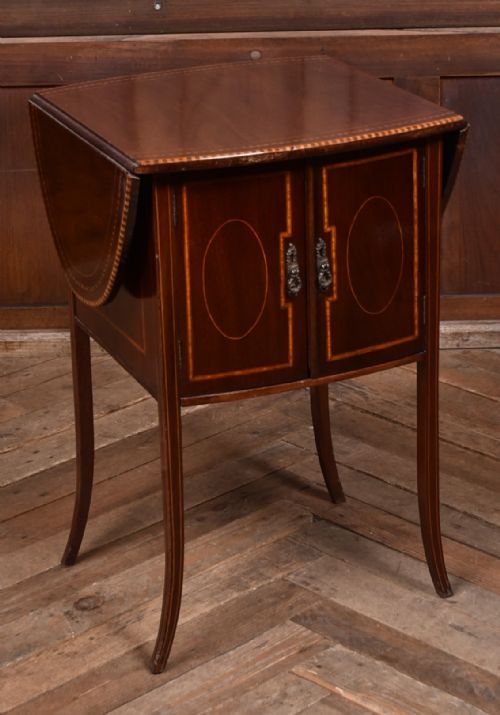
An antique drop leaf cupboard combines the enclosed storage of a cabinet with folding leaves, creating a flexible surface that expands when needed and tucks away neatly. The examples found here span diverse forms, including bedside cabinets, side tables, shaving stands, and small chests of drawers.
The periods represented stretch from the seventeenth century through to the Edwardian era and the nineteen thirties. Buyers will frequently encounter Edwardian and nineteenth-century pieces alongside revival designs, seventeenth-century vernacular works, and Georgian specimens.
Makers and craftsmen applied these folding flap mechanisms to mahogany, walnut, oak, and satinwood. These timber choices ground the pieces in traditional English cabinet-making, providing durable surfaces designed for daily domestic use.
How they were made
Makers built these pieces primarily using solid timbers like mahogany, walnut, and oak, often incorporating secondary woods for interior framing. Brass hardware, iron fixtures, and glass components were utilised for hinges, handles, and doors.
Construction techniques relied on traditional joinery to support the folding flaps and drop leaves without sagging. Specialised variants such as dug out oak metamorphic cupboards and wire mesh panels demonstrate the diverse structural approaches taken by period workshops.
Some seventeenth-century examples involve dug out oak, proving that solid tree trunks made surprisingly sturdy cupboards.
What varies in quality
Quality reveals itself in the selection of figured timber veneers and the precise execution of the drop leaf mechanism. Superior examples display seamless movement in their folding flaps alongside well-fitted doors and drawers.
The refinement of the carving, the choice of brass or iron hardware, and the fidelity to period styles distinguish standard utilitarian items from exceptional cabinet-making.
The Antique Drop Leaf Cupboard Glossary
- Drop leaf
- A table or cabinet top with hinged side flaps that fold down to save space or lift up to extend the surface area.
- Vernacular
- Everyday domestic furniture made by regional carpenters rather than high-style urban cabinet-makers.
- Metamorphic
- Furniture designed to transform into another form or function, such as a cupboard that converts into a desk or seat.
- Bowfront
- A convex, curved front typical of certain Georgian and later case furniture.
- Satinwood
- A hard, yellowish timber used for fine cabinet-making and decorative veneers.
Antique Drop Leaf Cupboard: Frequently Asked Questions
What is an antique drop leaf cupboard?
These are small storage pieces featuring hinged flaps that drop down at the sides. They function as bedside cabinets, side tables, or compact cupboards.
They provide enclosed storage combined with an adjustable top surface, making them useful in smaller spaces.
How were drop leaf cupboards used historically?
They served multiple domestic functions, often placed beside beds for chamber items or used in living spaces for serving and writing.
The folding leaves allowed owners to increase surface area temporarily without permanently blocking room traffic.
What woods should I look for?
Mahogany, walnut, and oak are the primary timbers used across these historical periods. Satinwood also appears as a decorative wood.
Each timber brings a distinct grain pattern and weight to the piece, reflecting the prevailing style of its era.
How can I tell the period of a cabinet?
Dating relies on stylistic markers such as Queen Anne revival curves, Edwardian proportions, or Georgian brasswork details. Construction methods and timber selection also indicate the era of manufacture.
Comparing the hardware and secondary woods helps place the object within its specific century.