


18th Century Mahogany Clock
An 18th century mahogany clock brings mechanical precision and deep cabinet timber together into a room.
18th Century Mahogany Clock
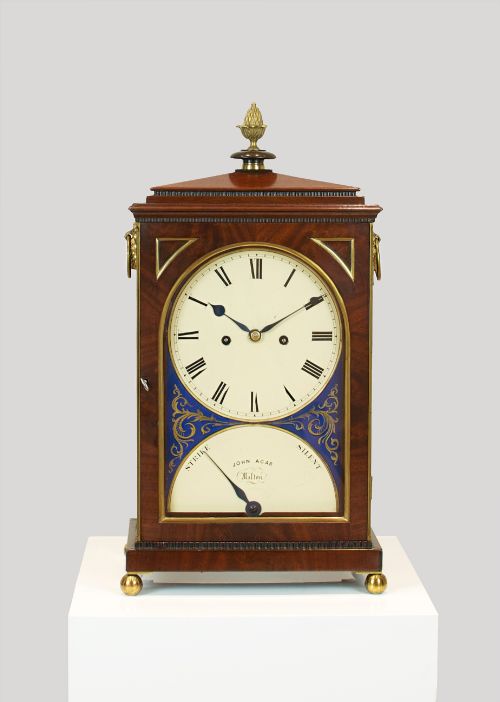
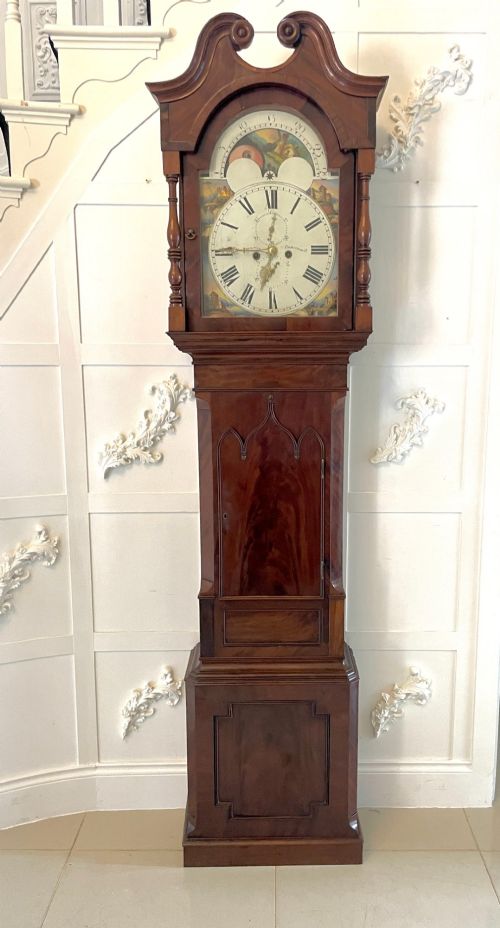
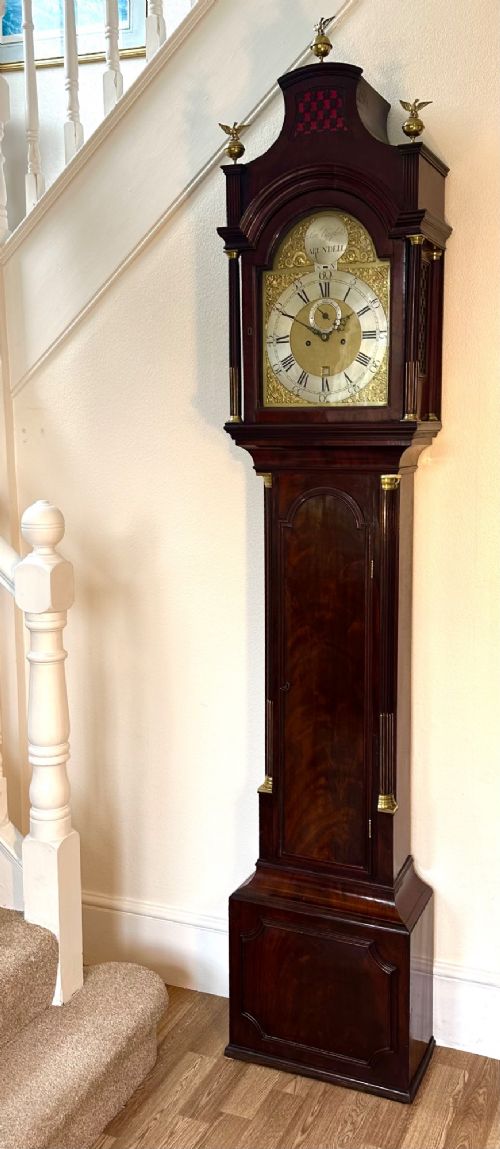
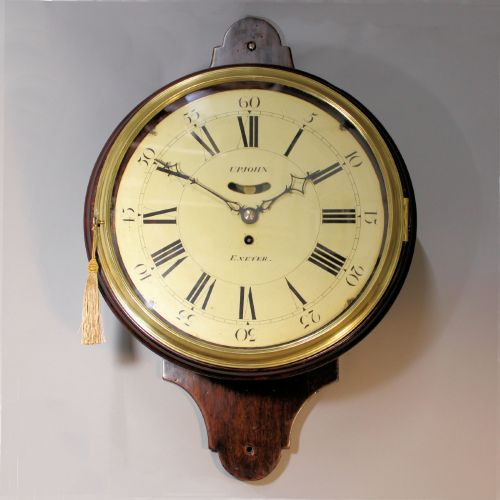
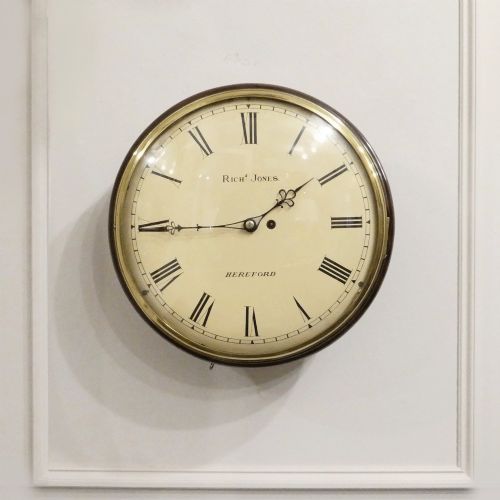
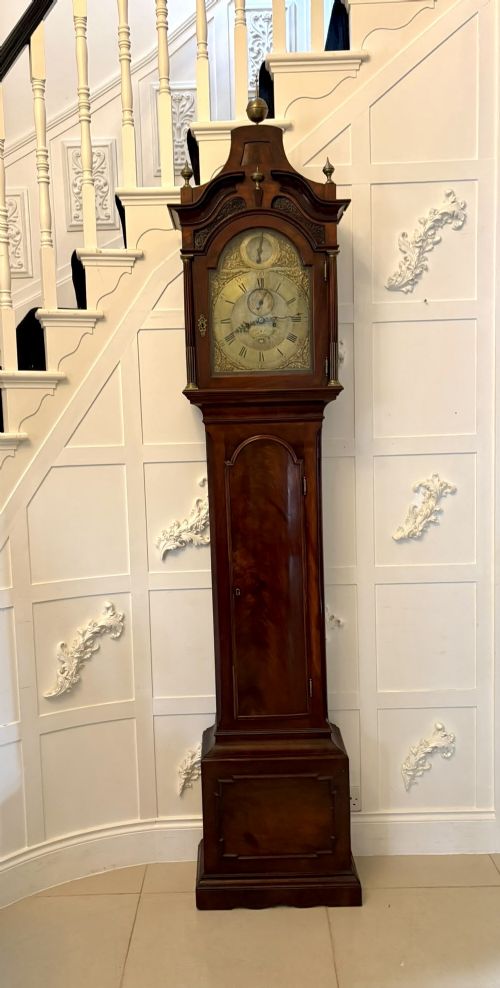
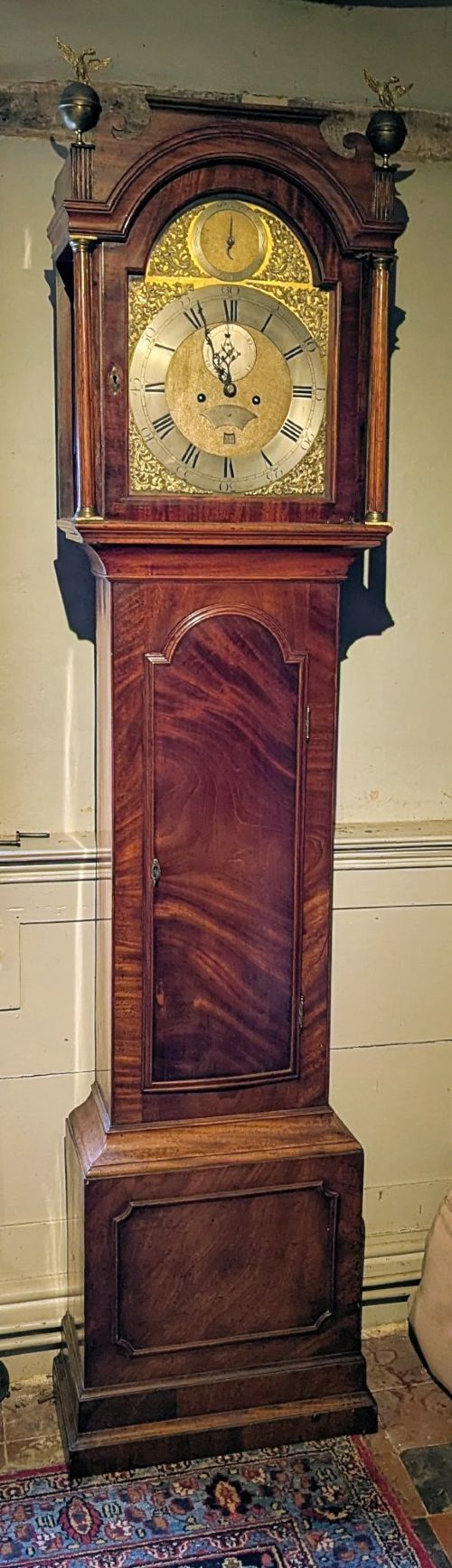
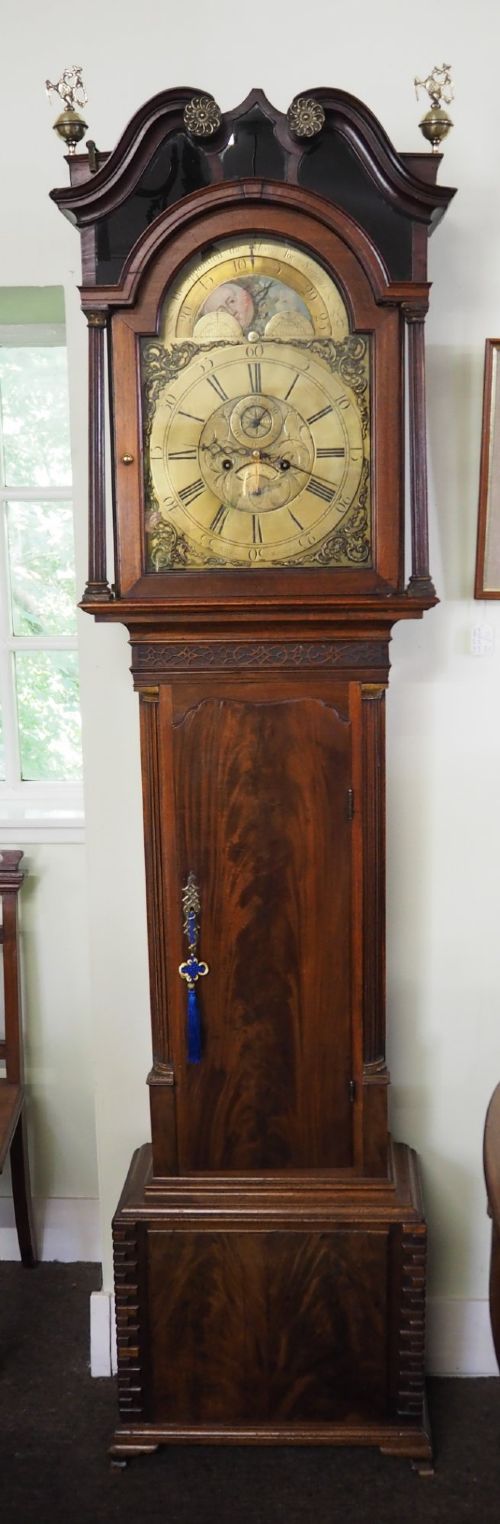
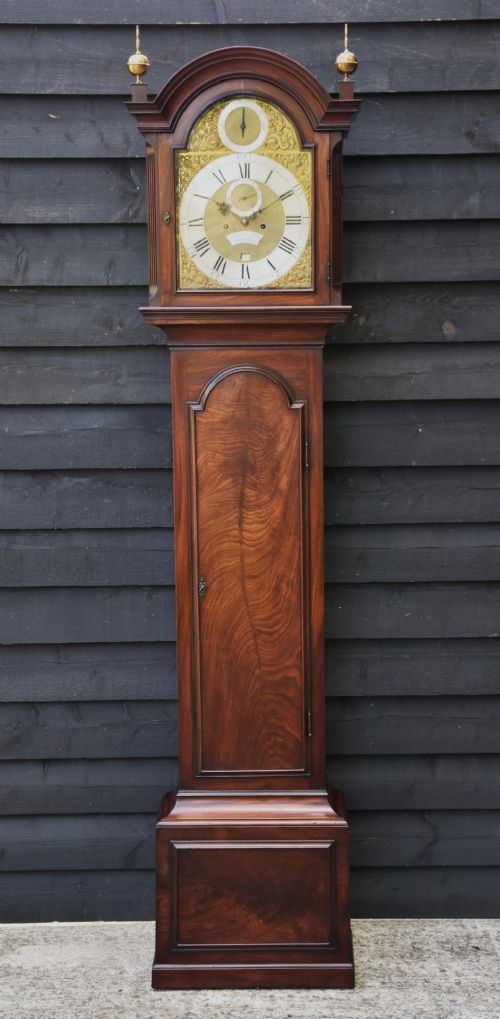
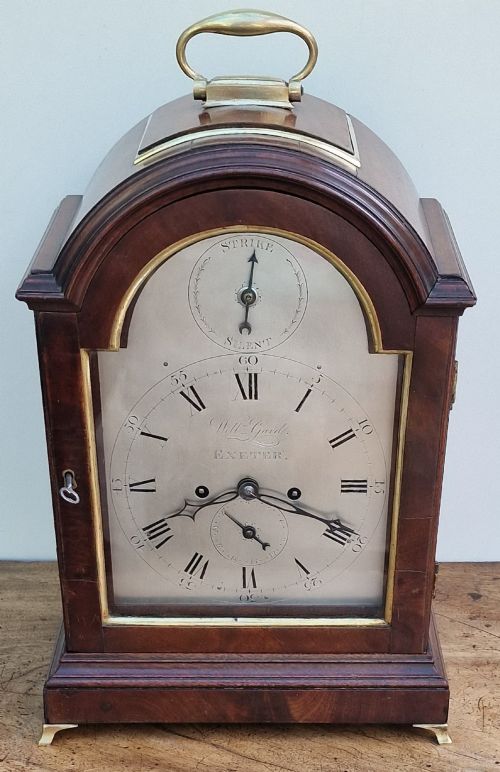
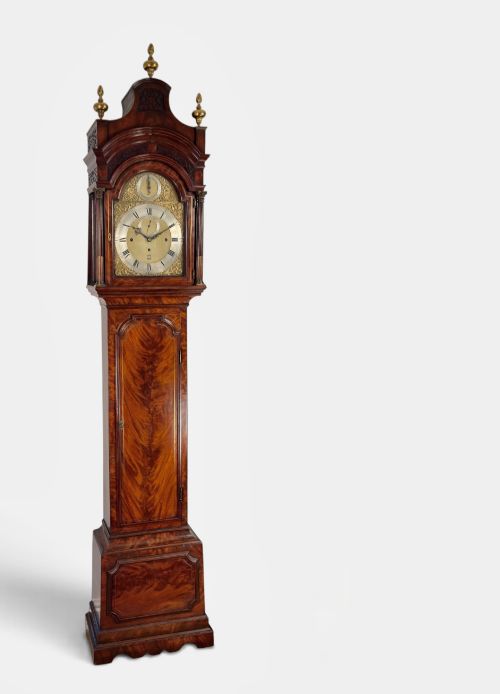
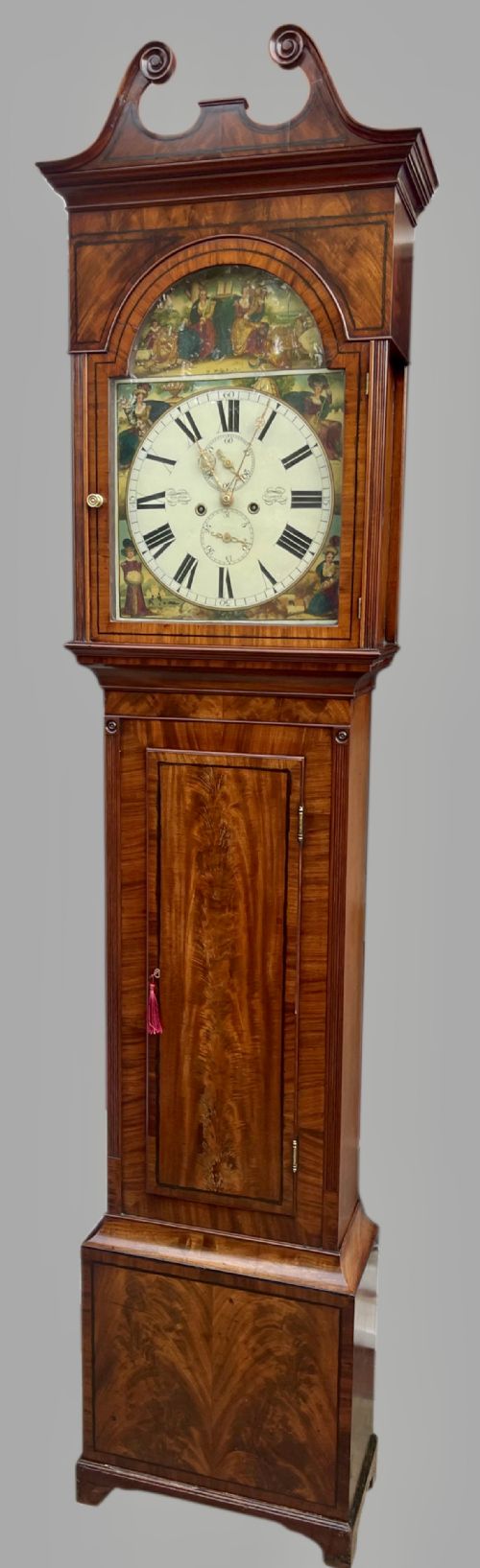
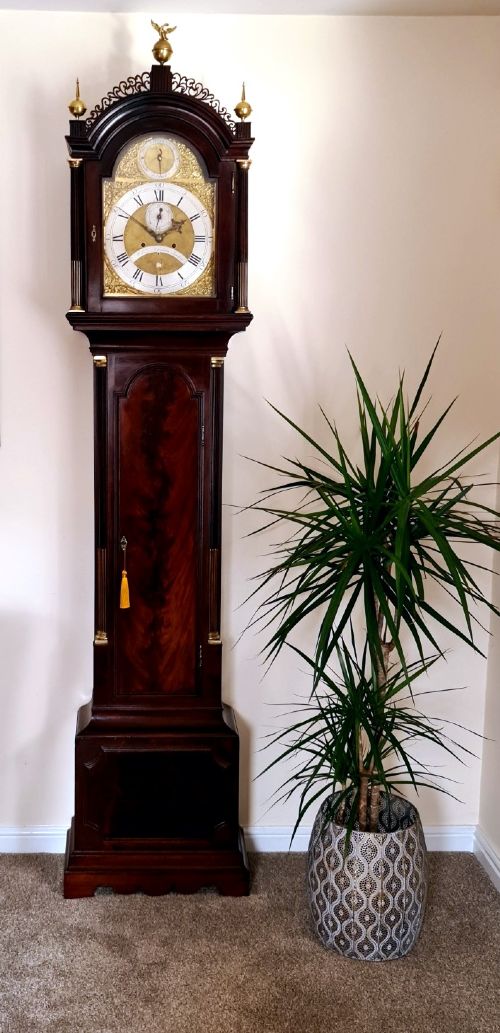
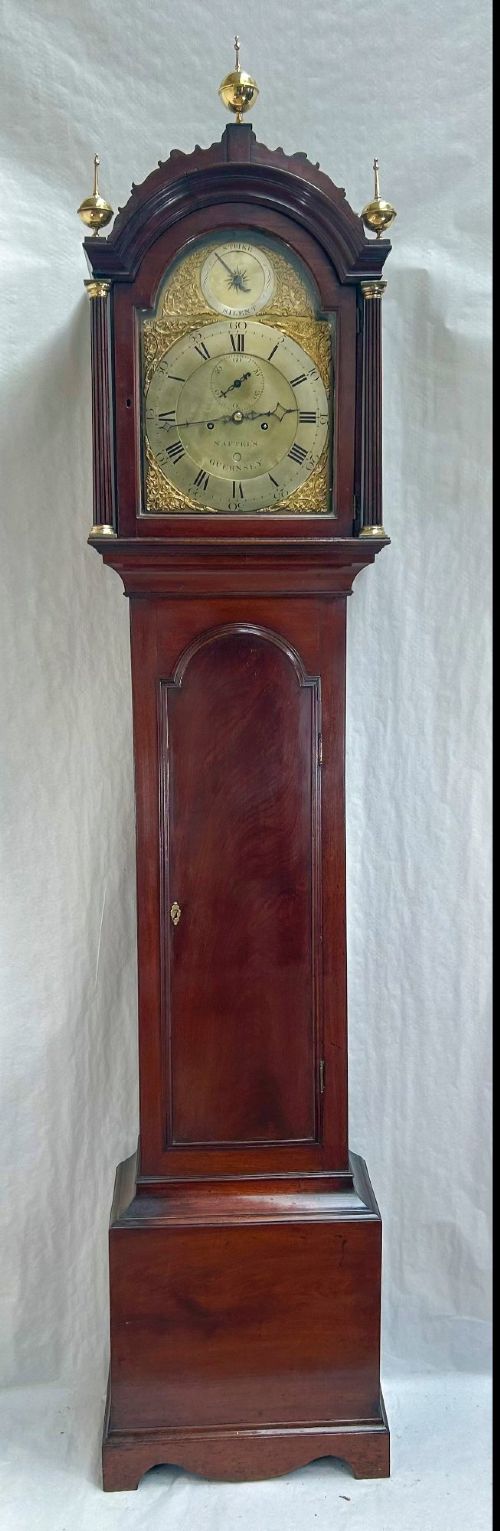
An 18th century mahogany clock encompasses tall case pieces, bracket clocks for tables, and wall dials designed to keep accurate domestic time. The most frequent variant on this page is the longcase clock, often referred to as a grandfather clock, housed in tall timber cabinetry.
Makers housed these movements in sturdy cases built from dense tropical hardwoods, frequently featuring arched brass or painted enamel dials. Provincial workshops and metropolitan makers alike produced these timepieces during the Georgian period.
The selection ranges from simple thirty-hour movements to complex eight-day mechanisms with moon rollers, strike-silent options, and musical capabilities. Regional variations span English, Scottish, Irish, and Dutch provincial centres.
How They Were Made
Cabinetmakers utilised solid mahogany and flame mahogany veneer over supporting structural timbers such as oak, applying crossbanding and brass inlay for decorative contrast. Cases were constructed with hinged doors and glazed hoods to protect the delicate motion within.
Clockmakers cast brass for dial faces, spandrels, and movement plates, cutting gear teeth by hand and incorporating verge or anchor escapements. Dials were subsequently engraved, silvered, or painted with enamel detail before being fitted with steel hands.
18th Century Mahogany Clock Retail Price Guide 2026
Typical asking prices for 18th century mahogany clock among the pieces listed under this phrase on Sellingantiques today, from the lower quarter to the upper quarter. They describe what is for sale here now, not the wider market.
Several makers clearly anticipated midnight confusion by adding strike-silent levers so households could sleep undisturbed.
What Varies in Quality
The refinement of the dial engraving and the complexity of the movement separate standard production from master work, particularly in signed London pieces versus provincial output. Cabinets exhibiting matched flame mahogany veneers and well-proportioned architectural hoods reflect superior workshop standards.
Originality of the movement to the case, along with the survival of delicate components like moon rollers and original brass spandrels, dictates the historical integrity of the piece.
Richard Jones of Hereford·John Ellicott of London·James Field of Hempstead·William Gard·Barwise·William Jourdain·Benjamin Taylor·George Hallifax·William McEwan·Edward Shepley·Thomas Hedge·Matt Wylie·Joseph Gibson·Francis Perigal·Charles Dowsett·Will Lassell·William Betagh·Handley and Moore·William Allam·James Tregent·Henry Cross·Kenneth Maclennan·William Bullock·John Greenough·John Cook
The 18th Century Mahogany Clock Glossary
- Longcase clock
- A tall freestanding timepiece enclosed in a wooden case, commonly known as a grandfather clock. These standing clocks utilise a long pendulum and heavy weights suspended inside the trunk.
- Bracket clock
- A portable table or shelf clock designed during the seventeenth and eighteenth centuries. These smaller spring-driven clocks often feature carrying handles on top.
- Verge escapement
- An early type of clock escapement mechanism that controls the release of power to the pendulum or balance. It relies on a crown wheel and pallets to regulate time accurately.
- Moon roller
- A rotating dial mechanism that tracks the phases of the lunar cycle behind an arched aperture. This complication required supplementary geartrain wheels linked to the primary motion.
- Spandrel
- An ornamental metal corner piece applied to the dial plate surrounding the chapter ring. These cast brass appliques evolved from plain spandrels to elaborate rococo designs through the century.
18th Century Mahogany Clock: Frequently Asked Questions
How do I wind an 18th century clock?
Most eight-day movements require a crank key inserted into winding holes on the dial face to draw up the hanging weights. Care must be taken not to overwind the springs or pull the weight cords too rapidly.
Allow the pendulum to settle to a vertical beat after moving the case to ensure uniform ticking. Minor adjustments to the pendulum bob regulate the speed if the timekeeping gains or loses.
Where were these clocks placed in Georgian homes?
Tall longcase clocks stood in hallways, stairwells, or principal living areas where their striking mechanisms could be heard throughout the household. Bracket clocks sat upon wooden tables, bracket shelves, or mantelpieces in private parlours.
Their placement depended on the need for daily interaction with the winding key and visibility of the dial. Drafty corridors were avoided to protect timber veneers from extreme humidity shifts.
What is the difference between a thirty hour and eight day movement?
A thirty-hour movement utilises a simpler gear train and shorter cord drop, requiring manual winding at the end of each day. These mechanisms suited more modest households and simpler provincial cottages.
An eight-day movement incorporates heavier weights and additional gearing to run for over a week between windings. This heavier power requirement demanded sturdier case construction and more robust pallet designs.
How do I identify a provincial maker from a London maker?
London makers like John Ellicott or James Tregent signed elaborate dials and incorporated advanced musical or quarter-striking complications into fine mahogany housings. Their work often reflects cutting-edge horological developments of the capital.
Provincial makers in towns such as Paisley or Auchterarder signed simpler regional dials, occasionally combining oak carcasses with mahogany banding. These regional pieces display local vernacular design traits in the cabinetwork and dial painting.