

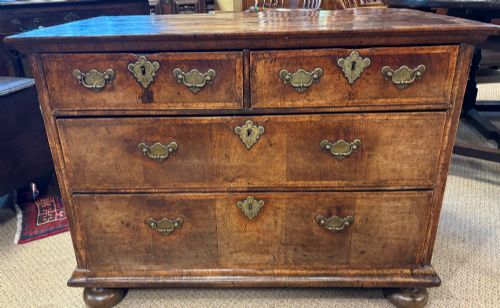

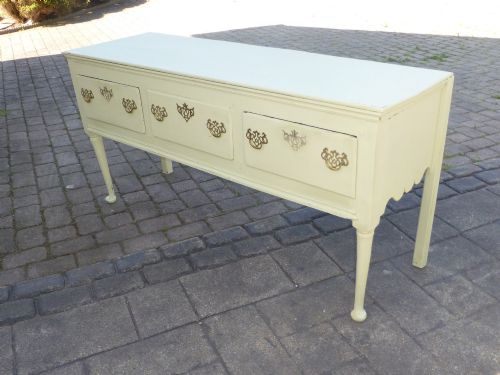

18th Century Low Dresser
An 18th century low dresser brings robust timber storage into a modern room, offering low surfaces and deep drawers that anchor a space.
18th Century Low Dresser
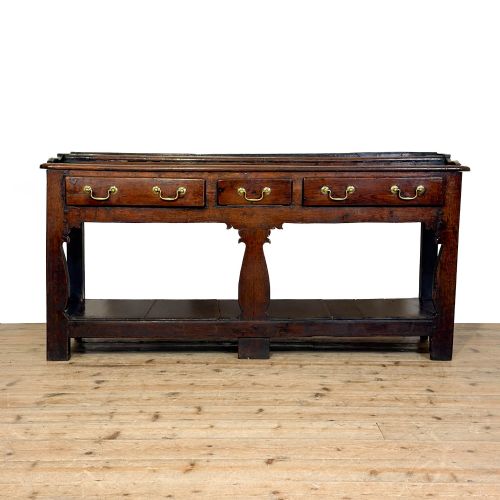
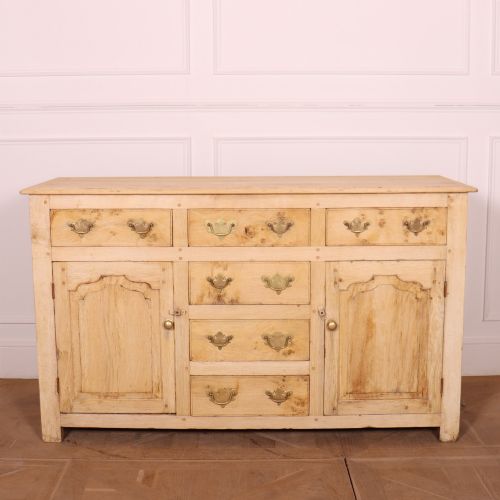
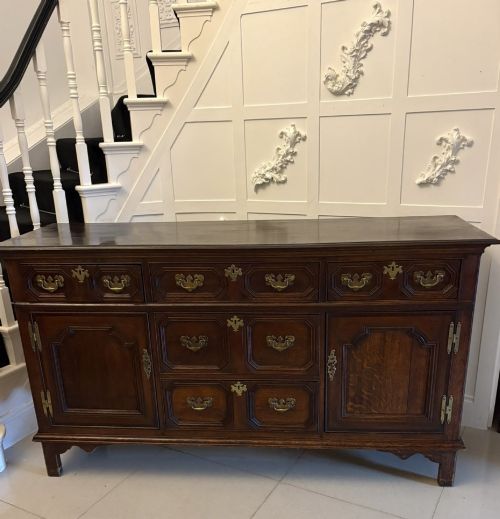
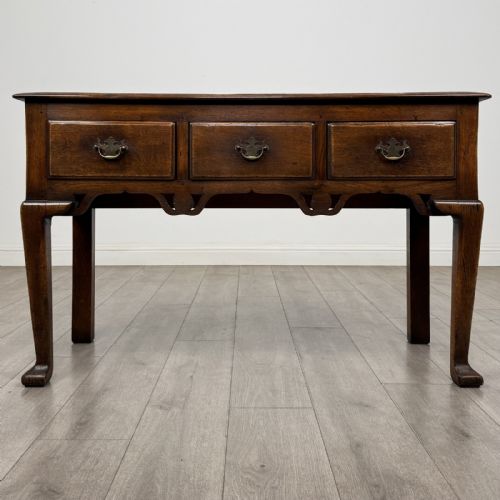
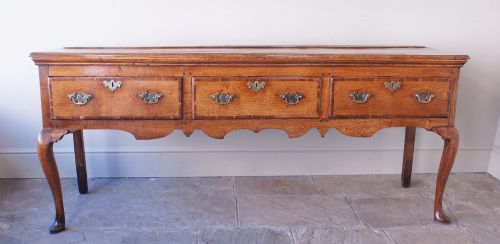
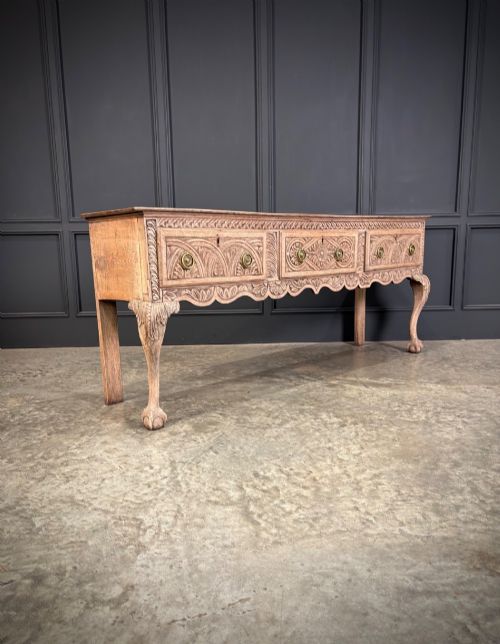
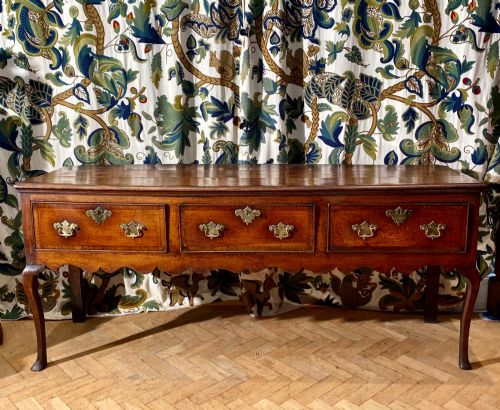
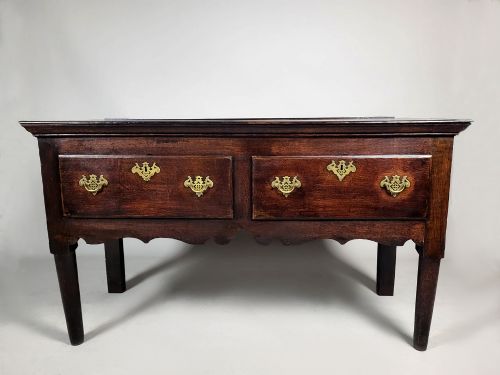
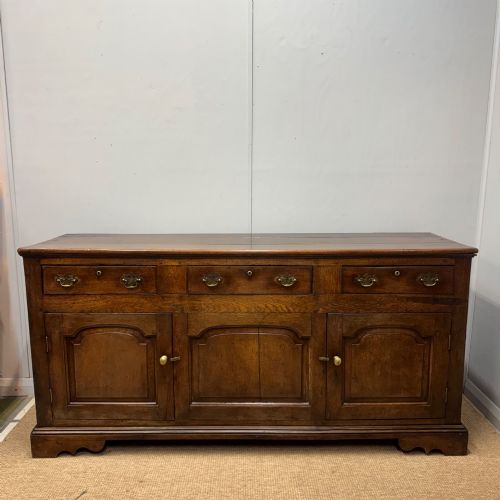
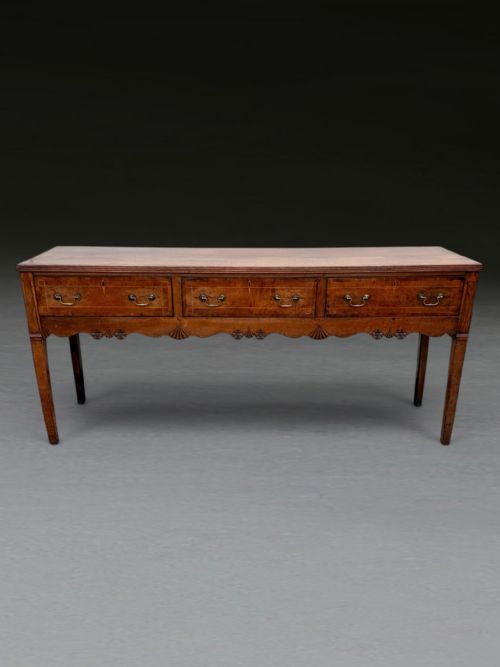
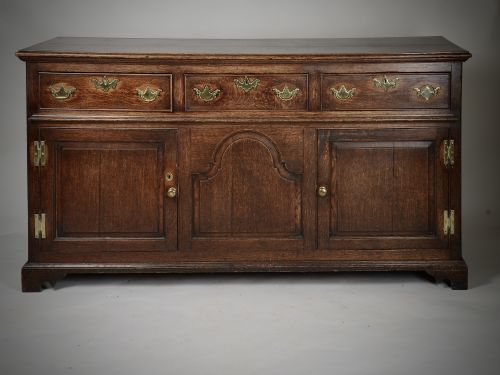
An 18th century low dresser is a heavy, low-slung table form designed for practical household service rather than formal display. These pieces usually stand at sideboard height, fitted with banks of drawers beneath a broad timber top.
Most examples found here date from the Georgian period, particularly the reigns of George II and George III. They emerge predominantly in English and Welsh country workshops, built for domestic utility.
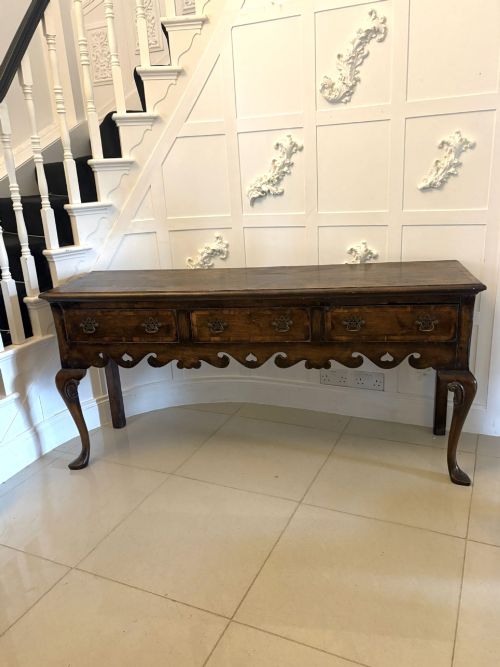
Buyers encounter open potboard variants featuring a lower shelf for storage, alongside enclosed cupboard designs and cabriole leg formats. Oak dominates the selection, frequently paired with elm or fruitwood elements.
How they were made
Cabinet makers constructed these pieces primarily from solid oak, utilising elm and fruitwood for secondary timbers or drawer linings. Boards were joined using traditional framing techniques to accommodate the natural movement of unseasoned timber over time.
Iron and brass hardware, including drop handles and escutcheons, secured the drawer fronts and doors. Some surfaces received early coats of paint or developed deep patination through decades of daily friction and polishing.
18th Century Low Dresser Retail Price Guide 2026
Typical asking prices for 18th century low dresser among the pieces listed under this phrase on Sellingantiques today, from the lower quarter to the upper quarter. They describe what is for sale here now, not the wider market.
Makers occasionally hid extra small drawers inside the potboard framing to keep secret spice supplies safe.
What varies in quality
Quality rests in the integrity of the timber selection and the retention of original structural elements like potboards and brasses. Pieces retaining their early surface patination and uncompromised drawer sides command greater regard among collectors.
The balance of proportions between the low timber top and the supporting legs dictates visual success. Later restorations or replacement feet alter the stance of the base, changing the character established by the original maker.
The 18th Century Low Dresser Glossary
- Potboard
- An open lower shelf built between the legs of a dresser for storing heavy pots and utensils. This platform provides structural stability to the base while offering wide storage space.
- Cabriole leg
- A furniture leg that curves outward in a convex arc and tapers inward in a concave arc, ending in a pad or foot. This stylistic element appears on several Georgian country examples.
- Enfilade
- A long sideboard or low cabinet featuring a continuous line of multiple doors across the front. French provincial pieces often utilise this format for dining room storage.
- Breakfront
- A piece of furniture where the central section projects forward from the flanking outer sections. This architectural arrangement creates depth and shadow across the drawer facade.
- Fruitwood
- A dense timber harvested from fruit trees such as pear or apple, used by country makers for boards and turnings. It accepts a warm polish and ages to a rich tone.
18th Century Low Dresser: Frequently Asked Questions
Where were 18th century low dressers used?
These low timber pieces served practical functions in domestic kitchens, dairies, and pantries for food preparation and storage. Householders used the broad tops for working surfaces and the drawers for utensils.
Over time, these heavy utility bases moved into dining rooms and living spaces as decorative storage furniture. Their low profile makes them suitable for modern television placement or sideboard service.
How do you date an oak dresser base?
Dating relies on examining the construction methods of the drawers, timber shrinkage, and tool marks left on the interior boards. Hand-cut dovetails and pegged frame joints typically indicate earlier Georgian manufacture.
Stylistic cues such as cabriole legs or moulded front cupboards point to specific decades within the eighteenth century. Later revival pieces from the nineteenth and twentieth centuries display different timber dryness and machine-cut elements.
What is the difference between a Welsh and English dresser?
Welsh examples frequently incorporate potboards beneath the main drawer tier and utilise local timbers like oak combined with elm or fruitwood. They reflect regional rural building traditions from mountain workshops.
English country pieces show varied regional proportions, sometimes omitting the lower shelf in favour of deeper cabriole or straight legs. Both styles prioritise robust utility over delicate ornamentation.
Can you use a low dresser as a sideboard?
The low height and generous surface area make these timber bases ideal for modern dining room sideboard use. Deep drawers accommodate cutlery and linens while the top surface holds serving dishes.
Their substantial depth requires careful measurement of wall space in contemporary rooms. The sturdy timber construction easily supports everyday domestic handling.