
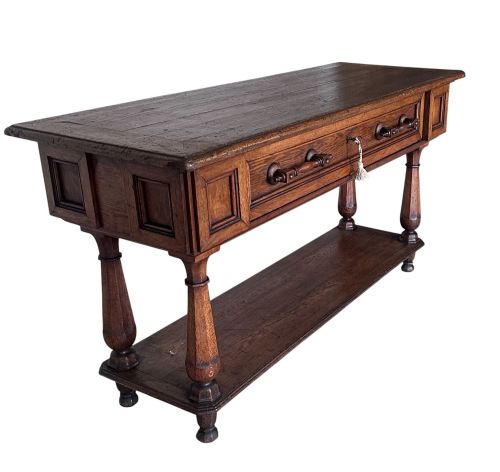
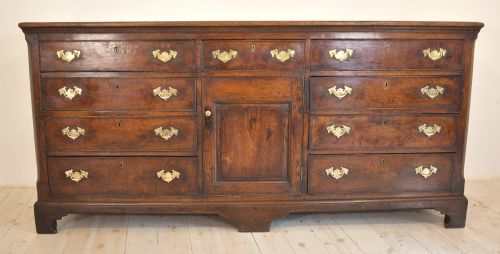
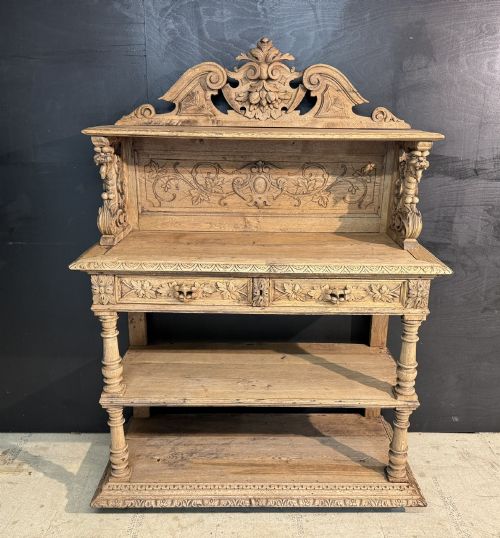
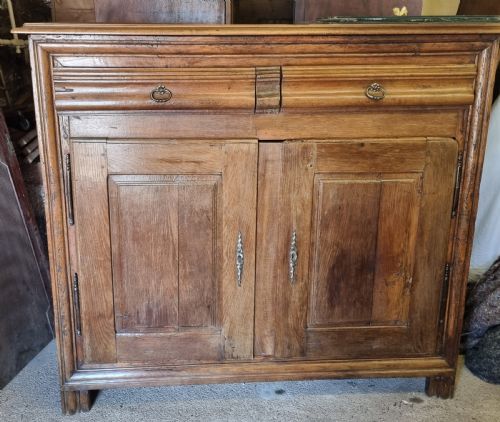


Provincial Oak Sideboard
A provincial oak sideboard offers sturdy storage and rustic charm, rooted in centuries of rural European cabinet-making.
Provincial Oak Sideboard
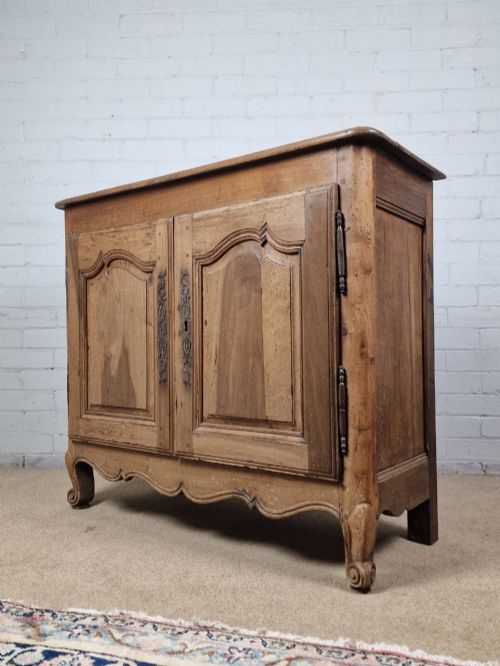
A provincial oak sideboard represents a practical family of heavy timber storage furniture, encompassing regional dressers, commodes, buffets, and enfilades. These pieces originate largely from French provincial workshops alongside English country makers, spanning periods from the eighteenth century through to the early decades of the twentieth century.
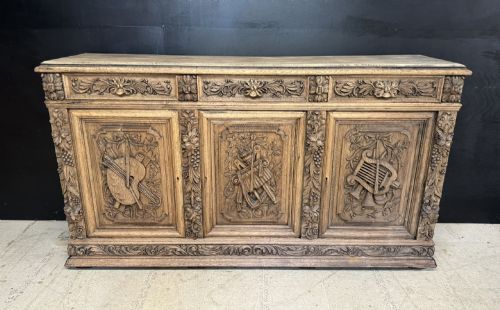
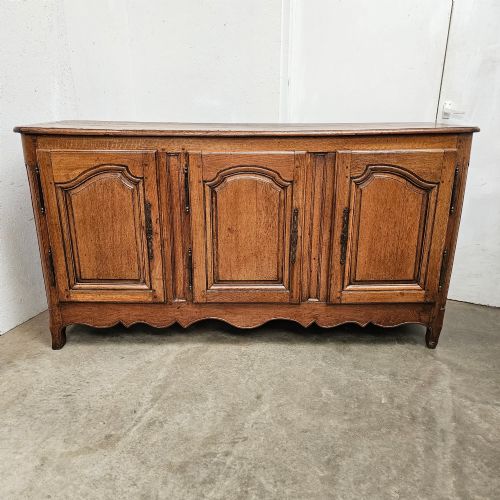
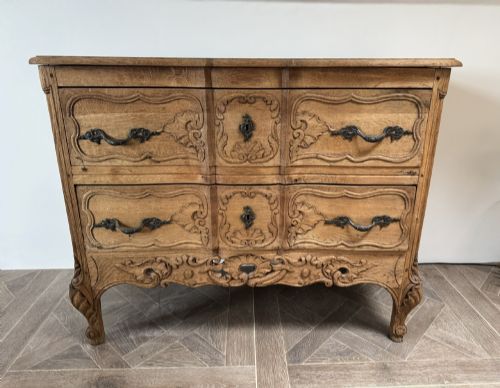
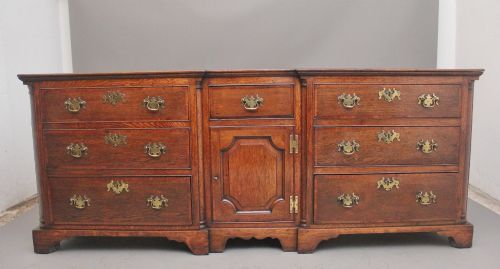
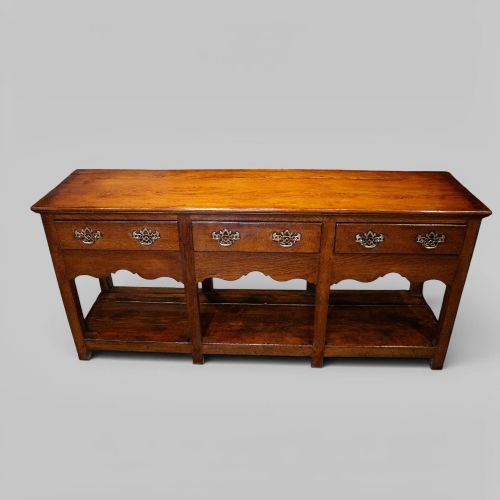
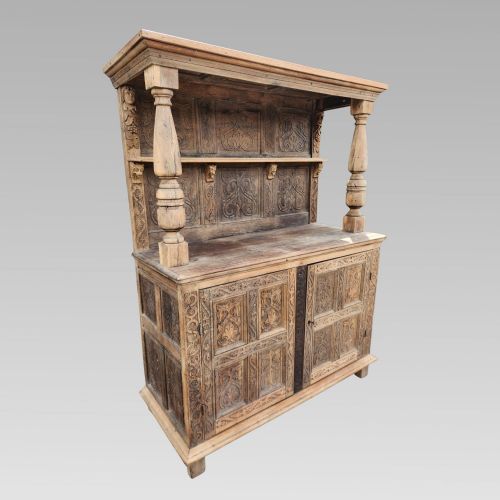
Most examples encountered here lean toward French regional styles, including carved oak buffets, low sacristy cabinets, and multi-door enfilades. English country equivalents appear as dresser bases with pot boards, drawer arrangements, and occasional Welsh or Lancashire proportions.
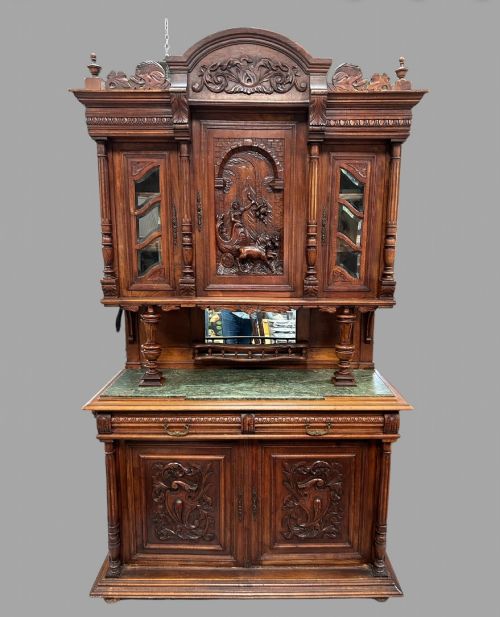
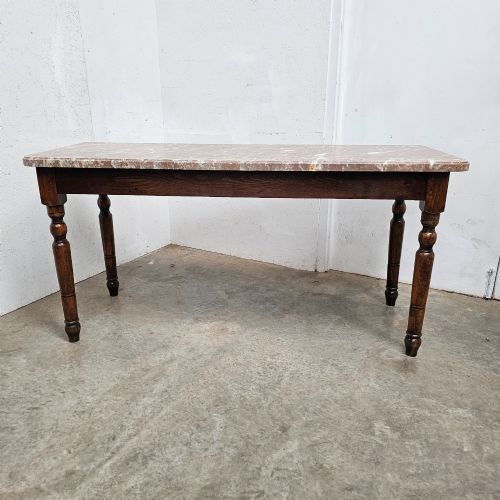
Forms vary from monumental buffet de corps and house maid cupboards down to simpler serving tables and commodes. Oak remains the primary structural timber, often complemented by fruitwood, walnut, or beech elements.
Materials and Construction
Makers relied principally on solid oak, selected for durability and finished with traditional joinery methods suited to rural workshops. Secondary timbers such as fruitwood and walnut appear in mouldings and drawer linings, while hardware typically involves cast brass or iron fittings.
Surface treatments range from natural waxed finishes and bleached oak effects to painted details and parquetry tops. Structural elements on regional pieces frequently incorporate hand-carved panels, pegged joints, and heavy timber tops.
Listings feature oak alongside fruitwood, walnut, marble, and iron across eighteenth, nineteenth, and early twentieth-century periods.
Assessing Quality and Character
Quality rests upon the integrity of the timber selection and the restraint of the carving, distinguishing regional vernacular pieces from later revival items. Well-proportioned frames with original hardware and honest surface patination hold greater authority than heavily restored or purely decorative reproductions.
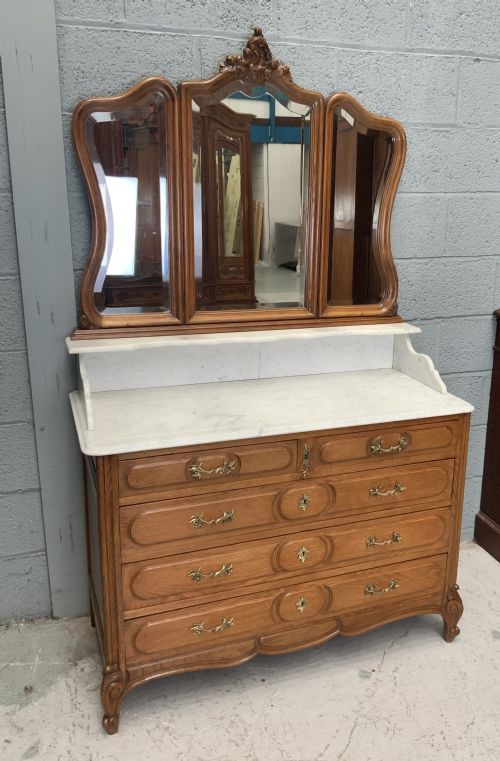
The sophistication of regional joinery determines the character of each piece, from simple country workbenches to formal Louis XV style sideboards. Original backs, unaltered drawers, and deep timber grain define the superior examples across all periods.
The Provincial Oak Sideboard Glossary
- Enfilade
- A long sideboard or cabinet featuring multiple doors in a continuous line, commonly found in French provincial dining rooms. This form provides substantial low-level storage.
- Dresser Base
- The lower section of a kitchen or dining dresser, typically fitted with rows of drawers and sometimes a pot board beneath. These serve as versatile sideboards in modern interiors.
- Buffet de Corps
- A large two-tier cupboard structure used for storing tableware and provisions in traditional rural households. They display significant regional carving and architectural presence.
- Parquetry
- Geometric wood inlay work arranged in patterns across the top surface of a table or sideboard. This technique demonstrates high cabinet-making skill.
- Pot Board
- An open lower shelf built into dresser bases and sideboards, originally designated for storing heavy pots and pans. It adds structural stability to the base.
Provincial Oak Sideboard: Frequently Asked Questions
What is a provincial oak sideboard?
A provincial oak sideboard is a sturdy, regional storage piece built for rural European homes. These include low buffets, enfilades, and dresser bases.
They reflect local cabinet-making traditions rather than urban court styles. Oak provides the durable foundation for everyday domestic use.
How do I style a sideboard at home?
These pieces suit kitchens, dining rooms, and hallways for practical surface space and concealed storage. Pair them with ceramics or mirrors depending on the room.
Their neutral wood tones integrate easily into both modern and traditional interiors. Low profiles allow them to anchor large wall spaces.
How do I tell different periods apart?
Eighteenth-century pieces typically feature hand-pegged joinery and simpler, heavier proportions shaped by regional tool use. Later nineteenth-century examples often incorporate revival styling and machine-finished elements.
Twentieth-century interpretations introduce art deco influences or bleached finishes while retaining traditional oak construction.
Were these pieces used in kitchens?
Many lower buffets and dresser bases originated in farm kitchens or sacristies for storing food and utensils. House maid cupboards and game cupboards served specific domestic utility roles.
Their practical design made them central to daily rural household management.