








18th Century Knopped Stemware
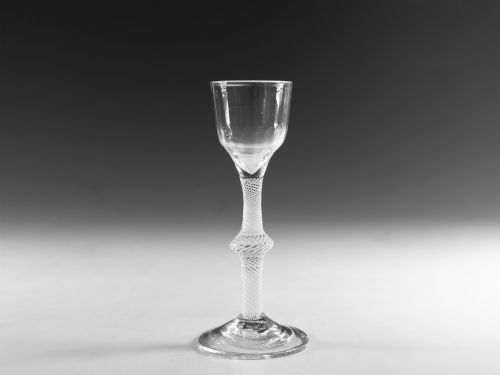
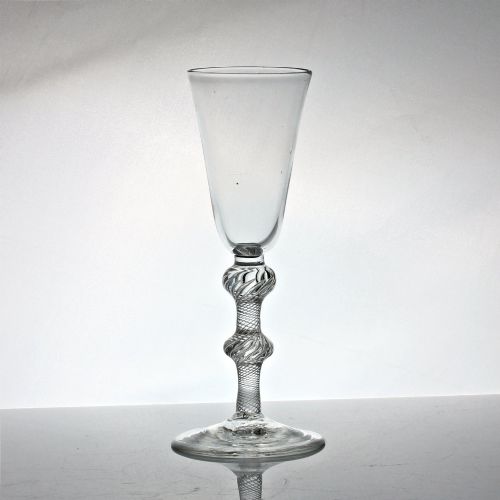
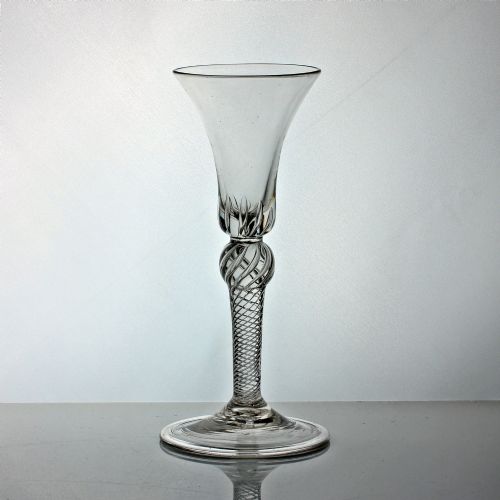
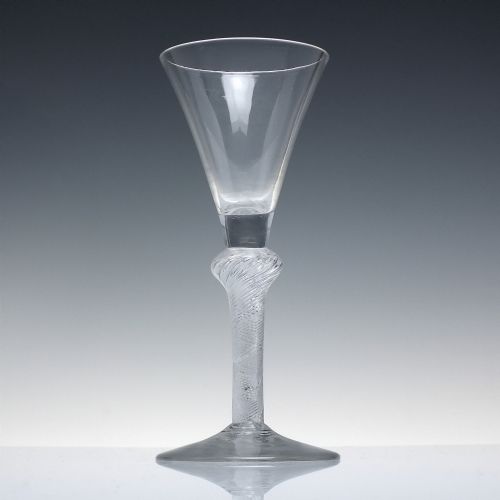
These 18th century knopped stemware pieces are hand-blown lead glass drinking vessels shaped by Georgian form and twisted stems.
18th Century Knopped Stemware
When you search for 18th century knopped stemware, you encounter heavy lead glass and flint glass drinking vessels designed for wine and ale. The pieces on this page span the Georgian era, running from early baluster forms through to lighter opaque twist stems with prominent knops.
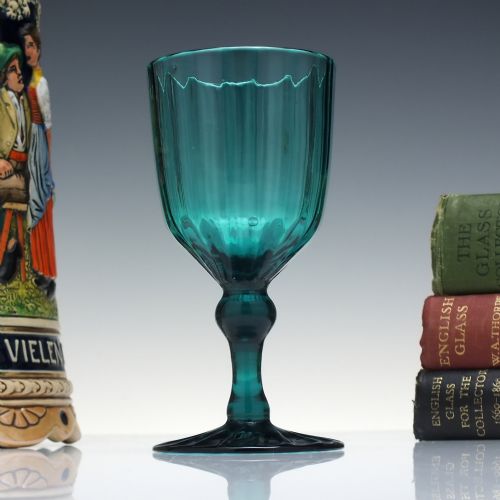
Most items you meet here are wine glasses and goblets featuring distinctive swollen nodes along the stem. You also find rarer moulded pieces from continental workshops alongside plain bowl forms with folded feet and air-teared stems.
Materials and Manufacture
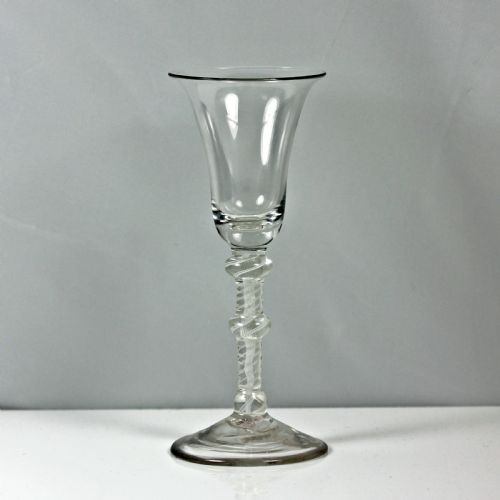
These vessels rely on lead glass and clear glass manipulated while hot by skilled blowers. Makers formed the stems using intricate air twists and white enamel spirals enclosed within the clear metal.
Knops were shaped directly on the stem to add weight and grip, while bowls were blown into moulds or shaped by hand. Feet were frequently finished with a folded rim for extra strength.
Some glasses survived centuries of toasts simply because their previous owners kept them tucked away in dark cupboards.
Evaluating Quality
Quality rests upon the clarity of the metal and the precision of the stem twist. Clear glass without excessive cloudiness or heavy inclusions marks the superior examples.
The complexity of the knop arrangement and the symmetry of the bowl shape dictate distinction. Well-balanced proportions and crisp moulding elevate a piece far above simpler domestic items.
The 18th Century Knopped Stemware Glossary
- Knop
- A swollen, decorative knob or protuberance on the stem of a glass. It provides both a tactile grip and visual division along the glass.
- Air twist
- A spiral formation of tiny air bubbles trapped within the drawn stem of a glass. Makers produced this effect by drawing out air-filled glass rods.
- Opaque twist
- A stem containing threads of white enamel glass twisted into a spiral pattern. This technique became popular during the middle decades of the eighteenth century.
- Baluster
- A heavy, heavy-stemmed form of glass derived from architectural pillars. These early forms often feature prominent nodal structures and substantial weight.
- Folded foot
- A base edge turned underneath and pressed flat to create a thickened rim. This traditional method added durability to the vulnerable perimeter of the foot.
18th Century Knopped Stemware: Frequently Asked Questions
How do I date an 18th century wine glass?
Dating relies on the changing fashions of bowl shapes, stem formations and foot styles across the Georgian period. Early heavy balusters give way to lighter air twists and opaque twists as the decades progress.
Changes in glass chemistry, such as the introduction of dense lead crystal, also help narrow down the decade of production when combined with stylistic evidence.
What is the difference between air twist and opaque twist?
Air twists contain spiralling threads of trapped air inside the clear glass stem. Opaque twists incorporate fine threads of white enamel glass drawn into the stem structure.
Both techniques required immense skill from the glassblower to maintain an even, regular spiral from top to bottom.
Why do some glasses have folded feet?
Makers folded the edge of the foot underneath to add structural strength to a vulnerable part of the drinking vessel. This practice was especially common on heavier early baluster forms.
Finding a folded foot often indicates an earlier production date within the eighteenth century.
Can I use these antique glasses for drinking?
These glasses are delicate historic artefacts that require careful handling and hand washing. While they were originally made for dining, most collectors choose to display them rather than use them daily.
Thermal shock and modern dishwashers will damage the fragile historic lead glass beyond repair.