





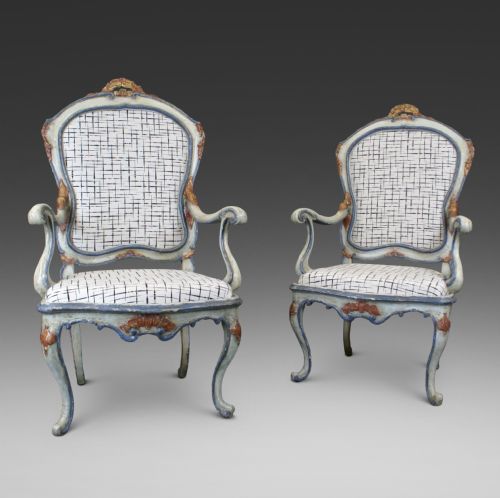
18th Century Italian Seat
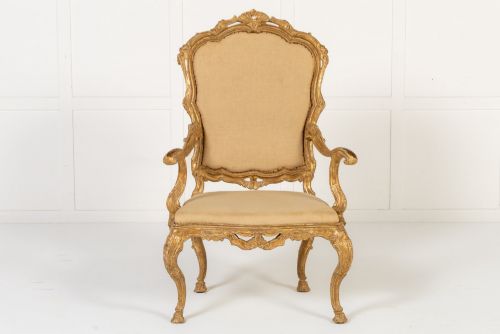
These 18th century italian seat pieces bring grand Baroque and Rococo presence into a room through elaborate carving and rich upholstery.
18th Century Italian Seat
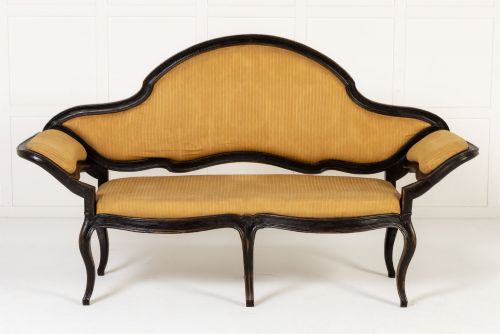
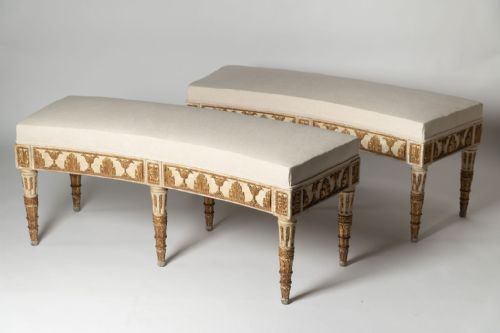
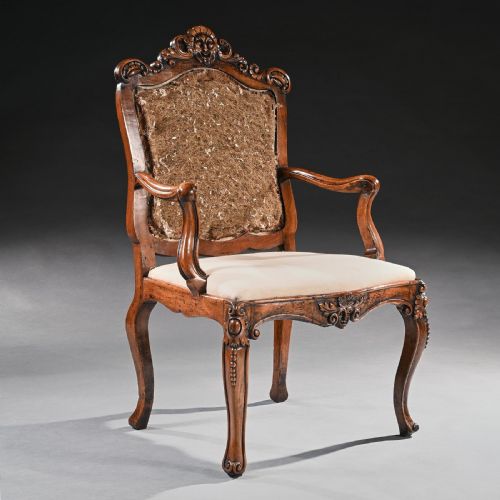
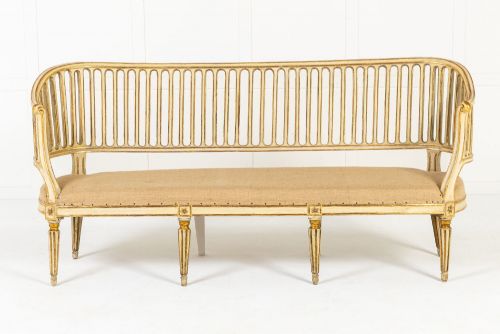
An 18th century italian seat encompasses grand giltwood armchairs, walnut side chairs, painted settees, and oak hall chairs. The material record spans formal giltwood and silver gilt, warm walnut, painted wood, and ebonised surfaces.
Venetian gondola chairs, sgabello hall chairs, and tete a tete sofas represent the more specialised seating forms found within this tradition. Buyers most frequently meet walnut armchairs and painted chairs bearing Rococo, Baroque, Neoclassical, and Barocchetto styles.
How they were made
The construction of an 18th century italian seat relies on traditional timber framing in walnut, oak, and general wood, shaped by hand carving. Surfaces receive applied finishes such as gesso beneath leaf gilding or silver gilding, alongside monochrome and decorative paintwork.
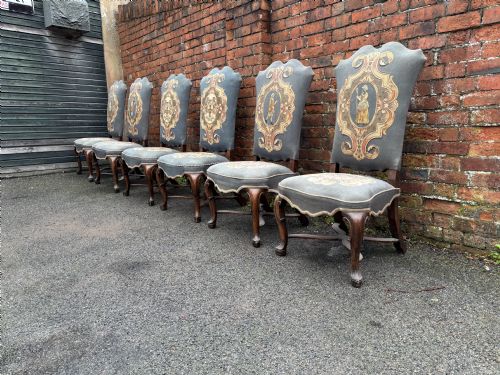
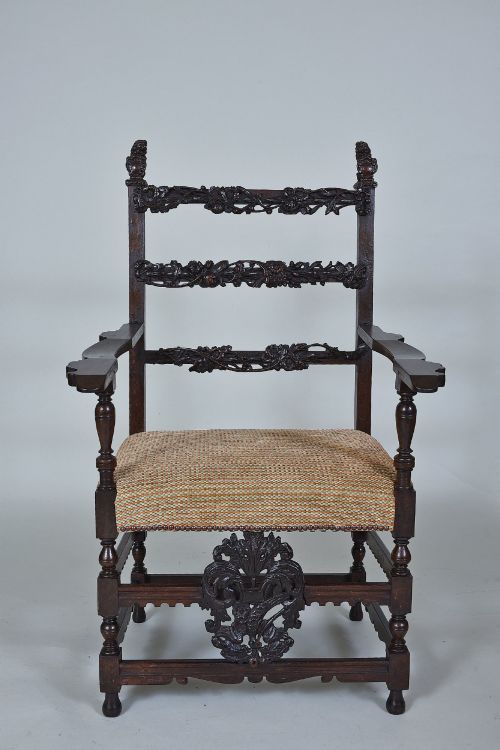
Upholstery requires durable textile, linen, and specialised fabric layers to support the heavily worked wooden frames. Elaborate details like carved head rails and open arms demonstrate the joinery and sculptural skill of the period.
Listings span four distinct periods: 18th Century, 19th Century, Georgian, and 1900, showing a strong concentration of walnut and giltwood finishes.
What varies in quality
The depth and crispness of the hand carving separate simpler seating from exceptional examples, particularly on head rails and arm supports. Giltwood and silver gilt surfaces display different grades of preparation and leaf application that alter the visual weight of the frame.
The integrity of the timber frame and the authenticity of the painted or ebonised finish dictate the overall standard. Sets of chairs and matched pairs maintain higher desirability than isolated single pieces.
The 18th Century Italian Seat Glossary
- Giltwood
- Wood carved and prepared with gesso before being covered in thin sheets of gold leaf. This finish creates a brilliant reflective surface favoured in formal 18th century interiors.
- Sgabello
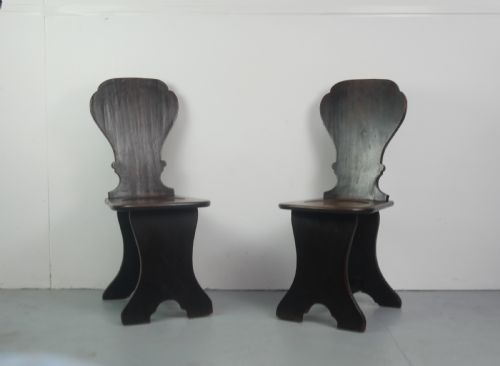
- A light wooden hall chair featuring a high back and solid trestle supports rather than traditional legs. These chairs often appear in oak and served primarily for hallway use.
- Barocchetto
- The Italian variation of the Rococo style, known for asymmetric curves and playful ornamentation. It appears frequently on mid-century armchairs and settees.
- Tete a tete
- A specialised double seat allowing two people to sit facing each other in an S-shape configuration. These conversation pieces were constructed as elaborate settees.
- Gesso
- A plaster mixture applied to wood frames to provide a smooth, absorbent base for gilding or painting. Its proper application is essential for durable leaf adherence.
18th Century Italian Seat: Frequently Asked Questions
How were Italian settees used?
These large upholstered forms occupied principal reception rooms and salons where guests gathered for conversation and formal display. Their elaborate frames signaled the status of the household.
They functioned both as seating and as architectural furniture elements placed against panelled walls when not in active use.
What is a gondola chair?
A Venetian gondola chair is a distinctive seating form featuring a curved, enclosing backrest reminiscent of lagoon watercraft. These chairs combined decorative elegance with compact proportions.
They were typically arranged informally in drawing rooms and boudoirs across Venice during the 18th century.
Where do sgabello chairs go?
Sgabello chairs were designed as stiff, upright hall seating placed in entryways and corridors to impress visitors upon arrival. Their narrow wooden profiles suited transitional spaces.
Because they lack padding, they served for short-term waiting rather than extended sitting.
How to tell painted from giltwood?
Painted surfaces utilise flat or layered pigments directly on the wood or gesso ground, offering softer tones and decorative motifs. Giltwood relies on reflective metal leaf to catch candlelight and daylight.
Both finishes require careful environmental control to prevent flaking and moisture damage.