


Italian Walnut Armchair
An italian walnut armchair brings centuries of southern European craft directly into a room, offering robust timber frames and rich upholstery.
Italian Walnut Armchair
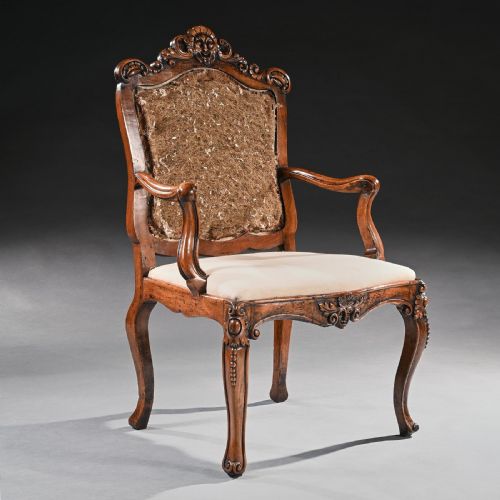
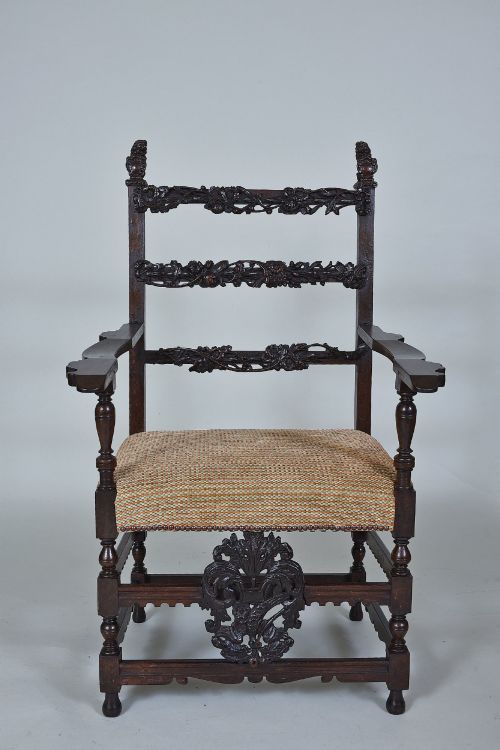
An italian walnut armchair is a substantial seating form constructed primarily from solid walnut timber, originating from workshops across Italy from the seventeenth century onwards. Buyers searching this phrase encounter heavy, sculptural armchairs shaped by regional traditions spanning the Baroque, Rococo, and Renaissance Revival periods.
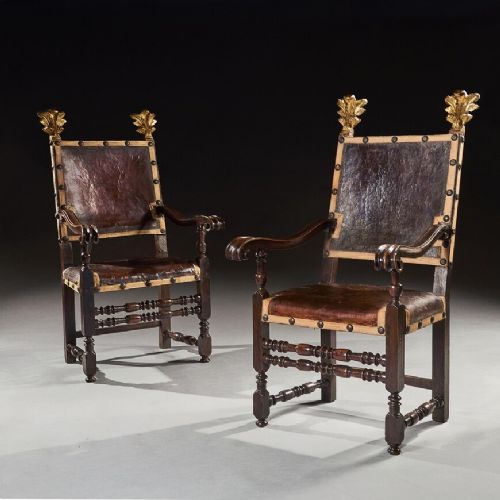
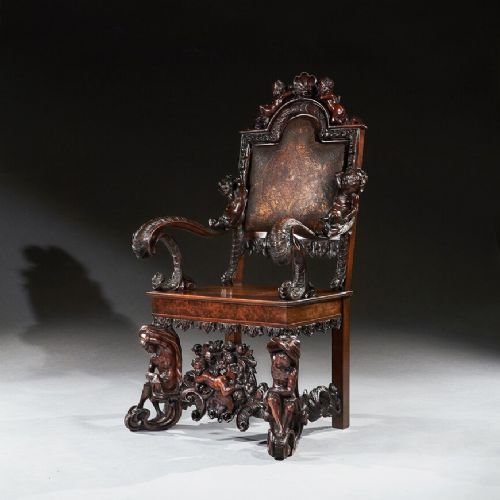
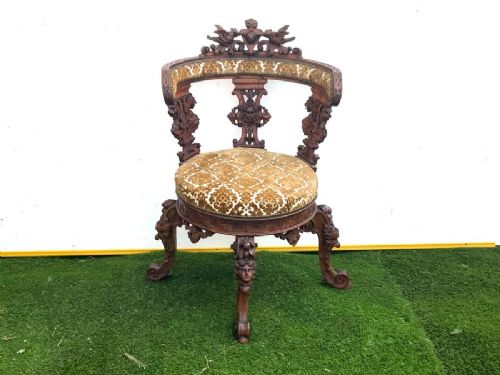
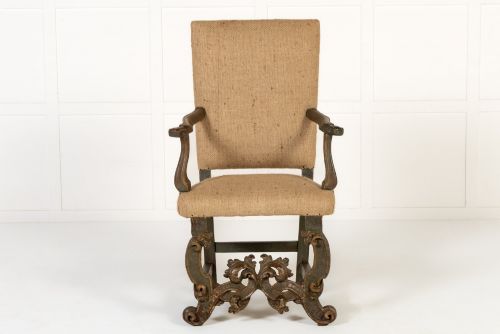
The pieces appearing on this page range from austere seventeenth-century audience seats with high backs and leather or textile panels to flamboyant nineteenth-century revival models featuring deep carving, parcel-gilt details, and turned woodwork. Many survive as pairs or individual pieces intended for salons, halls, and noble chambers.
How they were made
Maker-carpenters shaped these frames from solid walnut, a dense timber chosen for its deep grain and stability under intricate chisel work. Structural joinery relied on pegged mortise and tenon joints designed to bear the weight of heavy members.
Upholstery and ornamentation involved applied materials including tooled leather, velvet, textile, hessian, gold leaf, and brass hardware. Carvers applied deep relief work directly into the walnut, often combining parcel-gilding or paint with exposed timber surfaces.
Materials appearing across these pieces include gold leaf, brass, velvet, Hessian, and leather.
What varies in quality
Quality rests in the depth and clarity of the walnut carving, separating simpler vernacular turned frames from exhibition-grade sculptural works attributed to named carvers. Crisp undercuts, balanced proportions, and the integrity of the original timber structure dictate the standing of a piece.
The survival of original surface finishes, integral gilding, and period upholstery materials such as stamped leather or heavy textiles elevates an example above heavily restored or later re-carved items.
Andrea Brustolon
The Italian Walnut Armchair Glossary
- Parcel-Gilt
- Partially gilded with gold leaf applied to specific raised portions of the carved walnut frame, leaving the dark wood visible elsewhere to create tonal contrast.
- Bobbin Turned
- Furniture legs and stretchers shaped on a lathe to resemble a series of wooden beads or bobbins, popular in seventeenth-century and revival seating.
- Audience Armchair
- A high-backed formal seat designed for reception rooms and halls, intended to project authority and status during official gatherings.
- Head Rail
- The topmost horizontal wooden member of a chair back, frequently carved with scrolls, crests, or figural motifs in eighteenth-century Italian pieces.
- Strap Back
- A chair back formed of intersecting leather or textile straps secured directly to the wooden frame, common in early seating.
Italian Walnut Armchair: Frequently Asked Questions
How do I date an italian walnut armchair?
Dating relies on examining the joinery, tool marks, and stylistic indicators such as the transition from austere seventeenth-century rectilinear frames to curved eighteenth-century Rococo lines and nineteenth-century revival flourishes.
Secondary clues include the wear patterns on the walnut timber and the composition of underlying upholstery layers.
Where were these armchairs originally placed?
These chairs stood in the grand halls, noble salons, and audience chambers of Italian palazzos, serving as functional status objects for guests and dignitaries.
Their heavy construction and imposing backs suited high-ceilinged stone rooms rather than intimate domestic spaces.
How should I care for old walnut timber?
Walnut benefits from stable room humidity and protection from direct sunlight to prevent the timber from drying out or splitting.
Applying microcrystalline wax periodically helps nourish the surface without building up excessive residues on the carved details.
What is the difference between Baroque and Rococo Italian chairs?
Baroque chairs feature symmetrical, robust frames with heavy carving, straight legs, and strong architectural presence typical of the seventeenth century.
Later Rococo versions introduce asymmetrical cartouches, cabriole legs, and flowing, organic curves carved into the walnut head rails.