


18th Century Glass Decanter
An 18th century glass decanter brings authentic Georgian character to a table, offering tactile weight, hand-cut facets and historical charm that collectors prize.
18th Century Glass Decanter
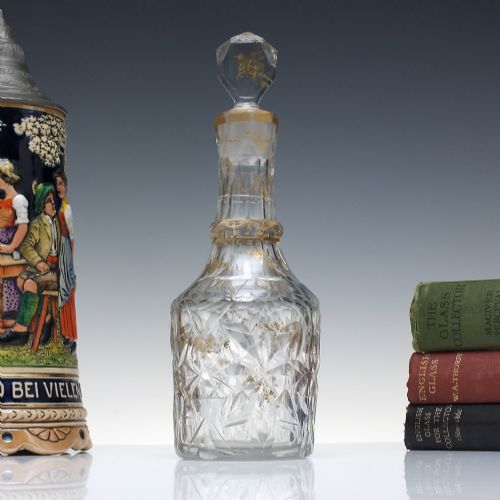
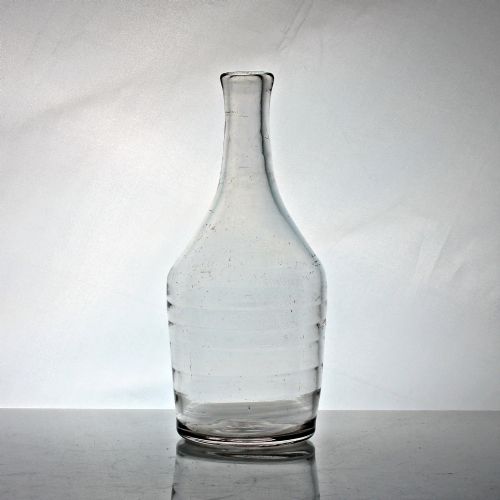
An 18th century glass decanter represents the pinnacle of Georgian and Regency dining ware, designed to hold and serve wine, spirits and cordials on the dining table. When searching for an 18th century glass decanter, buyers encounter various forms ranging from heavy lead glass carafes and sugarloaf beer vessels to slender shoulder decanters and Prussian shapes. These pieces bridge utility and decoration, originating from English, Irish, Bohemian, Dutch and German workshops.
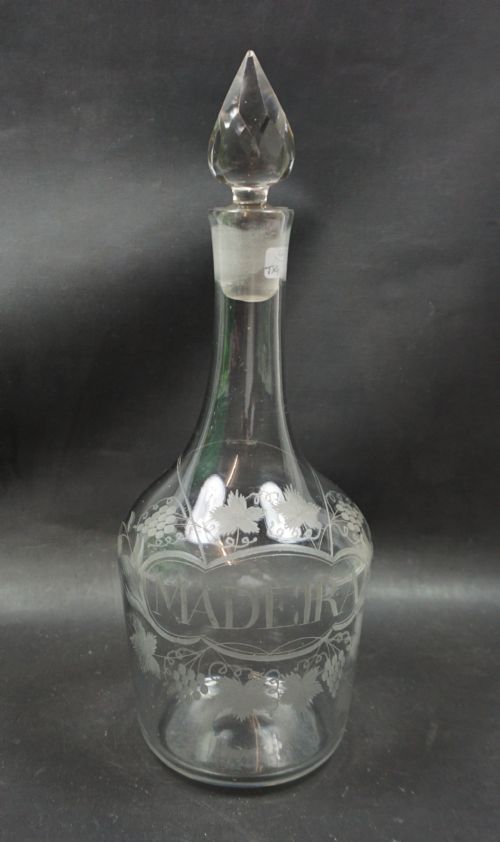
The surviving examples frequently feature distinct neck rings, engraved labels such as Madeira, or intricate facet cutting intended to catch the candlelight of a period dining room. Alongside standalone bottles, the selection often incorporates related serving items including decanter boxes, campaign sets and spirit carriers. Each piece demonstrates the domestic habits of the Georgian era, where drinks were decanted from bulk containers into vessels fit for display.
Materials and Construction
The primary material found across these pieces is heavy lead glass or clear glass, shaped by free-blowing or mould-blowing techniques. Artisans achieved the characteristic heft and brilliance through high lead content formulations, which allowed the metal to take deep wheel engravings and sharp facet cuts.
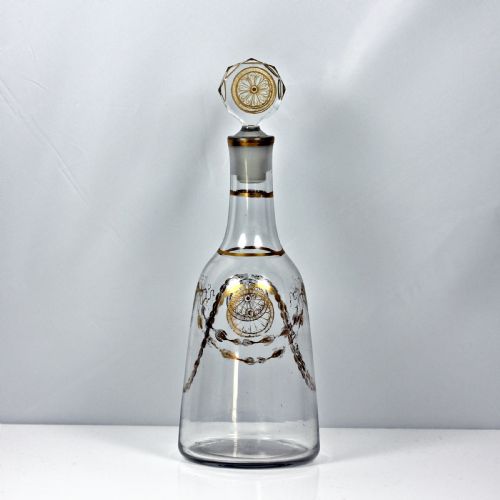
Decoration extended beyond glass manipulation to include polychrome enamel work, gold leaf embellishments and gilding, frequently attributed to specialised ateliers such as that of James Giles. Where structural housing was required, cabinet makers utilised mahogany to construct fitted boxes, carriers and tantalus frames to secure the bottles during transport or storage.
Periods represented in the selection range from mid-18th century items around 1750 through George III and Regency eras up to 1800.
Distinctions in Quality
The distinction between standard utility vessels and superior examples rests upon the crispness of the facet cutting, the depth of the wheel engraving, and the purity of the metal. Top tier pieces exhibit brilliant clarity in the lead glass, balanced proportions in the neck rings, and refined execution in any enamel or gold leaf detailing.
Provenance and ornamentation further elevate certain objects, such as those bearing named spirit labels, specific historic associations like Jacobite sympathy motifs, or documented workshop attributions. The integration of original matching stoppers and the inclusion of contemporary fitted mahogany boxes or campaign set mountings also separate standard bottles from exceptional collector pieces.
James Giles·Hester Bateman
The 18th Century Glass Decanter Glossary
- Lead glass
- A heavy, brilliant glass formulation containing lead oxide that became the standard for quality English and Irish drinking vessels during the Georgian period. It permitted deeper cutting and polishing than ordinary soda glass.
- Lynn rings
- Raised horizontal bands encircling the neck of a decanter, typically numbering between one and five. They provided a secure grip for the hand when pouring heavy wine.
- Prussian shape
- A distinct decanter profile featuring a broad, tapering body and a cylindrical neck, popular during the late eighteenth century for stability on shipboard and dining tables alike.
- Atelier
- A workshop or studio of artists and artisans, such as the decorating establishment run by James Giles in London, where blank glass was gilded and enamelled.
- Sugarloaf
- A descriptive term for a decanter form with a wide, rounded base tapering steeply toward the neck, resembling the traditional conical loaves in which sugar was sold.
18th Century Glass Decanter: Frequently Asked Questions
What is an 18th century glass decanter used for?
These vessels were created to hold, preserve and serve wine, port, Madeira, gin and liqueurs at the dining table or sideboard. They allowed hosts to present beverages attractively while separating the liquid from cask sediment.
Beyond functional dining use, many were engineered for travel in fitted mahogany campaign sets or secure carrier boxes to accompany officers and travellers on journeys.
How do I identify a Georgian decanter?
Authentic Georgian examples typically display heavy lead glass construction with a slightly grey or deep tone, handmade pontil marks on the base, and hand-applied neck rings. Their forms follow distinct historical silhouettes like the Prussian shape or broad taper.
Engraved labels naming specific contents such as Madeira or Hollands, alongside period cutting styles, further help confirm the eighteenth-century origin of the piece.
Are stoppers always original to the decanter?
Many surviving pieces retain their matching stoppers, often ground to fit the specific neck of that individual bottle during manufacture. Because stoppers were easily misplaced or broken over centuries of use, replacements are common.
When a stopper matches the glass colour, wear patterns and cutting style of the body, it adds significantly to the completeness and desirability of the object.