


18th Century Giltwood Table
An 18th century giltwood table brings architectural presence and luminous warmth to a room through carved wood and gold leaf.
18th Century Giltwood Table
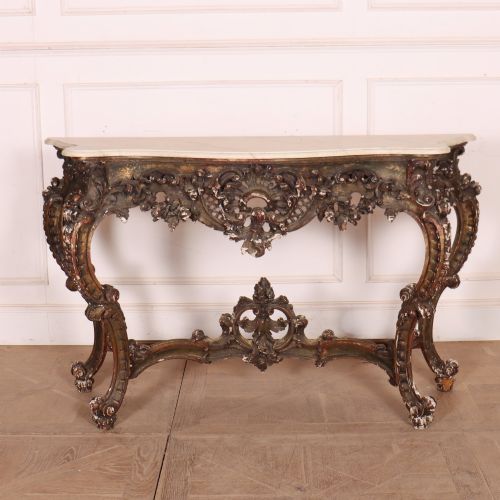
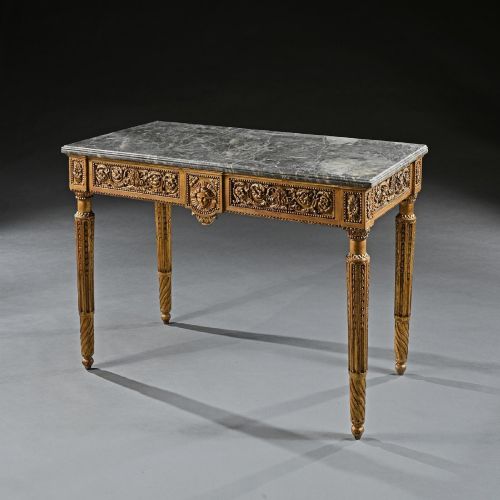
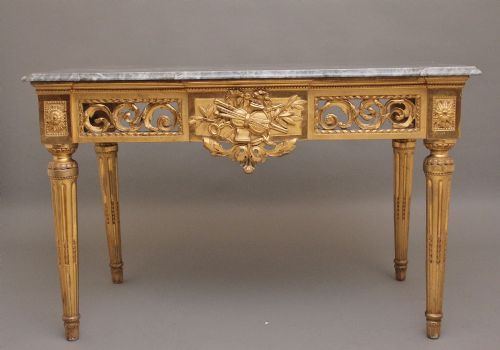
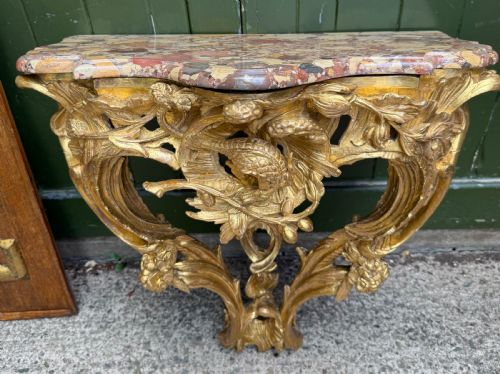
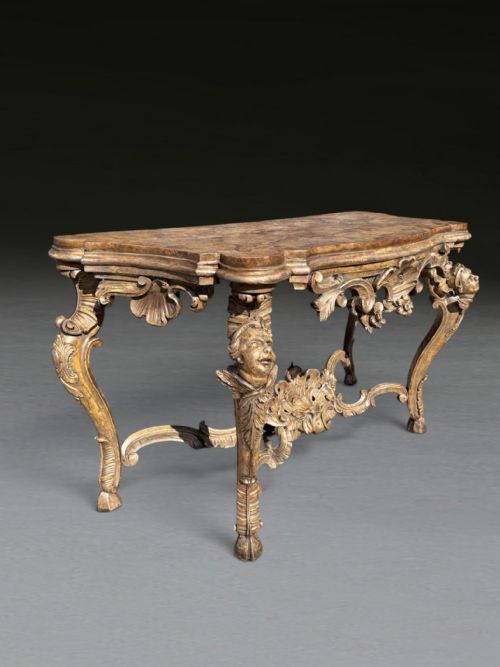
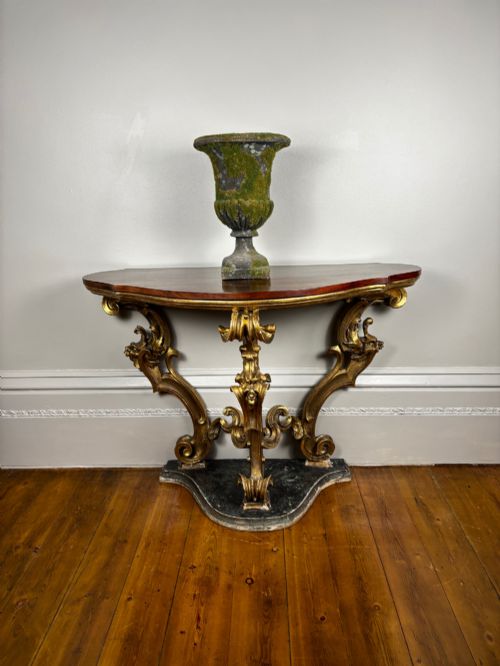
When searching for an 18th century giltwood table, collectors encounter a dramatic form of furniture designed to anchor a formal interior. Console tables dominate the selection, frequently paired with marble tops and heavy carving.
Italian workshops created a significant portion of these pieces, alongside French makers who produced serpentine and Rococo variants. The listings also include smaller dressing mirrors, side tables, and occasional centre tables spanning the Georgian period and the broader eighteenth century.
How they were made
Carpenters shaped the primary structure from wood such as lime, mahogany, or satinwood before applying layers of gesso to smooth the surface for carving. Craftsmen then laid fine gold leaf over the gesso base, burnishing portions to catch the light.
Heavy marble slabs, including figured breche d'alep, rested upon the carved wooden bases of the larger console tables. Paint and parcel-gilt details occasionally accented the carved scrolls and floral motifs.
What varies in quality
Depth and crispness of the wood carving separate standard items from superior works of art. Skilled carvers undercut the foliage and scrolls, creating genuine shadow and relief rather than flat surface decoration.
The integrity of the original gilding and the weight of the fitted marble top influence the overall character of the piece. Tables retaining their early gold leaf display a softer, more integrated patina than heavily restored surfaces.
The 18th Century Giltwood Table Glossary
- Giltwood
- Wood covered with thin sheets of gold leaf. This finish provided a brilliant metallic sheen suitable for grand interiors.
- Gesso
- A plaster mixture applied to wood surfaces as a preparation for gilding or painting. It allowed carvers to achieve sharp detail before applying gold leaf.
- Console table
- A wall-mounted or freestanding table supported by two or more legs at the front. These tables typically stood beneath mirrors or against drawing-room piers.
- Serpentine front
- A furniture front curving outward in the centre and inward at the sides. This shape added movement and complexity to console tables.
- Marble top
- A stone slab fitted to the upper surface of a table. These tops offered durability and a cool contrast to the warm giltwood frames.
18th Century Giltwood Table: Frequently Asked Questions
Where did these tables originally stand?
These tables stood against drawing room walls, frequently beneath large wall mirrors or between tall windows.
Their substantial marble tops and decorative frames made them permanent fixtures of formal reception rooms rather than movable furniture.
How do I clean a giltwood surface?
Dust giltwood gently with a dry, soft brush or a clean feather duster to prevent damage to the delicate gold leaf.
Avoid liquid cleaners, moisture, and abrasive cloths entirely, as water strips the underlying gesso and gold.
Are marble tops removable?
Many marble tops rest loose upon the wooden base, held in place purely by their own heavy weight.
Lifting the stone requires care and additional hands when moving the table to a new location.
What styles do these tables represent?
The pieces span Italian Baroque and Rococo aesthetics, alongside French designs and English Georgian interpretations.
Asymmetrical scrolls, acanthus leaves, and neoclassical symmetry define the prevailing decorative vocabularies.