


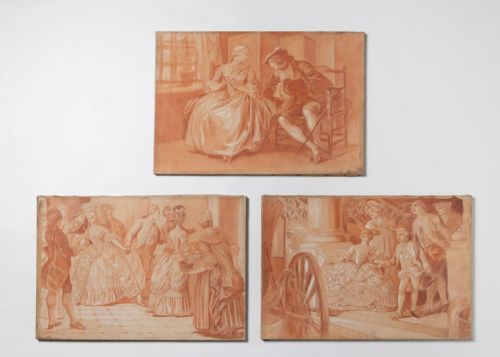
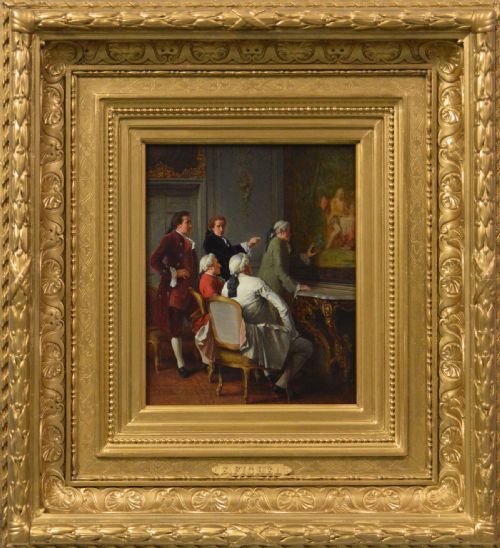


18th Century Genre Painting
These 18th century genre painting works capture everyday life and domestic scenes on canvas and panel, offering buyers a window into historical domestic moments.
18th Century Genre Painting
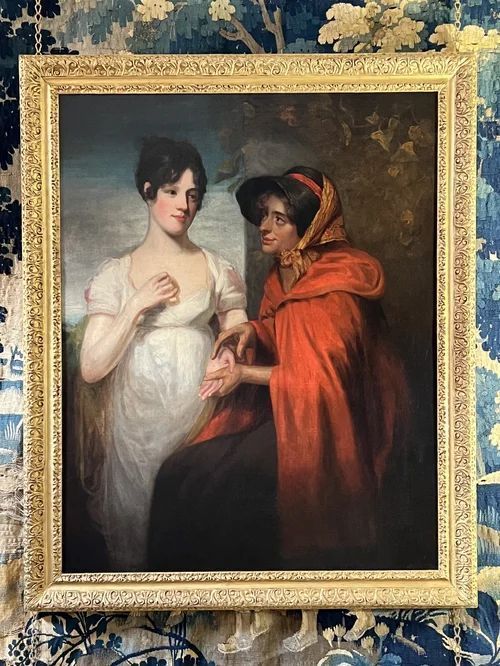
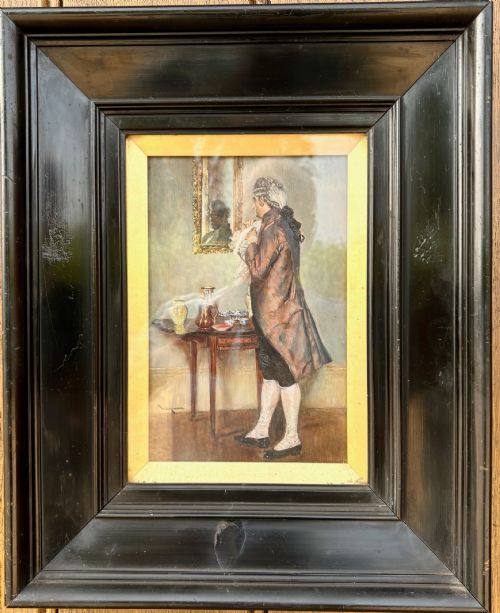
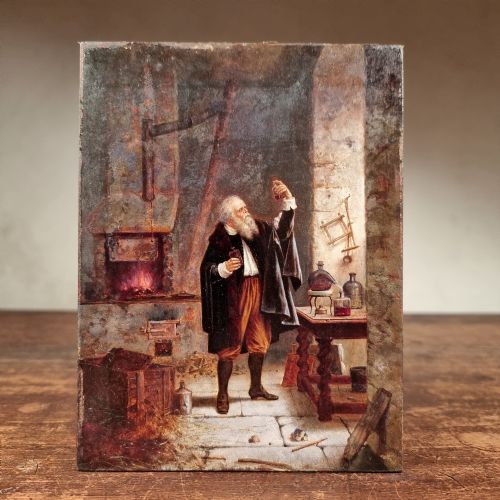
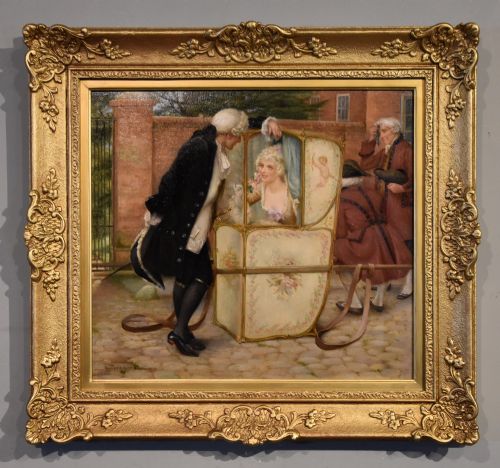
An 18th century genre painting portrays scenes of everyday life, from tavern interiors and card games to quiet domestic moments like cottage wives and spinners. Buyers exploring this category encounter works ranging from period originals to later interpretations in the Dutch School and French Rococo manners.
Subjects span from rustic countrysides and card players to gentlemen in gardens and courtiers taking tea at Versailles. This variety reflects both original eighteenth-century execution and subsequent revivals inspired by earlier masters.
Materials and technique
Painters of these works utilised oil paint on prepared canvas or rigid supports such as oak panels and board. The application ranges from smooth glazes characteristic of Dutch cabinet pieces to freer brushwork found in later academic adaptations.
Giltwood frames frequently house these paintings, often enhanced with gold leaf to complement the dark, rich palettes typical of interior and tavern scenes. Some examples utilise paper supports for watercolour works or print processes like mezzotint engraving printed in colours.
Evaluating the range
The quality of these works rests upon the fidelity of the brushwork and the expressiveness of the figures depicted. Stronger pieces demonstrate confident handling of light and shadow, particularly in interior lighting and fabric textures.
Condition of the support and pigment stability also separate examples. Works retaining their original panel or unlined canvas without excessive overpaint sit higher in the scale than heavily restored surfaces.
JOHN OPIE R.A·W.D.ALMOND·David Teniers The Younger·Delapoer Downing·Jean-Baptiste Greuze·Benjamin Eugene Fichel·John Sanderson Wells·Frank Moss Bennett·Quirijn Van Brekelenkamp·William Tate·Joseph Wright of Derby·Ludolf de Jongh·Bartolome Murillo·Arturo Orselli·Joaquín Luque y Roselló·George Morland·W Ward·Marcel Brunery·Henry Singleton RA·Edmund Alphonse Andre·Philip Mercier
The 18th Century Genre Painting Glossary
- Genre painting
- Depiction of aspects of everyday life by subjects from ordinary people to courtiers engaged in common activities. This category forms the core of the items listed.
- Dutch School
- A stylistic grouping reflecting the realistic portrayal of light, texture, and domestic subject matter popular in the Netherlands. Many listings reference this tradition.
- Panel painting
- Art executed upon a rigid wooden support, typically oak, rather than flexible canvas. These offer a firm ground for detailed brushwork.
- Mezzotint
- A printmaking process of the printmaker's art that achieves tonal gradation through roughening and scraping a copper plate. Examples include works printed in colours.
- Rococo
- An artistic style characterised by ornate curves, lightness, and decorative charm, visible in French-inspired courtly interior scenes.
18th Century Genre Painting: Frequently Asked Questions
What is an 18th century genre painting?
It is a work of art depicting scenes from everyday life rather than grand historical or mythological subjects. Common themes include tavern interiors, card players, and domestic workers.
These pieces offer a direct visual record of past social habits and dress, rendered in oil on canvas or panel.
How do I care for these paintings?
Keep them away from direct sunlight and sources of extreme heat or humidity to protect the canvas and wooden panels. Dust gently with a soft, dry cloth without applying water or cleaning solutions.
Professional conservation is recommended if the paint surface shows signs of flaking or if the canvas requires re-tensioning.
Are all these paintings from the eighteenth century?
No, while many date directly to the seventeen-hundreds, others are nineteenth- or twentieth-century works created in the manner of earlier schools. Artists often painted historical genre scenes long after the period had passed.
Check the individual listing details to confirm the specific date assigned to each piece.
What subjects are most common?
Common subjects include tavern gatherings, card games, musicians, and domestic labourers such as cottage wives and spinners. Courtly scenes set in gardens or interiors also appear frequently.
These narratives focus on human interaction and domestic tasks rather than formal portraiture.