
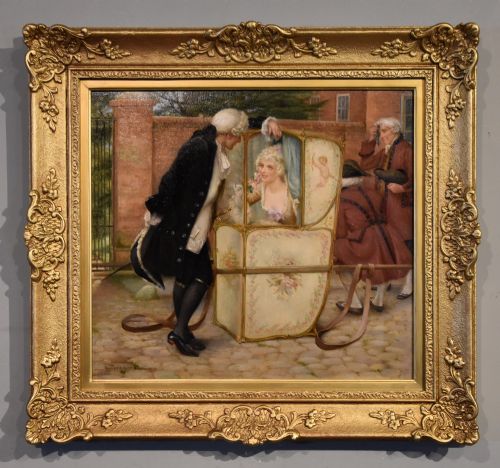
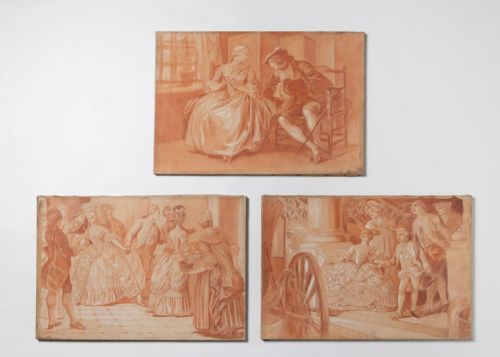

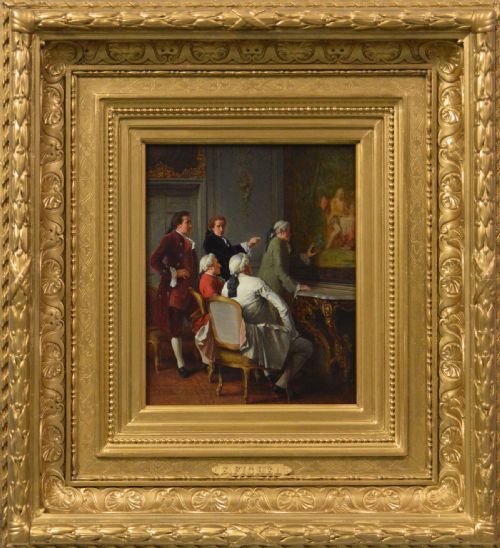
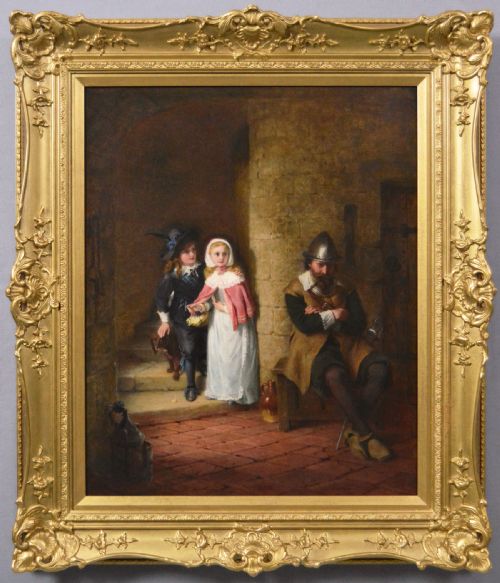


Historical Genre Oil Painting
Historical genre oil painting captures domestic and narrative scenes from past centuries, offering buyers a window into Victorian social life and earlier dramatic moments.
Historical Genre Oil Painting
A historical genre oil painting portrays figures engaged in narrative scenes, domestic pastimes, or theatrical interactions set in past eras. Buyers exploring this page regularly encounter 19th-century Victorian works alongside earlier examples from the 18th century.
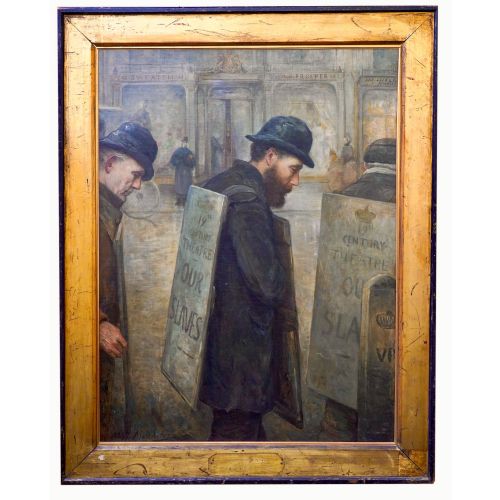
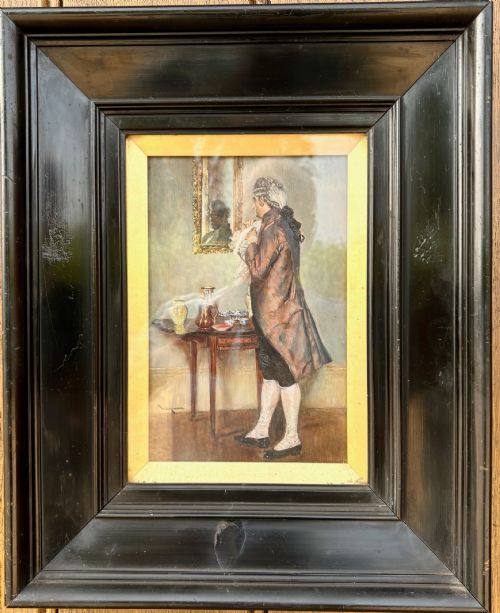
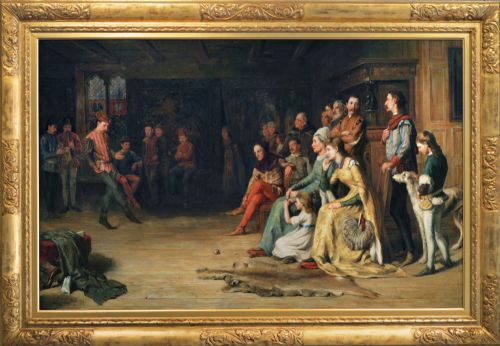
The subjects range from card players and gentlemen admiring art to domestic interiors, royal messengers, and children at fairs. Artists utilise canvas and panel to stage these detailed character studies, often framing them in giltwood.
Most pieces date from the Victorian period through to the early 20th century, reflecting academic historicism and social realism. These works preserve detailed period costumes, architecture, and interpersonal dramas.
Materials and technique
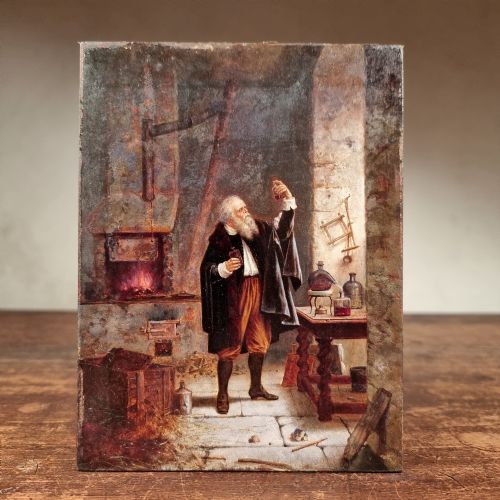
Artists painted primarily with oil paint applied to stretched canvas or rigid wood panels. Gold leaf and giltwood frames frequently complement the primary painted surface.
The technique relies on layered oil pigments to build rich interior light, fabric textures, and distinct facial expressions. Canvas supports allow for both intimate domestic scenes and large-scale academic compositions.
One domestic interior catches a gentleman's shaving ritual abruptly interrupted by his wife.
Distinctions in quality
Quality rests in the precision of the figures' expressions, the handling of interior light, and the accuracy of period costume details. Academic training shows in the anatomical proportion and the composition of multiple figures within a room.
Secondary works rely on repetitive staging and flatter brushwork, whereas superior paintings establish genuine psychological tension between subjects. The integration of the wooden panel or canvas grain with the paint layer distinguishes accomplished hands.
Felix Stone Moscheles·W.D. Almond·James Hamilton·Delapoer Downing·Johann Hamza·Benjamin Eugene Fichel·George Bernard O'Neill·John Watkins Chapman·John Robert Dicksee·Robert Alexander Hillingford·Edwin Hughes·Alfred Holst Tourrier·Frank Moss Bennett·Heywood Hardy·Rolinda Sharples·Christoffel Bisschop·Willem Johannes Martens·Marcel Brunery·Henry Charles Bryant·Walter Dendy Sadler·James Bertrand·Arthur David Mccormick·Adolphe-Alexandre Lesrel·Jules Girardet·Ferdinand Barth
The Historical Genre Oil Painting Glossary
- Genre painting
- A pictorial representation of scenes from everyday life, typically involving ordinary people engaged in domestic or social activities. These works focus on narrative rather than portraiture or landscape.
- Oil on panel
- A painting executed on a flat piece of wood rather than stretched canvas. This rigid support was common in earlier centuries and provides a smooth, stable surface for fine detail.
- Academic historicism
- A style of painting governed by the rules of formal art academies, depicting historical or literary scenes with strict attention to period accuracy. It values polished brushwork and grand narrative.
- Giltwood
- Wood that has been coated with a thin layer of gold leaf or gold paint. Frames made of this material frequently accompany 19th-century oils.
- Social realism
- An artistic movement depicting the everyday conditions of the working classes and contemporary social issues. In historical genre works, this approach emphasises the authentic realities of past domestic life.
Historical Genre Oil Painting: Frequently Asked Questions
What is a historical genre oil painting?
It is an artwork depicting narrative scenes, domestic interactions, or historical moments involving human figures. These paintings capture everyday or dramatic episodes from past centuries.
They rely on oil paint applied to canvas or wood panel, often housed within period giltwood frames.
How were these oil paintings used?
Historically, these works hung in domestic drawing rooms, galleries, and stately homes as conversational centerpieces. They were produced to entertain, educate, and display the refined taste of the owner.
Victorian collectors valued them for their storytelling ability and the accuracy of their historical costumes.
How do I live with an oil painting?
Keep the painting away from direct sunlight and sudden temperature shifts to protect the canvas and oil pigments. Placing it on an interior wall helps preserve both the paint layer and the giltwood frame.
Ensure proper wall fixings support the weight of the canvas and its wooden frame.
How do I tell periods apart?
Eighteenth-century examples often appear on wood panels with lighter rococo palettes and theatrical gestures. Victorian works tend toward richer social realism, academic precision, and detailed interior furnishings.
Twentieth-century continuations retain academic techniques while depicting historical costumed figures with updated canvas priming.