


19th Century Battle Painting
These 19th century battle painting works capture historic military clashes through oil on canvas, delicate watercolours, and painted porcelain chargers.
19th Century Battle Painting
When you search for 19th century battle painting, you encounter a focused selection of military artworks, marine engagements, and historical scenes spanning the Georgian, Regency, and Victorian eras. The available pieces range from large oil paintings on canvas depicting cavalry charges and naval warfare to delicate porcelain chargers, cabinet plates, and works on paper.
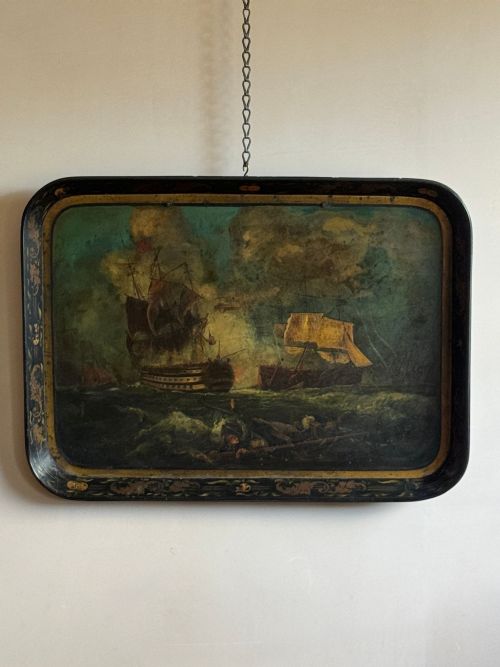
Oil paintings dominate the selection, often signed by recognised artists and capturing specific historical conflicts such as the Napoleonic Wars and the Afghan campaigns. You also find specialised decorative items, including reverse glass prints, papier-mâché trays, and porcelain figures depicting ancient and medieval military history.
Materials and techniques
The physical objects rely on traditional fine art and decorative techniques, with oil on canvas and watercolour forming the primary media for framed works. Artists applied pigments to prepared surfaces, frequently mounting oils within elaborate giltwood frames adorned with gold leaf.
Ceramic pieces utilise porcelain bodies decorated with hand-painted enamel scenes, often finished with gilt highlights and manufactured by notable European potteries such as Sevres, Meissen, and Vienna. Other items employ papier-mâché with japanned finishes or reverse glass printing techniques.
The selection includes pieces spanning the Georgian, Regency, Victorian, and later eras up to nineteen-twenty.
Quality differences
Quality in a 19th century battle painting or associated ceramic piece rests on the precision of the hand-painted detail and the historical accuracy of uniforms and equipment. Works by documented artists demonstrate superior brushwork, anatomical proportion, and dynamic composition compared to unsigned or decorative studio output.
Material preservation also defines the tier of a piece, particularly the stability of the paint surface on canvas, the absence of restoration on porcelain chargers, and the integrity of original gilt frames or japanned surfaces.
Robert Alexander Hillingford·Richard Brydges Beechey·Francis Russell Flint·George Cattermole
The 19th Century Battle Painting Glossary
- Oil on canvas
- Pigments bound in a drying oil applied to stretched woven fabric. This medium allows for deep tonal gradations and rich textures suited to dramatic military scenes.
- Cabinet plate
- A decorative ceramic plate intended for display in a cabinet rather than for dining. These often feature detailed historical or battle scenes painted in enamel.
- Reverse glass print
- An image applied to the rear side of a glass panel, viewed from the front. This technique produces a characteristic glossy finish popular during the Regency period.
- Charger
- A large ceremonial or decorative plate. In 19th-century porcelain, these often depict elaborate historical narratives and battles.
- Japanned
- European imitation of East Asian lacquerwork, created through layers of varnish and heat curing. It provides a dark, glossy finish often found on Regency papier-mâché items.
19th Century Battle Painting: Frequently Asked Questions
What conflicts do these paintings show?
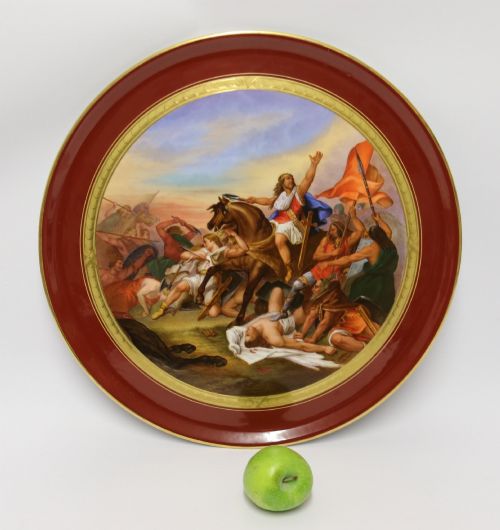
The works depict various military engagements, ranging from ancient and medieval clashes like the Battle of Tolbiac to Napoleonic conflicts and the 2nd Afghan War.
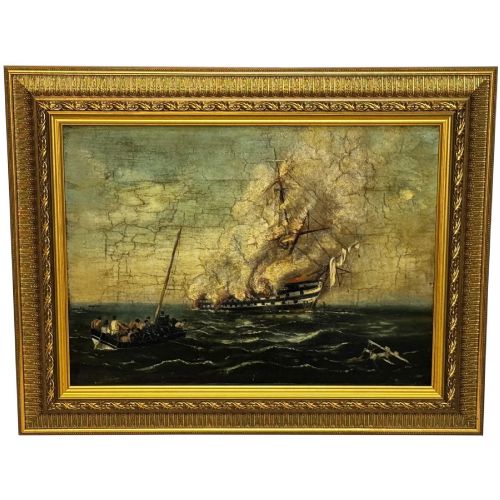
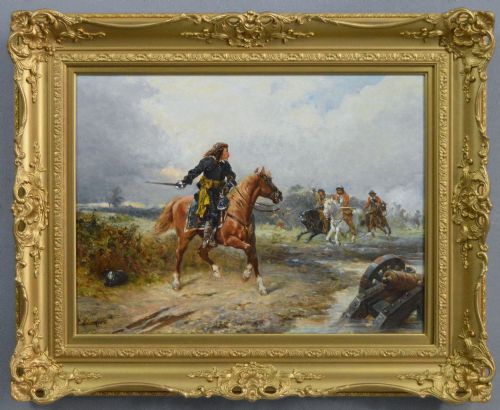
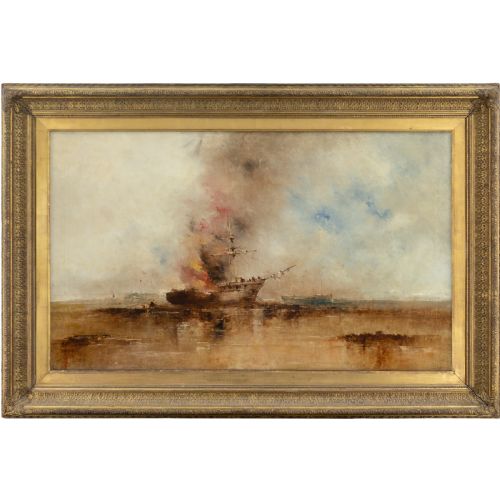
Naval battles and shipboard fires also feature prominently alongside historical cavalry encounters involving recognizable military figures.
How were porcelain battle plates displayed?
Plates and large porcelain chargers depicting military scenes were manufactured primarily for decorative display in cabinets or on walls rather than functional use.
Their hand-painted enamel surfaces and gilt borders marked them out as prestige items for domestic interiors.
How do I identify Regency pieces?
Regency items in this category often include specific formats like reverse glass prints or japanned papier-mâché trays.
Stylistic markers and period framing conventions help distinguish these earlier pieces from late Victorian or Edwardian examples.
Are all these items oil paintings?
While oil on canvas forms a large part of the selection, the category encompasses several other artistic mediums.
Listings include watercolours on paper, enamel-painted porcelain chargers, and printed works behind glass.