



Historical Costume Painting
Historical costume painting works as a record of past centuries captured through theatrical dress and period attire.
Historical Costume Painting
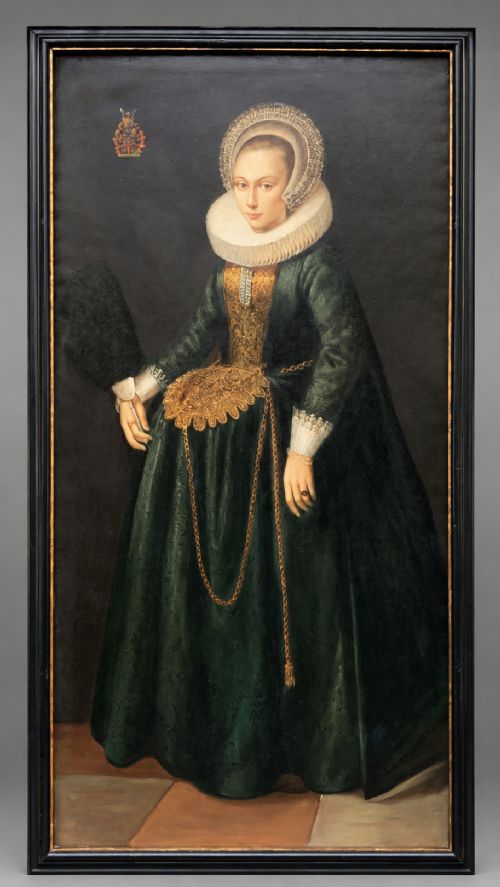
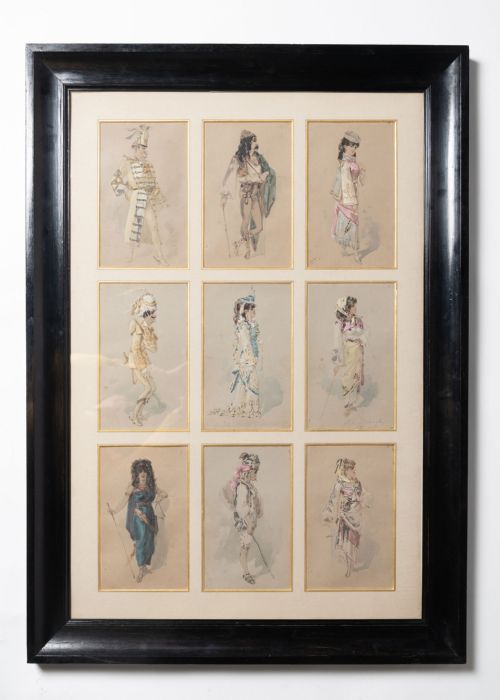
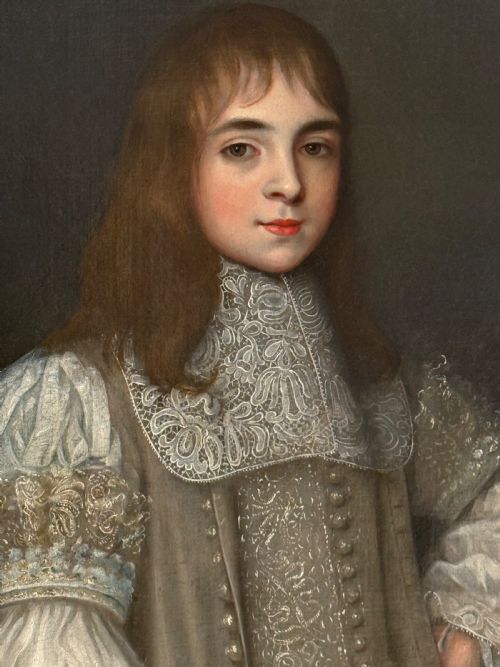
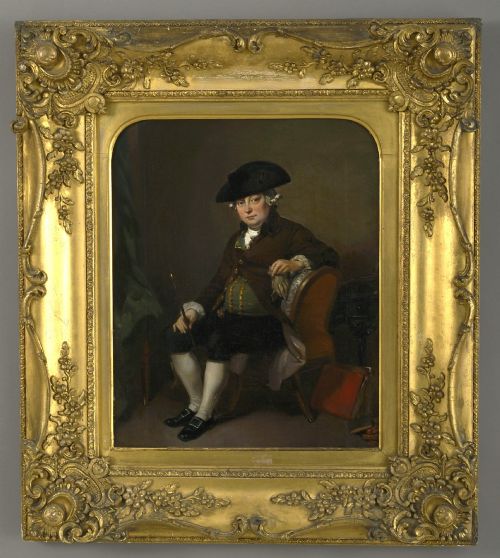
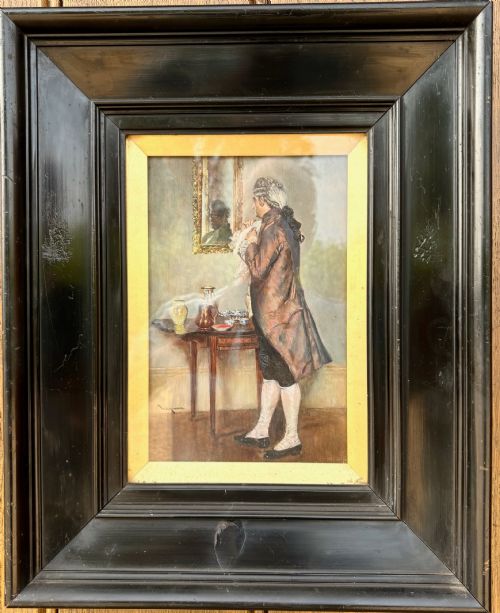
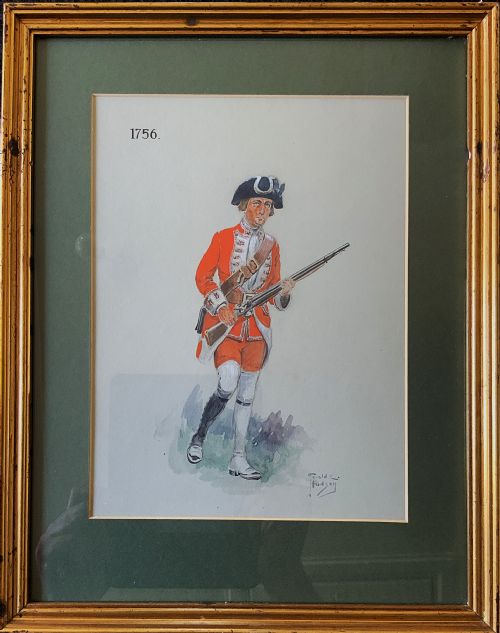
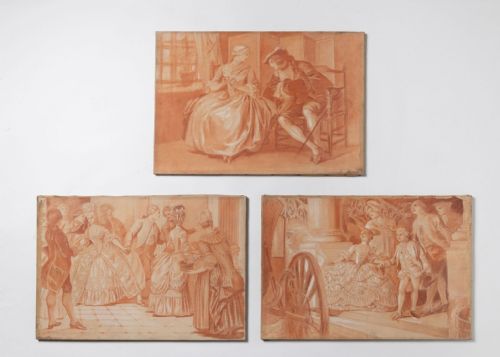
A historical costume painting presents figures dressed in the attire of earlier centuries, blending portraiture with narrative genre scenes. These works capture actors, soldiers, and gentlemen in elaborate garments that span from the seventeenth century through to the Edwardian era.
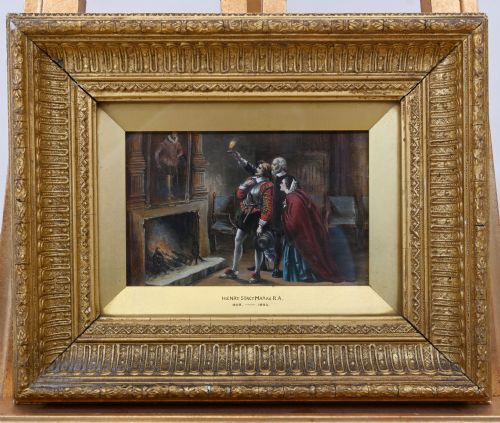
The pieces on this page appear in various media, predominantly oil on canvas or board alongside detailed watercolours and pencil drawings. Subjects range from single theatrical portraits to multi-figure genre scenes set in Georgian or French Rococo contexts.
Makers recorded in the inventory include established artists such as John Michael Wright, George Perfect Harding, and Samuel De Wilde's followers. Their work reflects academic historicism and Victorian genre painting traditions.
Materials and technique
Artists utilise oil paint on canvas, wood panel, or board to build deep, layered depictions of fabric and texture. Watercolours and wash on paper provide a lighter medium for intricate costume details.
Giltwood and gilt wood frames frequently house these artworks, complementing the academic historicism and Victorian styles of the period. Pigments are applied with precision to render lace, armour, and velvet accurately.
Historical Costume Painting Retail Price Guide 2026
Typical asking prices for historical costume painting among the pieces listed under this phrase on Sellingantiques today, from the lower quarter to the upper quarter. They describe what is for sale here now, not the wider market.
Some gentlemen depicted in these paintings appear to take their card games and tea drinking with surprising theatrical intensity.
Judging quality
The distinction between standard works and superior examples lies in the precision of the draughtsmanship and the authenticity of the period staging. Framed presentation in period giltwood also contributes to the overall cohesion of the artwork.
Samuel De Wilde·John Michael Wright·Delapoer Downing·Robert Alexander Hillingford·Frank Moss Bennett·Susie Lassam·Paul Schier·Hans Temple·Willem Johannes Martens·Marcel Brunery·Adolphe Alexandre Lesrel·George Perfect Harding
The Historical Costume Painting Glossary
- Academic historicism
- An artistic style characterised by the accurate and detailed depiction of historical subjects and costumes. This approach relies on careful research into past eras.
- Genre painting
- The pictorial representation of scenes from everyday life, often involving figures in historical or theatrical costume. These works tell a story rather than serving purely as formal portraits.
- Giltwood
- Wood carved and covered with a thin layer of gold leaf, commonly used for framing historical artworks. It provides an ornate border that matches the period style of the painting.
- Watercolour
- A painting method in which the paints are made of pigments suspended in a water-based solution. Artists use this technique on paper for delicate portraits and costume studies.
Historical Costume Painting: Frequently Asked Questions
What is a historical costume painting?
A historical costume painting depicts subjects dressed in the clothing of past centuries, often combining portraiture with theatrical or narrative elements.
These works draw on styles from the seventeenth century onward, capturing the meticulous details of period dress.
How do I identify the period?
The period is determined by the style of dress depicted, the artist's working dates, and the framing materials used.
Signatures, inscriptions, and mediums such as oil on canvas or watercolour further help date the artwork.
Where should I hang these?
These artworks suit traditional interiors, studies, or libraries where period furnishings complement the theatrical subjects.
Keep them away from direct sunlight to protect the canvas, paper, and giltwood frames.
What subjects appear most often?
Common subjects include actors in character, soldiers in uniform, and gentlemen in elaborate seventeenth or eighteenth-century attire.
Genre scenes involving card games or tea also feature frequently among the available works.