

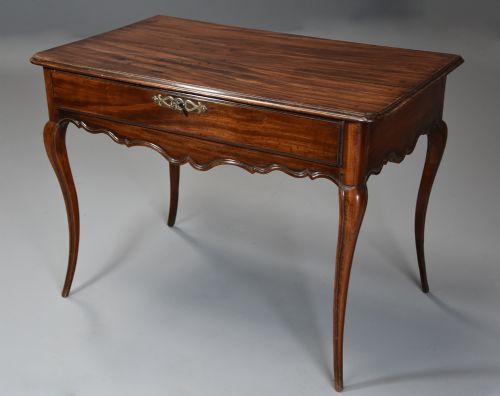


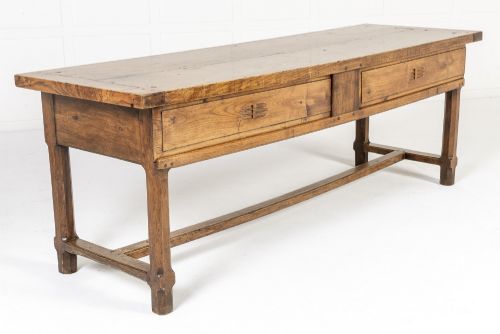


18th Century French Console
An 18th century french console brings architectural presence and fluid carving to a room, holding mirrors or lamps with elegance.
18th Century French Console
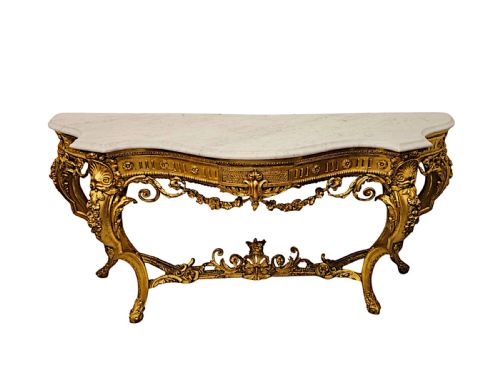
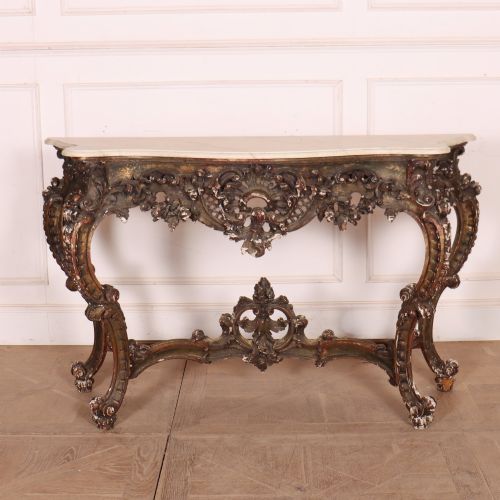
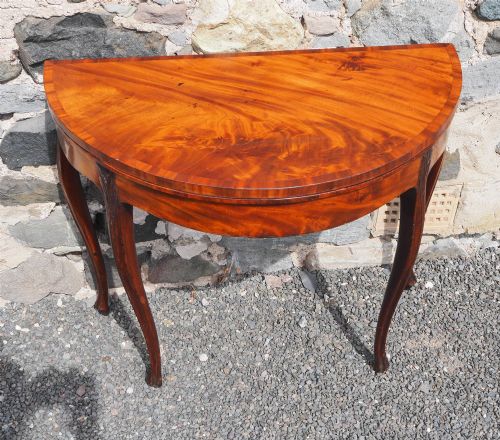
An 18th century french console typically presents as a wall-fixing or side table designed to stand beneath mirrors, taking forms such as serpentine fronts, commodes, and serving surfaces.
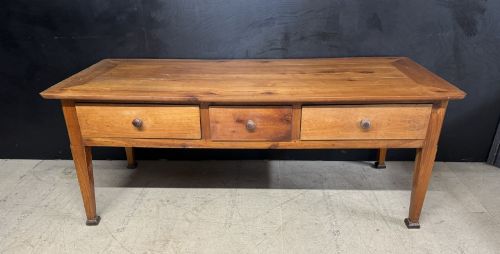
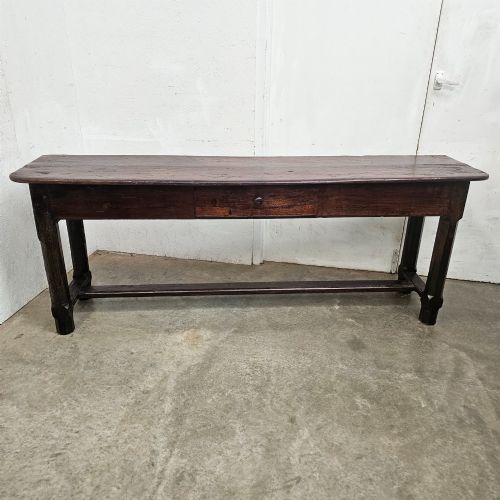
Pieces span periods from the 18th century through later revivals, utilising regional oak, fruitwood, walnut, and yew alongside gilded finishes.
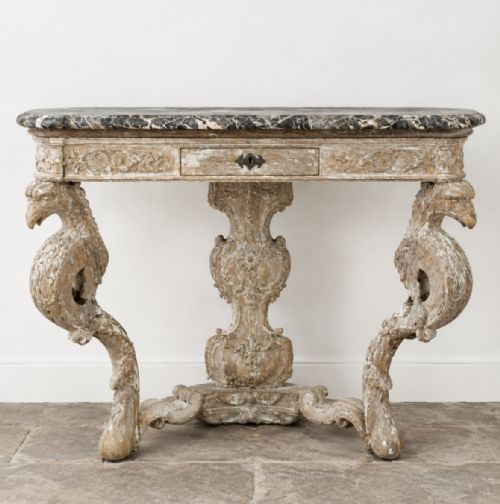
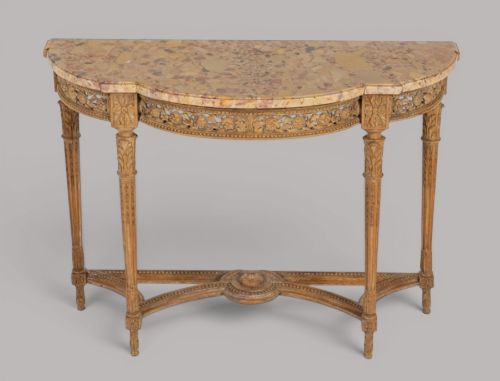
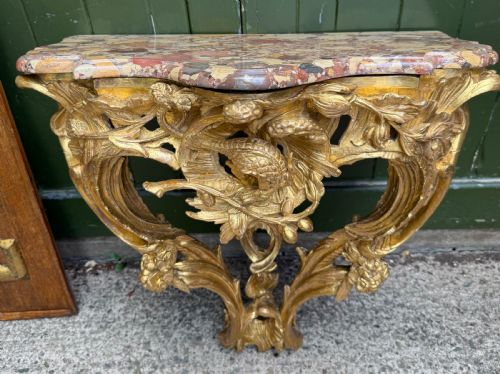
The selection ranges from provincial oak designs to elaborate giltwood and marble-topped examples reflecting Rococo, Louis XVI, and Baroque styles.
Materials and Construction
Joinery relies on solid timber frames of walnut, oak, and mahogany, shaped with carved detail, gesso, and applied brass or parquetry inlay.
Surface treatments combine hand-carved giltwood, painted finishes, and polished timber patinas supporting heavy figured marble inserts like breche d'alep.
18th Century French Console Retail Price Guide 2026
Typical asking prices for 18th century french console among the pieces listed under this phrase on Sellingantiques today, from the lower quarter to the upper quarter. They describe what is for sale here now, not the wider market.
Listings feature woods like walnut, oak, mahogany, fruitwood, and yew alongside marble, brass, gesso, and giltwood finishes.
Judging Quality
Quality rests upon the crispness of the hand-carved detail in the wood or gesso and the integrity of the original marble top fitted to the frame.
Proportion and the depth of the original patina separate superior provincial and courtly examples from later interpretations.
The 18th Century French Console Glossary
- Console
- A table designed to be fixed against a wall, often supported by front legs with the rear bracketed to the masonry.
- Giltwood
- Timber coated with gold leaf or gilt preparation, widely utilised on ceremonial and formal seating and tables.
- Marquetry
- Inlay work using various coloured woods to form decorative patterns on furniture surfaces.
- Serpentine
- A furniture front or top curving outward at the centre and inward at the sides in a continuous wave.
- Breche d'alep
- A variegated multi-coloured marble prized for decorative tabletops.
18th Century French Console: Frequently Asked Questions
Where did these tables stand in a house?
These pieces usually stood against principal walls in reception rooms, frequently positioned directly beneath tall wall mirrors or between windows.
They served as decorative display surfaces rather than general utility tables.
How do I identify the wood types?
Close inspection reveals the grain and weight of timbers such as heavy walnut, figured mahogany, pale oak, and dense fruitwood.
Many surfaces also carry layers of gesso, paint, or gilding that conceal the underlying structural timber.
Are the marble tops original?
Original marble inserts fit the rebate of the wooden frame precisely and display period weathering that matches the base.
Replacements often sit differently or show cleaner modern edges compared to eighteenth-century stone.
How should I care for giltwood?
Giltwood requires dry dusting with a soft brush, avoiding any moisture, cleaning solvents, or abrasive cloths that lift the gold leaf.
Stable indoor humidity preserves both the gesso ground and the delicate carved wooden substrate.