





18th Century French Armoire
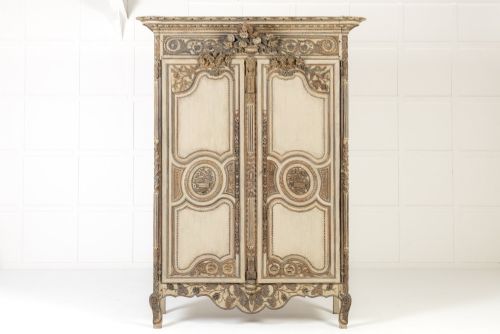
An 18th century french armoire brings substantial storage and regional character to a room, constructed to hold linens, garments, or provisions.
18th Century French Armoire
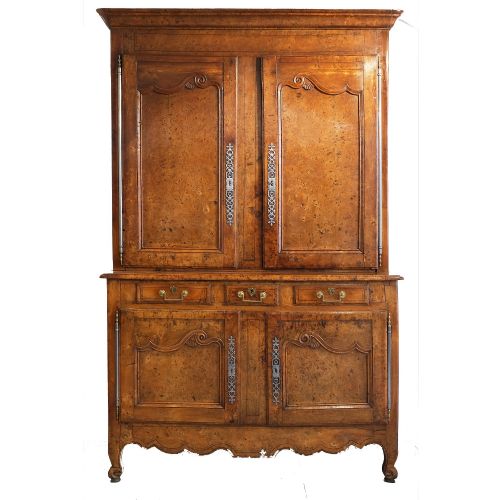
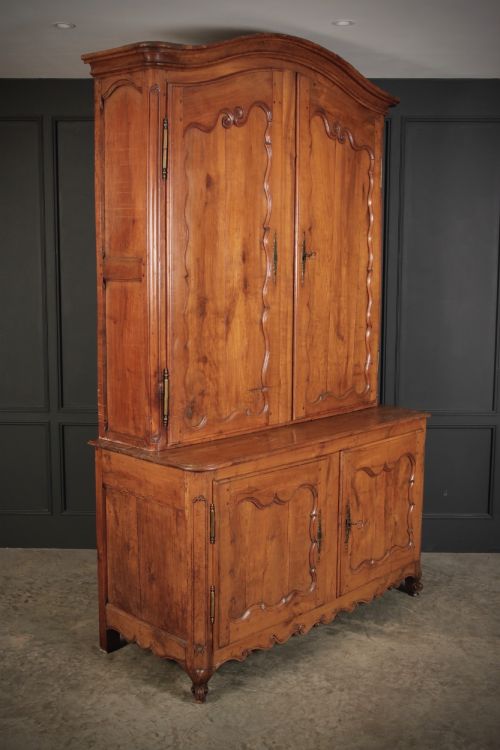
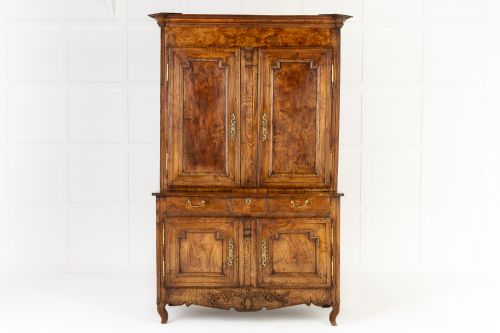
The phrase 18th century french armoire encompasses large freestanding storage pieces, including double-door wardrobes, buffet à deux corps, and regional cupboards designed for domestic utility. You will frequently encounter oak, walnut, and chestnut versions on this page, reflecting the timber traditions of provincial workshops.
Forms range from low single-door cupboards to grand two-piece stacked cabinets with carved panels and substantial cornices. Pieces originate from distinct regions like Normandy and Burgundy, often displaying local variations in moulding profiles and door configurations.
Materials and Construction
Local timbers such as oak, walnut, chestnut, ash, and fruitwood provide the structural integrity for these large storage pieces. Carpenters utilised pegged mortise and tenon joinery to assemble heavy frames and panelled doors.
Iron hinges, latches, and brass escutcheons secure the doors, while surfaces are frequently left natural, bleached, painted, or waxed to finish the timber.
18th Century French Armoire Retail Price Guide 2026
Typical asking prices for 18th century french armoire among the pieces listed under this phrase on Sellingantiques today, from the lower quarter to the upper quarter. They describe what is for sale here now, not the wider market.
Listings feature oak, walnut, chestnut, ash, and fruitwood across various 18th century and 19th century regional forms.
Assessing Quality and Execution
The depth and crispness of hand-carving on panels and cornices separate standard utility cupboards from more ambitious regional commissions. Timber selection also matters, particularly the use of solid, well-figured walnut or quarter-sawn oak rather than mixed secondary woods.
Proportion and scale dictate the visual weight of the piece, where harmonious alignment of doors, drawers, and cornices demonstrates the maker's skill.
The 18th Century French Armoire Glossary
- Armoire
- A tall freestanding cupboard or wardrobe with doors enclosing shelving or hanging space. They served as primary storage furniture in French homes before built-in closets became common.
- Buffet à deux corps
- A large two-tier cabinet comprising a lower section beneath an upper cupboard. This stacked form provides massive capacity for linens or provisions.
- Escutcheon
- A flat plate surrounding a keyhole, often fashioned from brass or iron. It protects the surrounding wood from wear and adds decorative detail.
- Cornice
- The moulded horizontal projection crowning the top of a cabinet. Regional styles often dictate the height and profile of this architectural element.
- Provincial
- Pertaining to regions outside Paris, describing furniture made by local craftsmen using native timbers. These pieces exhibit distinct rural characteristics rather than court styles.
18th Century French Armoire: Frequently Asked Questions
What were 18th century french armoires used for?
These large pieces stored household textiles, folded clothing, and provisions in domestic interiors. Their deep interiors accommodated voluminous linens and heavy garments before fitted closets existed.
Over time, many were adapted with hanging rails to function as modern wardrobes while retaining their traditional timber doors and panelled construction.
How do I identify regional styles?
Regional differences appear in the choice of timber, carving motifs, and overall silhouette. Pieces from Normandy often feature distinct chestnut construction and characteristic crests, while Burgundian examples frequently showcase deep walnut carving.
Examining the internal construction and secondary woods also helps trace a piece to its specific provincial origin.
Can these armoires be dismantled for transport?
Many of these large pieces employ pegged frame-and-panel construction that allows them to be taken apart into manageable sections. Pegs are driven out to separate the cornices, sides, and doors for moving.
Buyers should check individual listings to confirm whether a specific armoire is constructed as a single solid unit or a modular take-down design.
How do I care for antique timber?
Maintain stable humidity levels in the room to prevent the solid oak, walnut, or chestnut from splitting or warping. Regular application of traditional beeswax nourishes the dry wood and preserves the surface sheen.
Avoid placing the cabinet near direct heat sources or strong sunlight, which can fade painted or natural wood finishes.