





French Carved Walnut Armoire
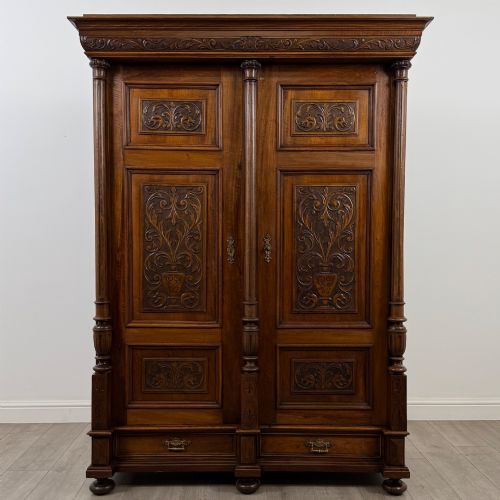
A french carved walnut armoire brings monumental presence and rich timber tone into a room, offering generous storage for daily life.
French Carved Walnut Armoire
A french carved walnut armoire is a large freestanding wardrobe or storage cabinet built to house garments and household goods. These pieces range from substantial four-door cupboards down to single-door versions designed for compact chambers.
The selections available span multiple centuries, touching upon the seventeenth, eighteenth, and nineteenth centuries alongside later early twentieth-century examples. Regional pieces often bear distinct regional carvings, linking them to specific areas such as Burgundy or Brittany.
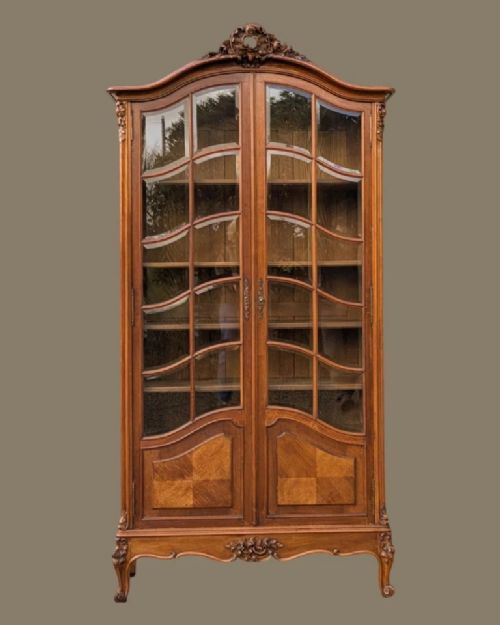
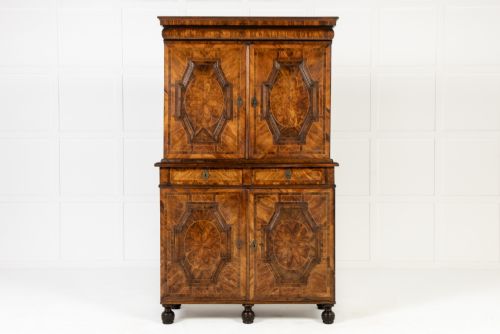
Forms vary significantly beyond standard wardrobes, including bookcase cabinets with glass doors, buffet deux corps compositions, and complete bedroom suites. Buyers frequently encounter nineteenth-century interpretations alongside earlier provincial models.
Judging Quality and Execution
Quality rests in the depth, crispness, and hand-carved detail of the walnut panels rather than mechanical uniformity. Superior examples show confident relief work on the doors and cornice that integrate harmoniously with the overall architectural proportions.
The integrity of the timber selection dictates the character of the piece, with burr walnut veneers and well-figured solid planks commanding greater visual depth. Original hardware, glass panes, and stable internal fittings separate accomplished cabinet work from later alterations.
French Carved Walnut Armoire Retail Price Guide 2026
Typical asking prices for french carved walnut armoire among the pieces listed under this phrase on Sellingantiques today, from the lower quarter to the upper quarter. They describe what is for sale here now, not the wider market.
Some provincial makers hid secret compartments behind deep carved cornices, leaving miniature hiding spots for household valuables.
The French Carved Walnut Armoire Glossary
- Armoire
- A tall wardrobe or cupboard enclosed by doors, traditionally used for storing garments. It serves as the primary freestanding storage furniture in traditional European interiors.
- Burr walnut
- A specialised timber cut from walnut tree growths, prized for its swirling, highly figured grain patterns. Cabinet makers deploy this veneer on prominent exterior surfaces to create rich visual texture.
- Buffet deux corps
- A large two-tier cupboard featuring an upper cabinet set upon a deeper lower section. This architectural form provides extensive partitioned storage for household provisions.
- Louis XV style
- A design aesthetic defined by asymmetrical curves, naturalistic scrolling foliage, and delicate floral motifs. Pieces from this tradition avoid rigid symmetry in favour of fluid, organic movement.
- Breton armoire
- A distinct regional cupboard style originating from northwestern France, characterised by dense geometric and figurative carving. These units frequently display traditional local motifs reflecting rural heritage.
French Carved Walnut Armoire: Frequently Asked Questions
How do I fit a large armoire?
Many traditional armoires were constructed to be dismantled into panels, cornices, and base sections for transport and room assembly.
Check whether the specific piece employs knockdown construction before attempting placement in tight hallways or low-ceilinged rooms.
Are these wardrobes suitable for modern clothes hangers?
Older wardrobes often feature deep shelves or simple wooden pegs rather than modern horizontal clothes rails.
Buyers frequently adapt the internal depth by installing discreet hanging rods while preserving the original historical timber framework.
How do I distinguish eighteenth-century pieces from later revivals?
Earlier pieces exhibit hand-cut joinery marks, pegged joints, and patinated timber surfaces acquired through centuries of wax polishing.
Nineteenth-century revival pieces often display machine-sawn elements and crisper decorative carving associated with industrial woodworking advancements.
What is the difference between single and double door models?
Single door armoires were built for smaller bedrooms or provincial homes where floor space was strictly limited.
Double and triple door formats provide expansive storage capacities and act as dominant architectural focal points within large master chambers.