
18th Century Engraved Stemware
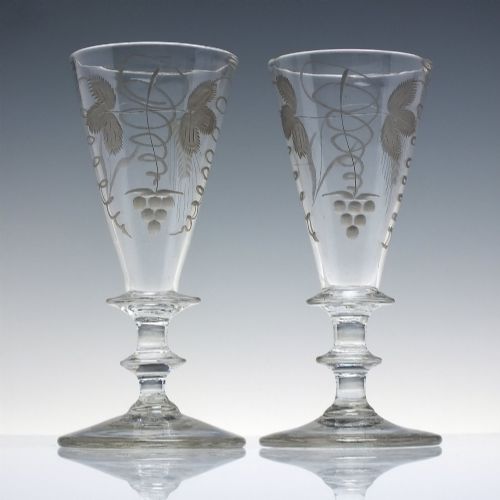
These 18th century engraved stemware drinking vessels bring tactile Georgian history to the table, valued for their characterful hand-engraved motifs and heavy lead glass.
18th Century Engraved Stemware
When you search for 18th century engraved stemware, you encounter drinking vessels created during the Georgian period, typically formed as wine glasses, dram glasses, ale glasses, and goblets. These pieces span various stem formations and bowl shapes, originating predominantly from English glasshouses during the seventeen-hundreds.
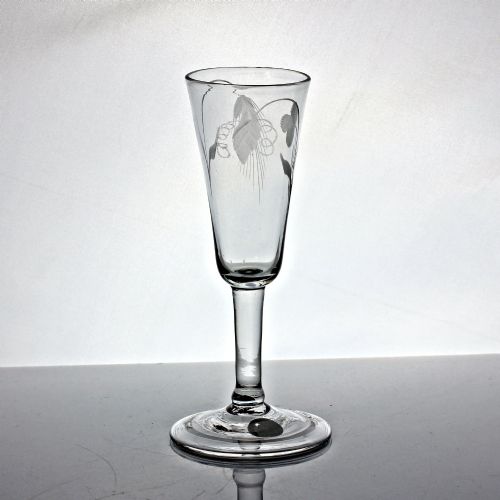
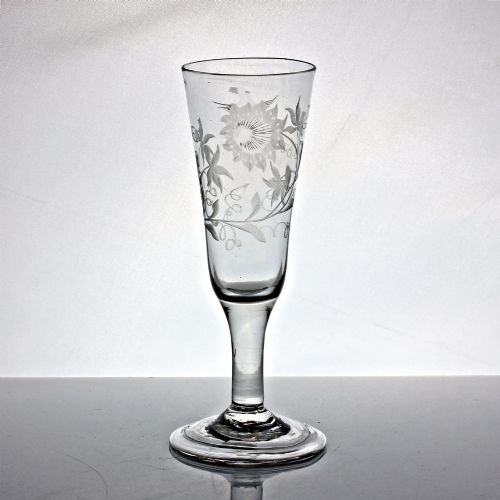
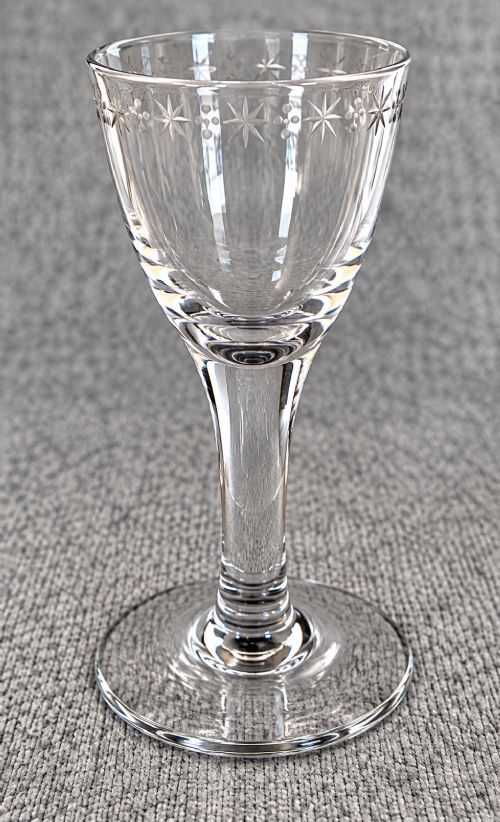
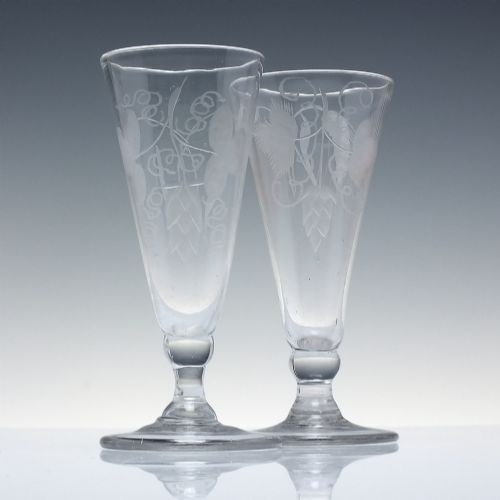
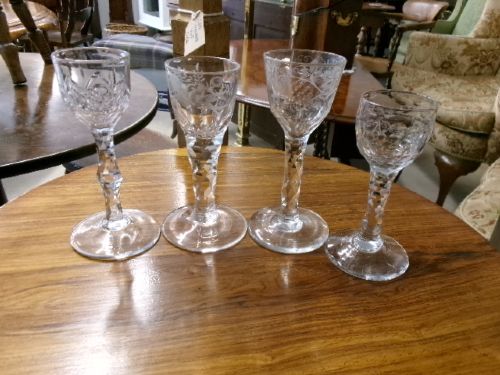
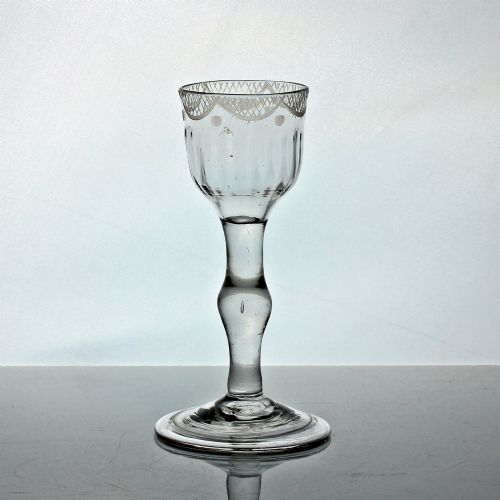
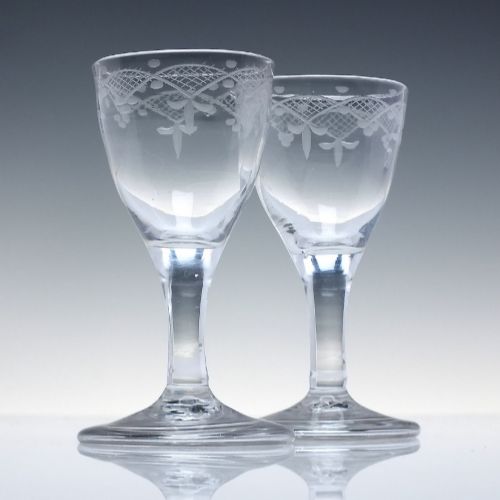
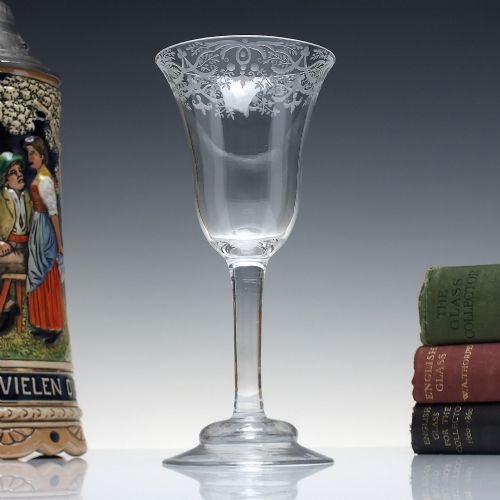
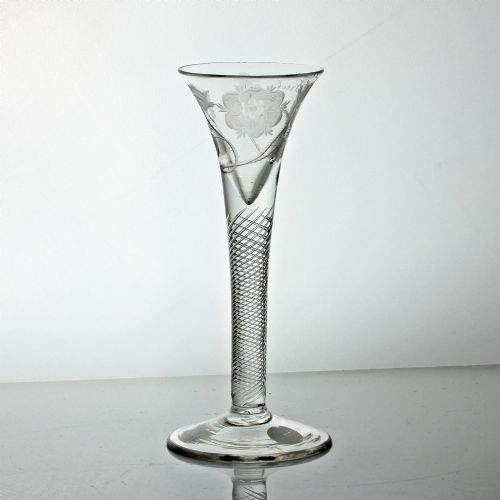
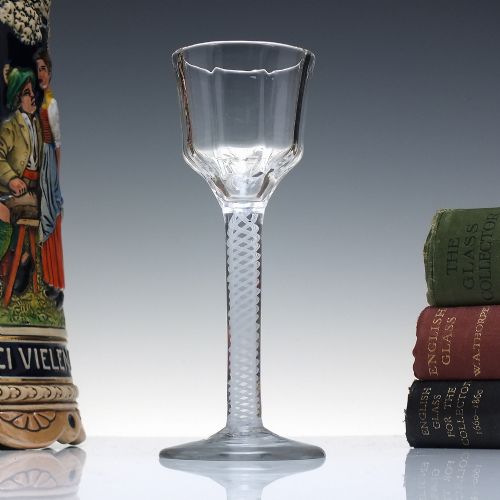
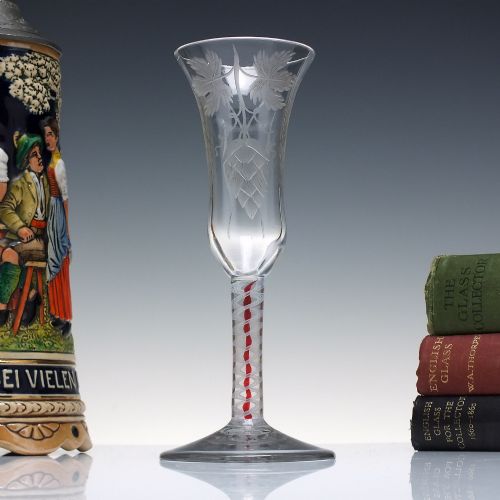
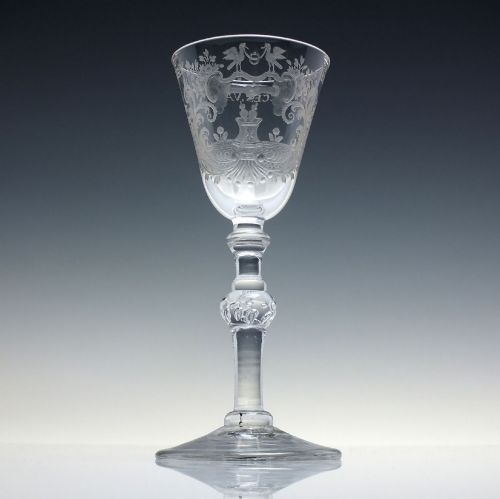
The most common examples on this page are wine glasses and ale glasses featuring clear lead glass bodies decorated with wheel-engraved or diamond-etched patterns. These range from simple plain stem forms to complex air twists, opaque twists, balustroid stems, and facet cuts.
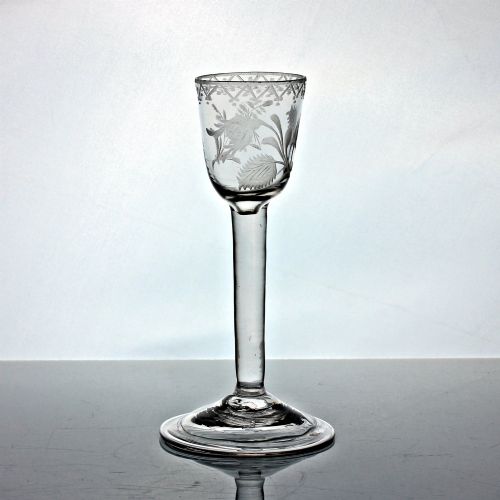
Engraved ornamentation frequently depicts floral themes, hunting scenes, and Jacobite symbols, applied to bowls like the ogee, rounded funnel, or bucket shape. Folded feet and wide foot bases frequently anchor these drinking glasses, providing stability and period authenticity.
Materials and construction
Glassmakers of this era utilised lead glass, lead crystal, and flint glass to achieve brilliance and weight in each vessel. The high lead content allowed craftsmen to blow robust bowls and draw out slender stems while maintaining clarity.
Stems were shaped using techniques including air twist formation, opaque enamel twist insertion, and mechanical facet cutting. Engraving was achieved through wheel-engraving or etching, rendering botanical details, crests, and inscriptions across the surface of the bowl.
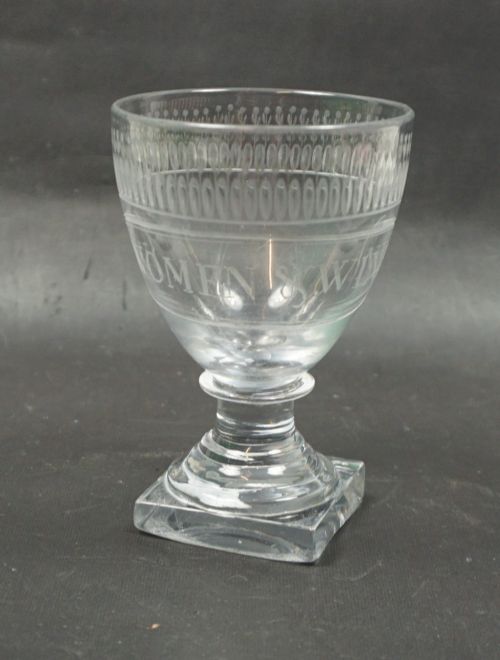
One remarkably honest 1780 rummer bears the cheerful pairing of women and wine, etched directly onto the glass for posterity.
Assessing quality in Georgian glass
Quality rests in the crispness of the wheel engraving, the symmetry of the stem twist, and the purity of the lead glass metal. Superior examples exhibit precise facet cutting, balanced proportions, and deep, clear pictorial motifs without surface distortion.
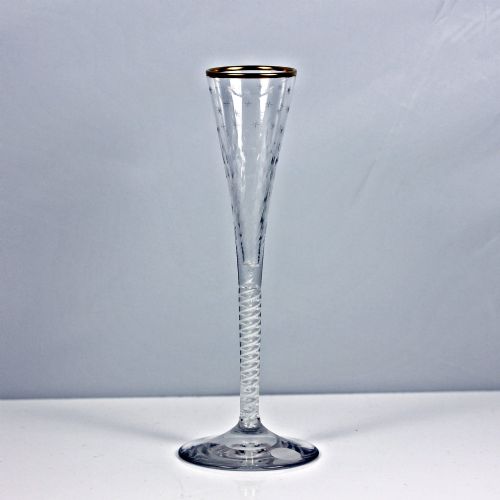
The sophistication of the stem formation largely dictates the calibre of the piece, with multi-spiral air twists and gilt-decorated opaque twists representing high levels of glasshouse skill. Foot condition and metal weight also contribute to the desirability of each drinking vessel.
The 18th Century Engraved Stemware Glossary
- Air twist
- A stem containing elongated threads of air trapped inside the glass during manufacture. This is formed by drawing out a cane with internal bubbles.
- Opaque twist
- A stem containing white or coloured enamel glass rods twisted within a clear lead glass core. These rods create intricate lace-like patterns inside the stem.
- Ratafia glass
- A tall, narrow-bowled glass designed for sweet fruit liqueurs. The slender bowl shape accommodated potent cordials.
- Folded foot
- A glass foot where the outer rim is turned underneath during formation. This technique creates a thickened, rounded edge that strengthens the base.
18th Century Engraved Stemware: Frequently Asked Questions
What drinks were served in these glasses?
These vessels accommodated various beverages depending on their specific form, from strong ales and beer to port, wine, and spirits. Smaller vessels functioned as dram glasses for whisky or liqueurs.
Larger rummers and goblets handled punch, wine, or ale at the dining table. The specific bowl capacity and height usually dictated the appropriate beverage for the period.
How do you date 18th century stemware?
Dating relies on stylistic evolution in stem construction, bowl shapes, and foot profiles. Plain stems and heavy baluster forms generally pre-date the introduction of intricate air twists and opaque twists.
Facet cutting and lighter funnel bowls typically point towards the later decades of the century. Pontil marks on the underside of the foot also offer clues regarding production methods.
What are Jacobite wine glasses?
Jacobite glasses feature secret engravings intended to show support for the exiled House of Stuart. Common motifs include the rose, oak leaves, and specific Latin inscriptions.
Adherents used these drinking vessels to toast the King over the water during clandestine political gatherings. The symbolism allowed sympathizers to express allegiance without immediate detection.