




18th Century Display Case
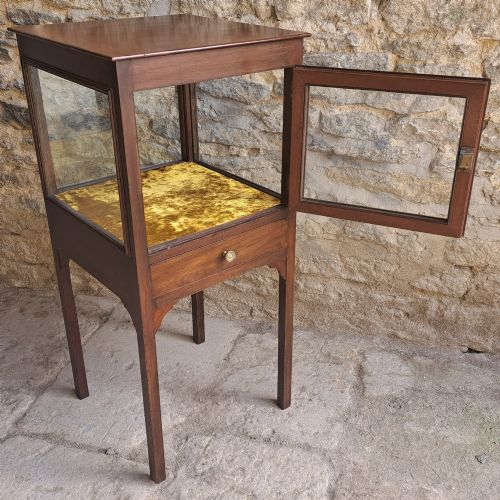
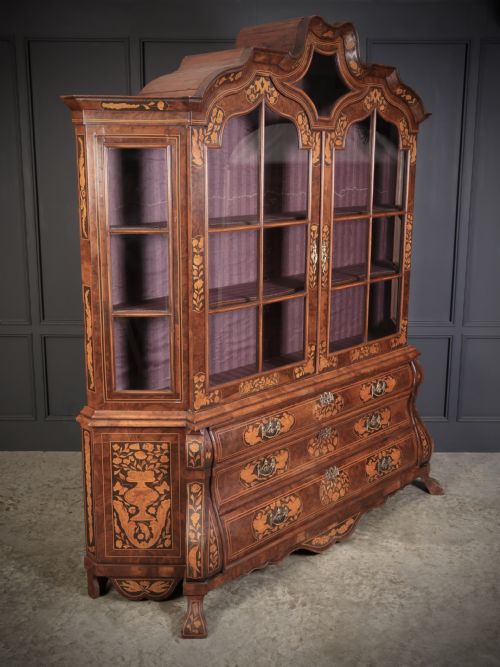
An 18th century display case brings period character and historic joinery to a room, offering a structured way to house smaller collections.
18th Century Display Case
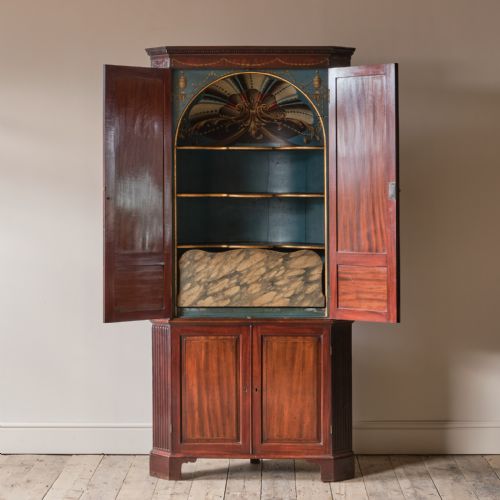
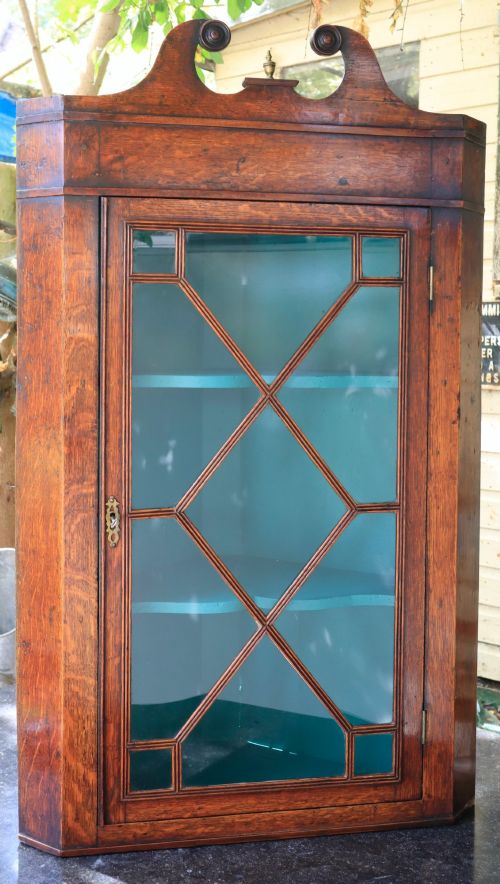
When searching for an 18th century display case, buyers encounter a variety of forms including corner cabinets, wall cabinets, glazed cupboards, and bookcases. These pieces originate from distinct regional traditions spanning English, Scottish, Welsh, Dutch, French, and Italian workshops.
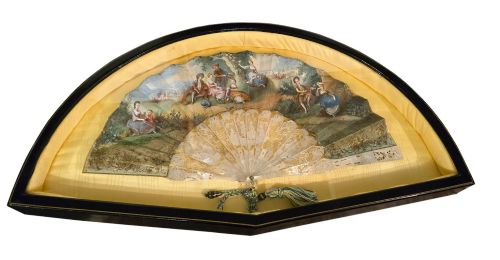
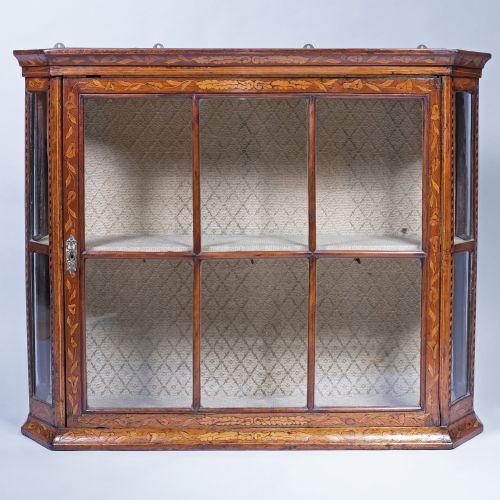
The pieces on this page lean heavily towards corner cabinets and wall-mounted cupboards designed to maximise smaller spaces in period homes. Alongside these architectural cabinets, the selection includes specialised enclosures such as glazed wall cases housing carved mother-of-pearl fans.
Most examples date across the Georgian period, incorporating stylistic influences from Dutch Baroque, French Rococo, Neoclassical, and Sheraton designs. Timber choices reflect this geographical spread, moving between native British hardwoods and continental veneers.
Materials and Construction
Cabinet makers relied primarily on solid timbers such as mahogany, oak, walnut, and yew wood for the primary structures. Marquetry inlay and satinwood added decorative contrast to select walnut and exotic timber surfaces, while gilt wood and painted finishes appeared on specific regional pieces.
Glazing bars divided the glass panes of door fronts to protect contents while maintaining visibility. Brass hardware, including hinges and escutcheons, secured the doors and drawers of these hanging and freestanding cabinets.
Listings feature oak, mahogany, walnut, and yew wood alongside fabric linings of silk and satin.
Factors That Separate the Tiers
The distinction between standard examples and top-tier pieces rests on the precision of the cabinet work and the choice of timber figure. Finer cabinets display carefully matched veneers, intricate marquetry inlay, and sophisticated carving along the cornice or base.
Original glazing, period brasses, and intact surface patination elevate a piece significantly. Regional variations also play a part, where robust country joinery differs from the refined proportions found in metropolitan workshops.
The 18th Century Display Case Glossary
- Bombe shaped
- A swelling, convex contour found on the base or sides of certain continental cabinets. This curved profile requires advanced woodworking skill.
- Glazing bars
- The wooden strips that hold individual panes of glass within a cabinet door. Also known as muntins or tracery.
- Marquetry
- Decorative patterns formed by fitting together thin veneers of different coloured woods. This technique is prominent on walnut and Dutch pieces.
- Corner cupboard
- A cabinet specifically constructed with angled sides to fit neatly into the corner of a room. These spacesaving designs were widely produced in oak and mahogany.
- Vitrine
- A glass-fronted display cabinet used for showing porcelain, curiosities, or decorative objects. French examples often feature limed oak or lighter finishes.
18th Century Display Case: Frequently Asked Questions
Where were corner cabinets placed?
These cabinets were built to utilise the unused angles of panelled rooms and parlours in period homes. Their triangular footprints allowed them to provide storage without obstructing floor space.
Many examples were designed to hang on the wall at a convenient height, while others stood independently or on dedicated stands.
How do I distinguish oak from walnut?
Oak is a heavy, durable timber with a coarse, open grain and distinct flecks visible in quartersawn boards. It forms the backbone of early country pieces.
Walnut offers a finer, smoother grain with richer, darker colour variation, often utilised alongside decorative marquetry and intricate veneers.
What is a bureau bookcase?
A bureau bookcase combines a sloping desk flap that opens for writing with upper shelving or glazed display doors for books and ceramics. This dual-purpose form became popular during the Georgian era.
The lower section typically contains drawers, making these substantial items central pieces of furniture in a study or parlour.
Are all glazed cabinets Georgian?
While the Georgian era produced many glazed cabinets and corner cupboards, the listings include continental pieces from Italian and French workshops. Stylistic markers such as Dutch Baroque curves or Neoclassical symmetry help differentiate origins.
Dates span from early eighteenth-century oak pieces to later nineteenth-century interpretations of earlier styles.