



18th Century Decanter
When sourcing an 18th century decanter, collectors encounter heavy lead glass vessels and mahogany boxes designed to hold wine and spirits safely.
18th Century Decanter
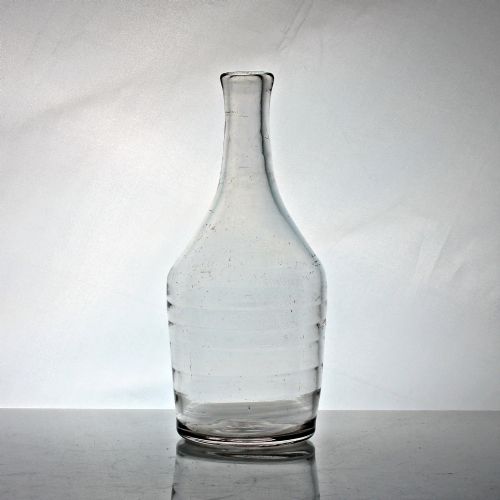
An 18th century decanter spans the Georgian and Regency eras, appearing in diverse forms such as mallet, Prussian, shoulder, and square spirit shapes. These vessels were produced to hold specific contents like port, madeira, gin, or brandy at the dining table.
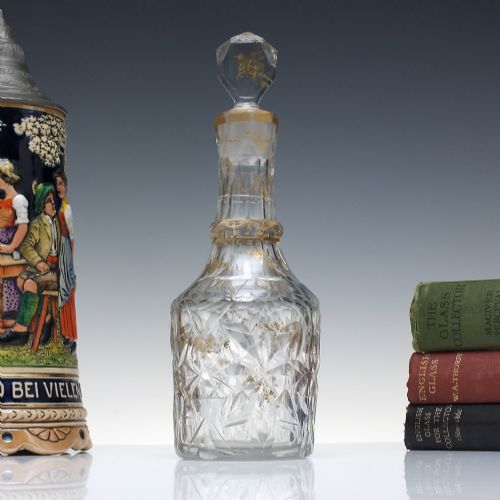
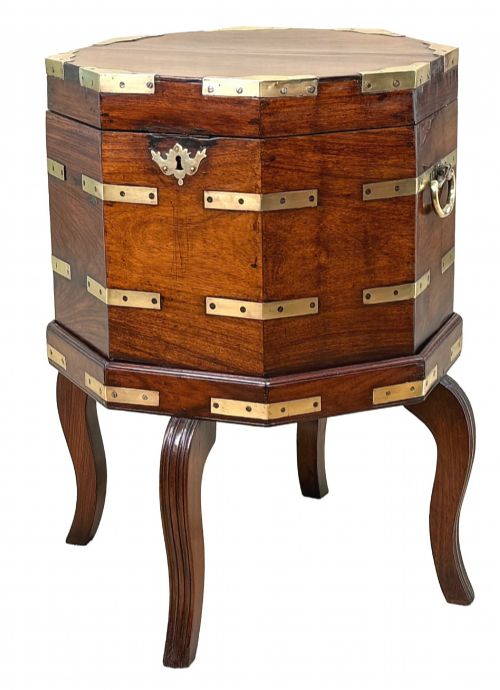
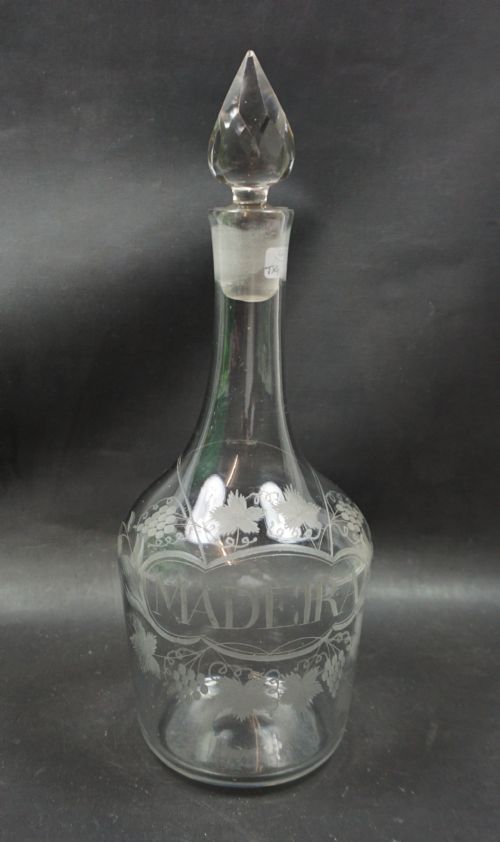
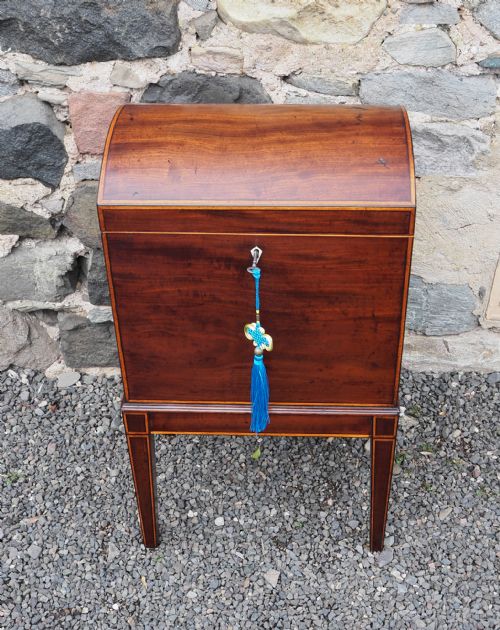
Buyers frequently encounter glass examples featuring cut patterns or engraved labels alongside timber carrying boxes and cellarettes designed to secure multiple bottles. Continental and English workshops both supplied these utilitarian and decorative table pieces.
The surviving selection includes specialised serving bottles and spirit decanters paired with silver labels or funnels. Each form reflects the dining and drinking habits of the Georgian period.
Materials and Technique
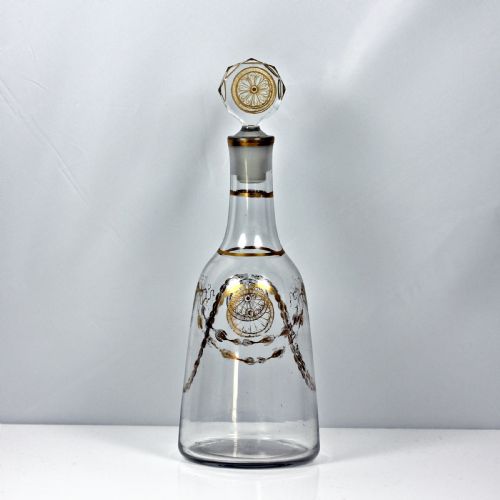
Makers utilised heavy lead glass and potash metal, shaping vessels through free-blowing, moulding, and subsequent wheel-cutting or engraving. Artisans applied gilding and enamel details to specific glass bodies, as seen in pieces attributed to specialised ateliers.
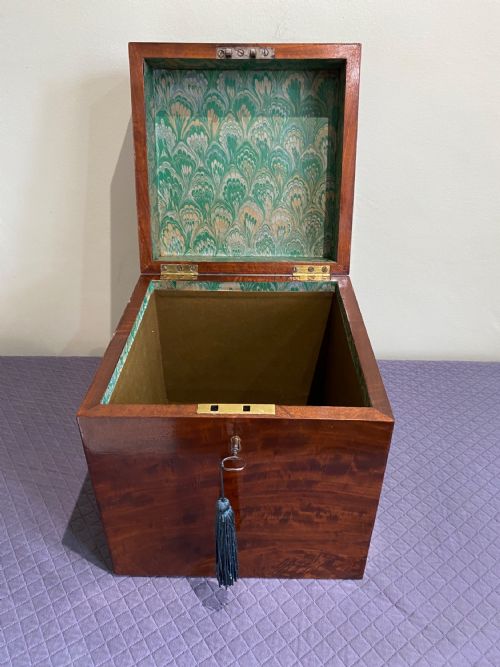
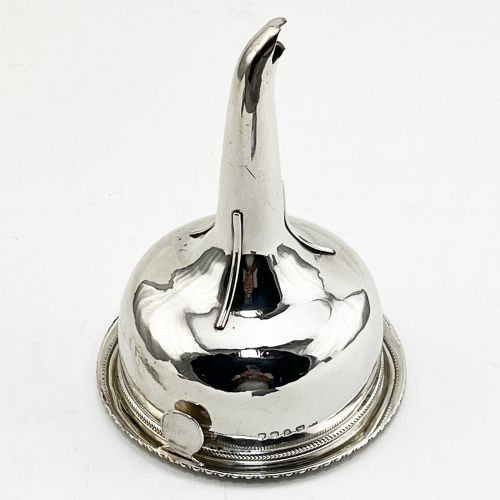
Cabinetmakers constructed companion boxes, cellarettes, and bottle carriers from dense timbers including mahogany, padouk, and oak, often incorporating brass hardware and partitions. Sterling silver and Old Sheffield Plate provided functional mounts, funnels, and hanging labels.
18th Century Decanter Retail Price Guide 2026
Typical asking prices for 18th century decanter among the pieces listed under this phrase on Sellingantiques today, from the lower quarter to the upper quarter. They describe what is for sale here now, not the wider market.
Listings feature lead glass, mahogany, sterling silver, and enamel across English, Irish, and Continental origins from the Georgian era.
Evaluating Execution
Quality rests upon the clarity of the metal, the precision of the glass-cutting, and the depth of wheel engraving. Superior glass vessels display heavy gauge walls and well-formed necks with rings rather than uneven blowing marks or clouding.
For fitted boxes and cellarettes, execution is judged by the integrity of internal dividers, the retention of original brass fittings, and the joinery of the timber. Complete sets retaining matching stoppers and original hardware command greater regard among collectors.
Atelier of James Giles·John Heaney of Dublin·Hester Bateman·Peter and Anne Bateman
The 18th Century Decanter Glossary
- Prussian decanter
- A specific glass vessel form featuring a tall neck with multiple rings and a broad, tapering body designed to sit securely on ship or table. This shape gained popularity during the late Georgian period.
- Lynn rings
- Applied or tool-formed horizontal glass ribs encircling the neck of a decanter to provide a secure grip for pouring. They are frequently found on eighteenth-century shoulder decanters.
- Cellarette
- A lockable timber container or cabinet used for storing wine bottles and decanters beneath the dining room sideboard. They often feature internal partitions lined for insulation.
- Wine funnel
- A small silver or metal funnel fitted with a removable strainer mesh used to decant wine while catching sediment. Eighteenth-century examples often bear hallmarks of notable silversmiths.
- Mallet decanter
- An early glass bottle form characterised by a cylindrical body that widens slightly toward a flat base, resembling a carpenter's mallet. This heavy form dates predominantly to the mid-eighteenth century.
18th Century Decanter: Frequently Asked Questions
How do I date an old decanter?
Dating relies on observing the vessel form, pontil mark, and manufacturing characteristics such as lead content and neck ring configuration. Mid-century mallet shapes differ markedly from late-century Prussian or facet-cut spirit designs.
Matching the style of any accompanying silver labels, stoppers, or fitted mahogany boxes also helps establish a reliable period of origin.
Were these bottles meant for the table?
These vessels served to transfer wine or spirits from bulk storage casks directly to the dining table for serving guests. Their heavy bases helped prevent tipping during transport around the room.
Wealthy households stored them in cellarettes or specialised wooden boxes when not in active use during meals.
What is a spirit decanter?
Spirit decanters were smaller vessels specifically designated for holding potent liquors like brandy, gin, or rum rather than table wines. They often formed part of matched sets housed within portable wooden cases.
Engraved labels attached by small chains identified the specific contents held inside each bottle.
How should I clean glass decanters?
Cleaning requires gentle warm water and mild solutions, avoiding abrasive brushes that can scratch the aged metal surface. Historic glass remains sensitive to sudden thermal shock.
Stoppers should be stored separately or left slightly loose to prevent them from becoming permanently stuck in the neck over time.