




18th Century Copper Box
An 18th century copper box is a small pocket vessel made for snuff, patches, or tobacco, offering tangible Georgian craft.

18th Century Copper Box
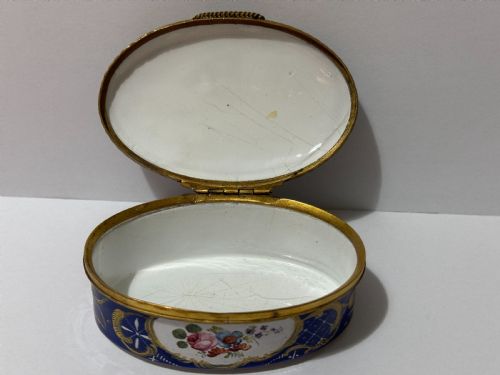
An 18th century copper box encompasses small personal containers including snuff boxes, patch boxes, tobacco boxes, and bonbonnières designed to hold cosmetic patches or tobacco. These objects span English, German, Dutch, and Chinese origins, reflecting international trade and domestic social habits of the Georgian period. Buyers encounter oval and rectangular forms alongside novelty shapes, often featuring hinged lids and delicate metalwork.
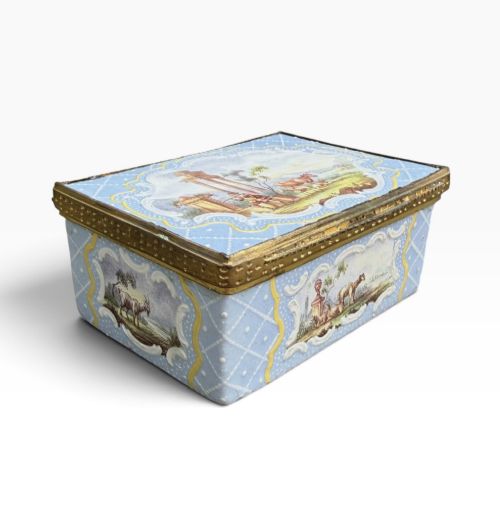
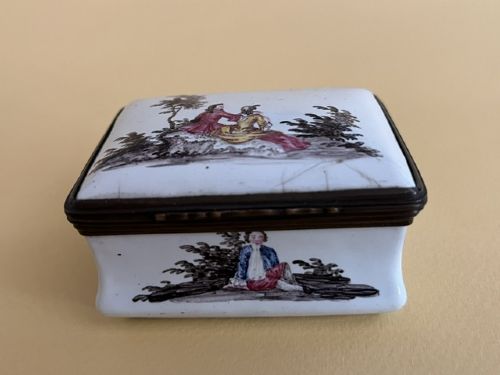
The version most frequently met on this page is the English enamel box, specifically those attributed to Bilston or South Staffordshire workshops from the latter half of the Georgian era. These pieces pair copper bases with opaque white or coloured vitreous enamel surfaces, frequently hand-painted with landscape scenes or inscriptions such as Cheltenham Wells. Alongside these English enamels appear heavier brass and copper tobacco boxes from Dutch and German makers, recording historical events like the Battle of Minden.
How they were made
Makers formed the body of an 18th century copper box by shaping sheet copper or casting brass, often utilising hinged mounts of gilt metal or plain brass to secure the lid. The metal surfaces provided a stable foundation for the application of vitreous enamel, which was fused to the copper through firing in a kiln.
Artisans applied enamel in powdered form and fired it multiple times to achieve a smooth opaque ground, subsequently hand-painting miniature scenes, portraits, or topographical views directly onto the surface. German and Dutch tobacco boxes relied instead on heavy engraving and embossing directly into the copper and brass plates to record dates and battle scenes.
Listings feature items spanning the 18th Century, Georgian period, and early 19th Century.
What varies in quality
The refinement of the hand-painted decoration determines the visual appeal of an enamel box, separating simple repeating floral motifs from finely detailed miniature pastoral scenes with musicians in parkland. Crispness in the metal hinge work and the preservation of the original gilding also distinguish superior examples.
Depth of relief and clarity of line separate utilitarian tobacco tins from presentation pieces. Boxes that retain their complete enamel surfaces without extensive restoration or hairline cracking represent the higher end of the surviving material.
The 18th Century Copper Box Glossary
- Patch box
- A small pocket container fitted with an interior mirror, used by Georgians to hold small adhesive cosmetic patches made of silk or velvet. These boxes often feature enamel lids decorated with mottoes or views.
- Snuff box
- A small lidded container designed to hold powdered tobacco for nasal ingestion. They were carried by both men and women as fashionable social accessories throughout the eighteenth century.
- Vitreous enamel
- A material made by fusing powdered glass to a metallic substrate, such as copper, at high temperatures. This technique created a smooth, glossy, and durable coloured surface.
- Bonbonnière
- A small ornamental box created specifically to hold sweets or sugarplums. In the eighteenth century, these novelty vessels took whimsical shapes alongside traditional round and rectangular formats.
18th Century Copper Box: Frequently Asked Questions
What did people keep inside an 18th century copper box?
These small vessels held substances and personal items suited to eighteenth-century social life, most commonly dry snuff, tobacco, or small cosmetic silk patches for the face.
Some specialised forms also served as bonbonnières for sweetmeats or functioned as domestic storage, such as hanging candle or spill boxes.
How do I date an 18th century copper box?
Dating relies on examining the manufacturing style, the hinge construction, and the specific composition of the enamel or metal engraving. English enamel examples often correspond to the reigns of George III and the production peaks of Staffordshire potteries.
Inscribed names like Cheltenham Wells or commemorative battle dates provide additional historical anchors for establishing the period of creation.
Were these boxes made only in England?
While the Staffordshire and Bilston regions produced a large volume of enamelled copper patch boxes, production was international. Continental workshops in Germany and the Netherlands manufactured heavy brass and copper tobacco boxes.
Additionally, pieces such as Beijing enamel boxes demonstrate that similar vitreous coating techniques were practised within Qing Dynasty workshops.
How should I care for an antique enamel box?
Enamel is essentially glass fused to metal, making it vulnerable to sharp impacts, drops, and sudden thermal shock. Cleaning requires only a soft, dry cloth to remove dust without disturbing fragile surfaces.
Keep these boxes away from high-moisture environments and harsh chemical cleaners to protect the delicate hand-painted miniatures and original metal gilding.