
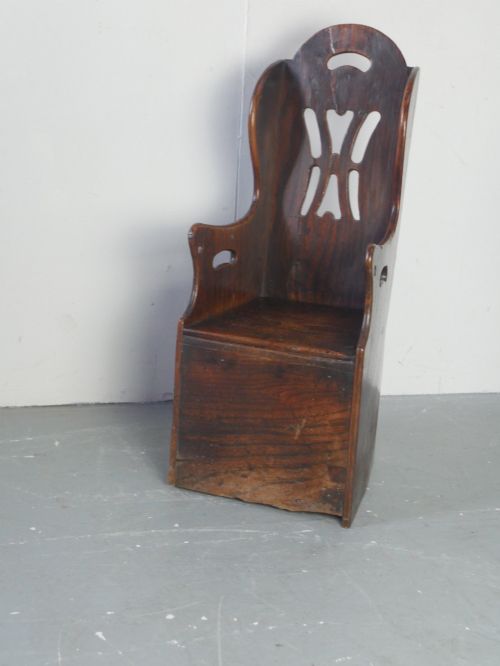
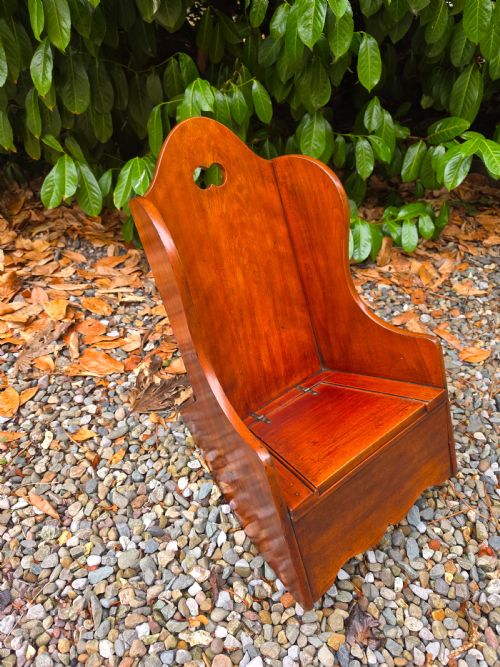


18th Century Childs Chair
These 18th century childs chair pieces are historic small-scale seats from the Georgian era that collectors prize for vernacular charm.
18th Century Childs Chair
When you search for an 18th century childs chair, you encounter miniature seating spanning high chairs, armchairs, rocking chairs, and stick-backed Windsors. The pieces reflect the domestic life of the Georgian period, rendered in scaled-down proportions for children of the era.
The versions most frequently met on this page include country-made windsor chairs in elm and ash, alongside mahogany high chairs and vernacular rocking pieces. Makers applied the same construction methods to these small items as they did to full-sized furniture.
Regional styles such as Welsh country and Dutch folk art appear among the offerings, providing distinct regional characteristics. These variations show how local workshops adapted standard domestic forms for young occupants.
Materials and construction
Local timbers dominate the construction, with elm, ash, yew, fruitwood, and oak selected for strength and bendability. Craftsmen often combined multiple woods within a single piece, using fruitwood or elm for seats and ash for spindles.
Stick-back and Windsor techniques required skilled boring and wedging to secure uprights into solid wooden seats. Joiners also utilised traditional mortise and tenon joints for frames, while brass fixings occasionally appear on complex high chair configurations.
The listings show materials including elm, mahogany, oak, ash, brass, yew, fruitwood, and tapestry across Georgian and 18th century periods.
What separates examples
Quality rests upon the integrity of the timber selection and the harmony of the miniature proportions. Superior examples retain their original surfaces and structural tightness without excessive timber replacement.
The sophistication of the turning on spindles and legs distinguishes workshop output, ranging from basic folk art execution to refined cabinetmaker standards. Retaining original elements such as rocking shoes or stands elevates the standing of a piece.
The 18th Century Childs Chair Glossary
- Windsor chair
- A chair built with a solid wooden seat into which the legs and back sticks are directly inserted. These sturdy country seats frequently feature bentwood bows.
- Crinoline stretcher
- A bowed stretcher connecting the legs of a chair near the base, providing extra rigidity. The curved shape resembles the undergarment of the period.
- Stick back
- A chair design where turned wooden spindles form the backrest rather than a solid carved splat. This method provides lightweight strength.
- High chair
- Elevated seating designed to bring a child up to table height. Examples often include integrated footrests or trays.
18th Century Childs Chair: Frequently Asked Questions
How were these chairs used?
These miniature seats served everyday domestic functions in Georgian households, accommodating young children at meals or by the hearth.
High chairs raised infants to table level, while rockers and armchairs provided safe seating in family living spaces.
How do I live with one?
Place these small seats where they can be appreciated visually, away from direct heat sources and strong sunlight that dries old timber.
Due to their historic construction and diminutive scale, they suit display rather than heavy daily use by modern children.
How do I tell periods apart?
Examination of tool marks, timber choice, and construction joints helps indicate the approximate manufacturing era. Country pieces often display greater variation than urban workshop output.
Stylistic cues link pieces to specific decades, such as George III traits or distinct regional traditions like Welsh stick chairs.