




Miniature Rustic Chair
These miniature rustic chair examples are small vernacular seats made for children, offering centuries of country craftsmanship in miniature form.
Miniature Rustic Chair
The forms span straightforward country seats to Windsor armchairs and spindle backs, often produced in domestic regional workshops. Pieces range from simple elm and ash country chairs to seventeenth- and eighteenth-century pine or oak examples with folk art character.
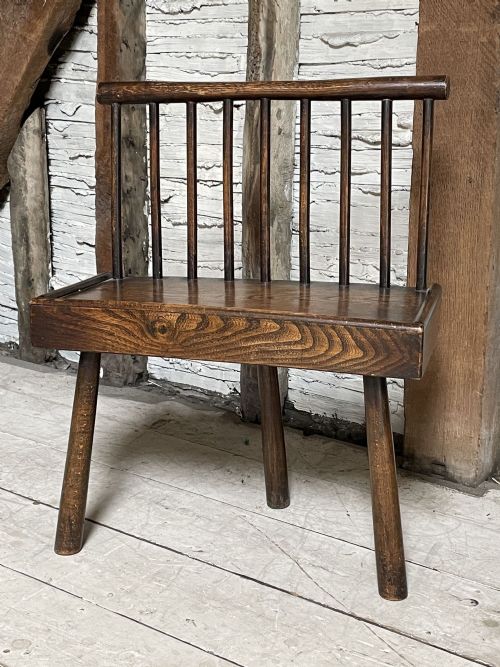
The selection encompasses specific seating types such as child's settles and reclining children's armchairs, capturing the domestic life of the Victorian era and earlier periods. Each miniature rustic chair reflects the practical need for durable children's furniture in rural households.
Materials and construction
Maker traditions relied on robust local timbers, with elm, ash, oak, pine, and beech appearing frequently across the inventory. Craftsmen utilised yew wood and birch for grain and strength, shaping solid seats and slender spindles by hand.
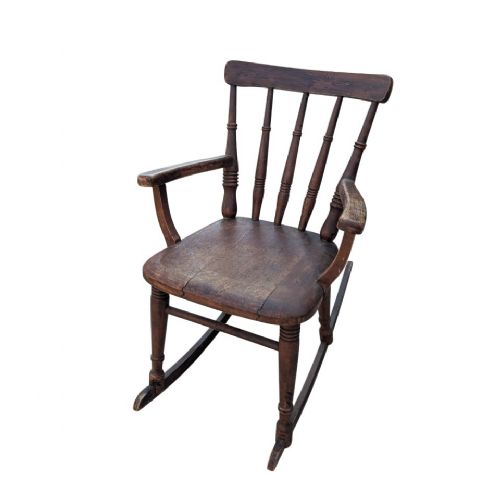
Construction techniques follow vernacular woodworking, combining pegged joints, bentwood components for Windsor hoops, and stickback frames. Surfaces are often finished simply with wood stain or left in the natural timber state to age.
Tiny rockers let children participate in the Victorian evening custom of sitting by the hearth just like the adults.
Assessing quality and character
Quality rests in the balance of the proportions and the honesty of the materials, where a well-turned spindle or a deeply saddled solid elm seat elevates a piece. Early examples show greater individual expression through hand-carved details and integrated folk art elements.
The integrity of the structural joints and the retention of original surface patination distinguish finer items from later or heavily restored pieces. Variations in timber selection, from plain pine to figured yew wood, create distinct tiers within the category.
The Miniature Rustic Chair Glossary
- Windsor
- A chair built with a solid wooden seat into which the legs and back sticks are tenoned directly. This method provides sturdy construction suited to everyday country use.
- Vernacular
- Objects designed by local tradesmen for practical domestic utility rather than following formal academic design rules. These pieces utilise regional timber and traditional workshop methods.
- Stickback
- A seating form featuring slender turned wooden rods inserted into the seat and top rail to form the backrest. It represents a lighter variation of traditional Windsor construction.
- Settle
- A wooden bench featuring a high back and solid arms designed to block draughts in older rooms. Miniature versions adapt this form specifically for children.
- Spindle
- A cylindrical or tapered wooden rod turned on a lathe to form part of a chair back. Their varying thickness and profiles help date and localise country furniture.
Miniature Rustic Chair: Frequently Asked Questions
What age are miniature rustic chairs for?
These small seats were constructed for children to use in domestic settings during past centuries. Their dimensions reflect the smaller scale intended for young occupants.
They served as functional furniture in nurseries, parlours, and farmhouses rather than being mere decorative models. Surviving pieces show genuine wear from active daily use.
How do I identify a Windsor style?
A Windsor chair is defined by its solid plank seat that acts as the central anchor for all other components. The legs and back pieces are fitted straight into bored holes rather than into an independent frame.
Child versions replicate this sturdy architecture on a reduced scale, often featuring steam-bent bows and sculpted armrests.
Are these chairs comfortable for children today?
While structurally sound when properly maintained, these items are primarily antique furnishings intended for display or careful domestic use. Their historic dimensions and rigid wooden construction differ significantly from modern ergonomic seating standards.
Collectors generally appreciate them as historical artefacts and decorative interior pieces rather than practical everyday furniture for children.
What woods were commonly used?
Country furniture makers relied heavily on accessible native hardwoods and softwoods such as elm, ash, oak, and pine. Beech and birch were also utilised for turned components like legs and spindles.
Finer examples occasionally feature yew wood, prized for its rich grain and warm tone in country workshops.