
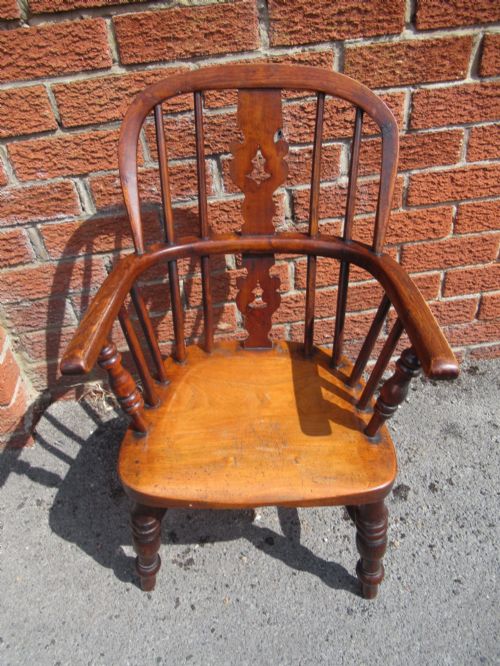
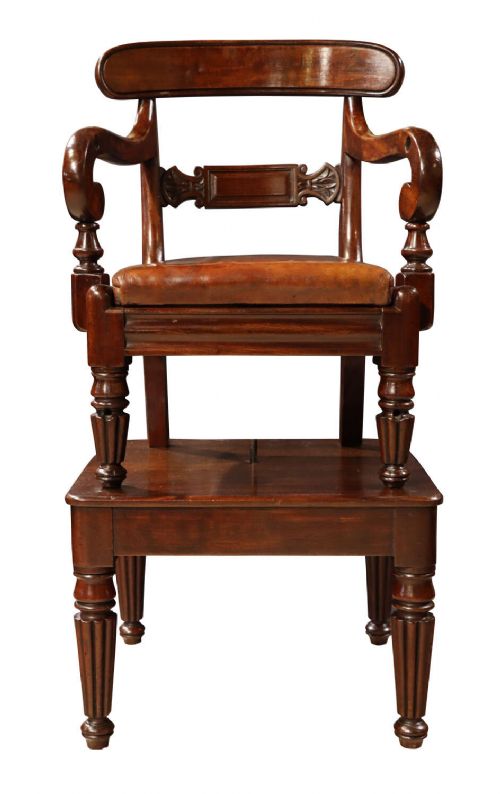


Carved Wooden Child Chair
A carved wooden child chair brings miniature scale and domestic history together, offering sturdy timber framing built for past generations.
Carved Wooden Child Chair
A carved wooden child chair is a scaled-down domestic seat created for children, appearing in forms such as armchairs, rocking chairs, high chairs, and commodes. These pieces span periods from the eighteenth century through the Victorian era and into the early twentieth century, showing regional vernacular designs as well as formal stylistic revivals.
Materials and construction methods
These items rely heavily on hardwoods such as mahogany, oak, walnut, and elm, chosen for their durability in daily domestic use. Joinery techniques vary from traditional Windsor spindle work to sturdy pegged frames and carved backsplats.
Seating surfaces incorporate woven cane, leather, fabric, and bergere panels, while specialised mechanisms such as metamorphic high chair conversions demonstrate the ingenuity applied to juvenile furniture.
The inventory records vernacular forms alongside Queen Anne, Regency, William IV, and Victorian style influences.
Distinguishing quality across examples
Quality rests upon the selection of timber and the crispness of any carved detailing, distinguishing simple utilitarian items from bespoke cabinetwork made for affluent households. The integrity of original joinery and the survival of natural patination play central roles in establishing the character of each piece.
Proportion and structural balance also separate standard workshop output from exceptional survivals, particularly in metamorphic designs and complex Windsor forms where mechanical parts or turned spindles must remain secure and well-aligned.
The Carved Wooden Child Chair Glossary
- Windsor chair
- A wooden chair built with a heavy solid wooden seat into which the legs and back spindles are direct-tenoned. This vernacular method provides exceptional stability for juvenile seating.
- Metamorphic
- Describing furniture designed to transform from one functional form to another, such as a high chair that converts into a low chair and play table. It relies on hinges and pivots.
- Bergere
- A type of upholstered wooden armchair with enclosed sides of woven cane or wickerwork. In children's seating, this material adds a lighter decorative texture to mahogany frames.
- Commode chair
- A seated piece of furniture enclosing a chamber pot, often disguised with a lid or front panel. In child chairs, these provided practical nursery sanitation during the Victorian period.
- Spindle back
- A chair back constructed from a series of slender turned wooden rods. This construction appears frequently in country vernacular and Windsor pieces across the eighteenth and nineteenth centuries.
Carved Wooden Child Chair: Frequently Asked Questions
How were these high chairs used?
These elevated seats allowed children to join adults at the dining table during family meals. Many incorporated trays, footrests, or metamorphic designs to adapt as the child grew.
Some examples also served functional roles within the nursery, keeping young children secure while parents managed household tasks.
Are these chairs safe for daily use?
While these items were constructed for genuine use by children in past centuries, their historical joinery requires careful assessment today. Most collectors treat them as decorative objects or display pieces rather than nursery furniture for modern toddlers.
Structural stability can vary significantly across different timber types and periods, particularly in metamorphic mechanisms or slender spindle-back designs.
How do I date a child chair?
Dating relies on identifying the prevailing timber, stylistic cues, and construction methods characteristic of specific eras. For instance, Georgian pieces often feature solid mahogany or elm with vernacular turning, whereas Victorian examples frequently showcase elaborate carving or ash Windsor framing.
Hardware, upholstery remnants, and wear patterns also offer clues to the approximate decade of manufacture.
What is a metamorphic high chair?
A metamorphic high chair is a convertible piece of nursery furniture engineered to shift between an elevated seating position and a low chair with a play desk. This clever dual-purpose design saved space in historical homes.
These pieces utilise hidden pivots, sliding tracks, or detachable bases to achieve the transformation.