
18th Century Bedroom Storage
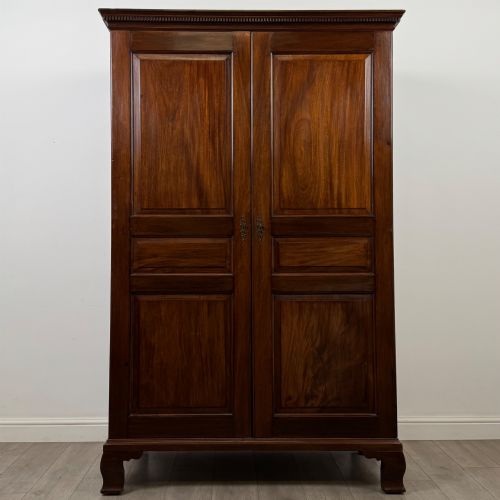
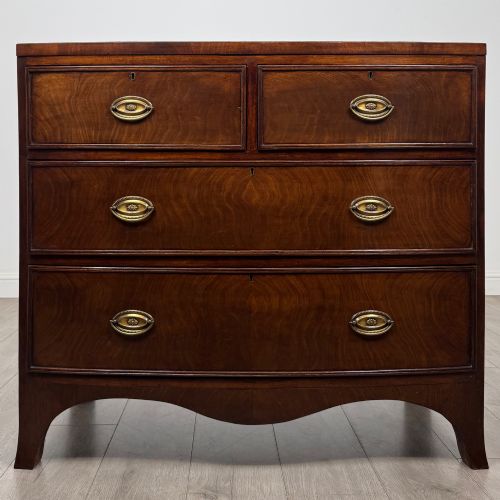
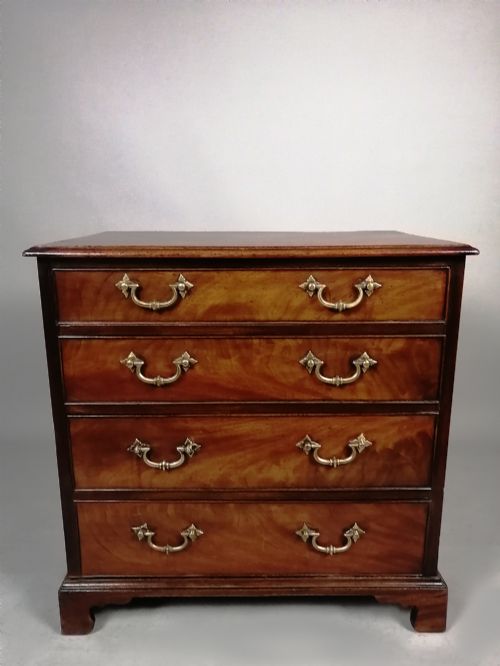
These pieces of 18th century bedroom storage provide heavy timber drawers and wardrobes built to hold linen and clothes with quiet authority.
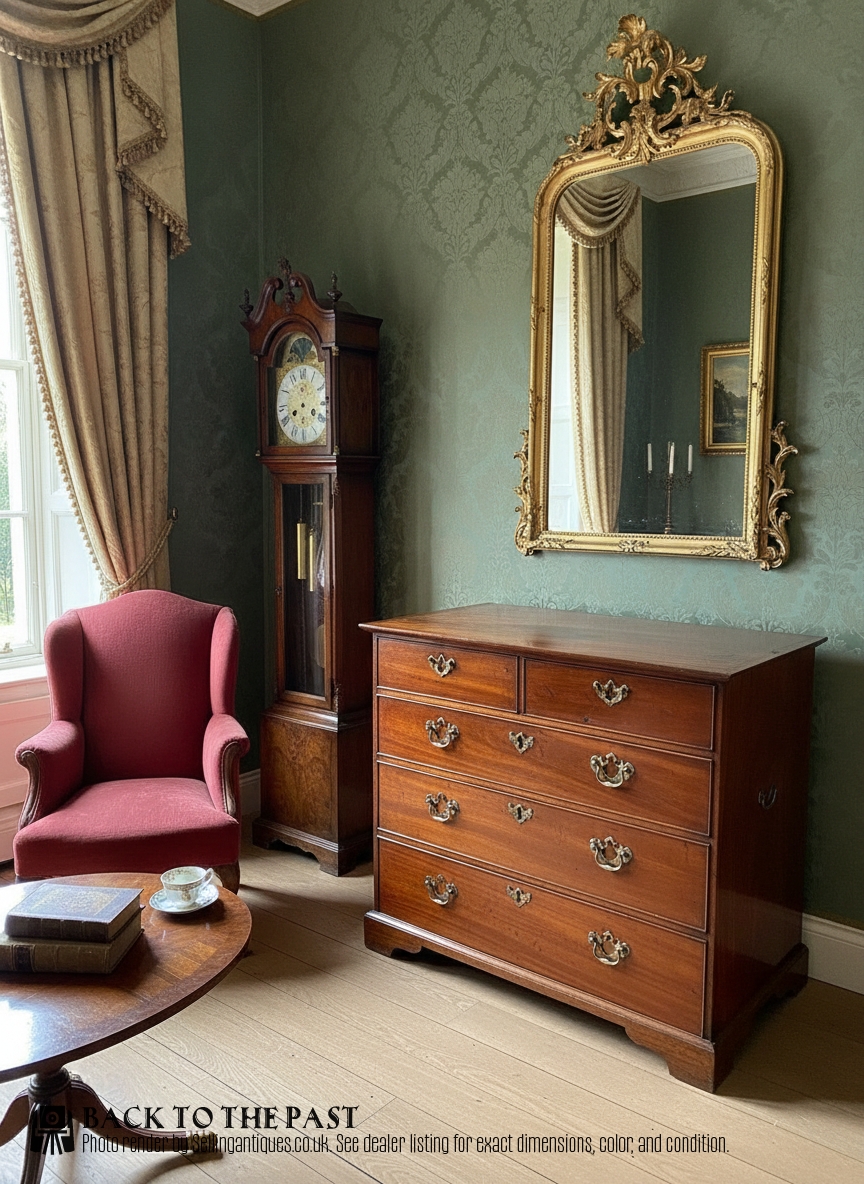
18th Century Bedroom Storage
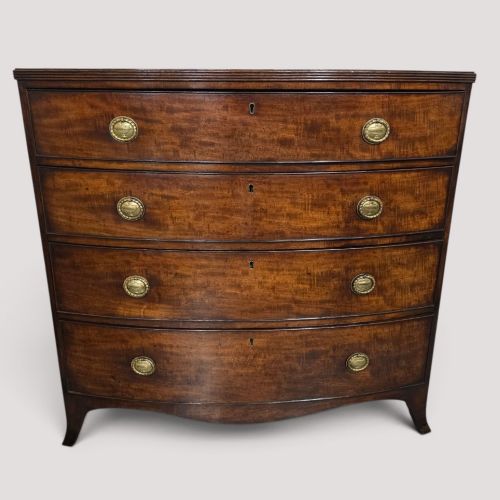
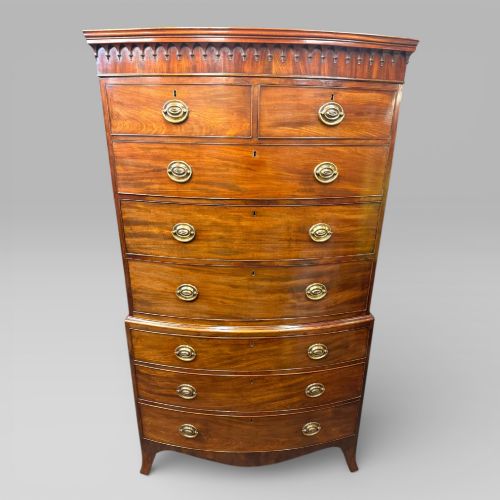
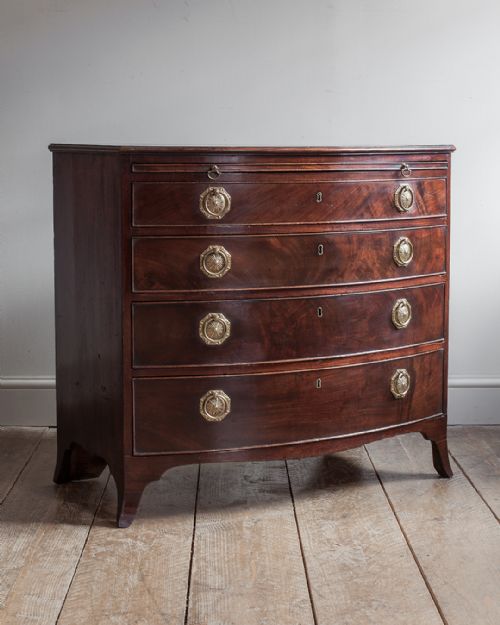
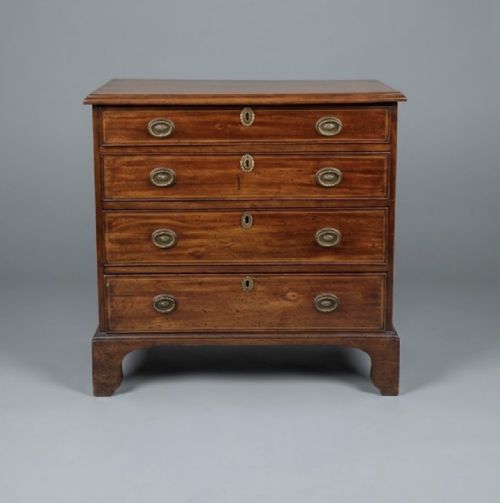
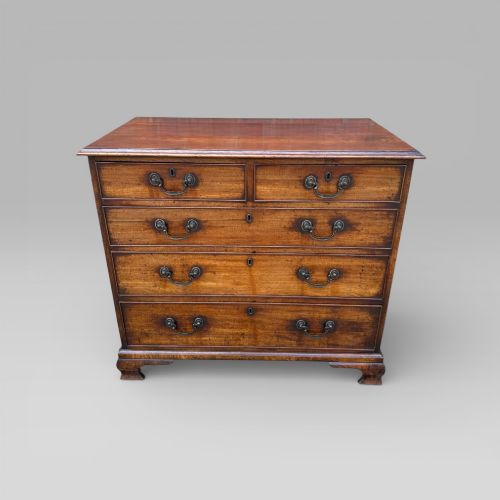
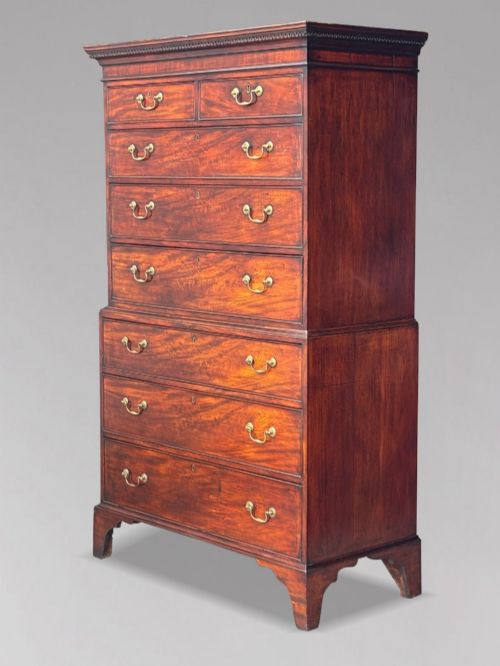
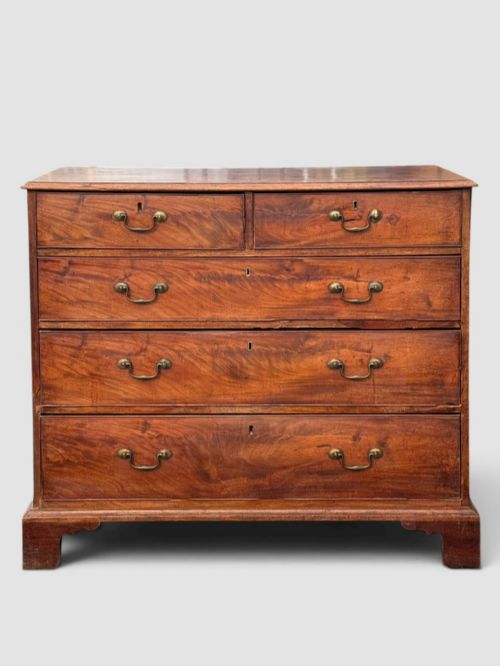
When you search for 18th century bedroom storage, you encounter practical timber furniture designed for sleeping quarters, predominantly taking the form of chests of drawers, chests on chests, wardrobes, and bedside cabinets.
The pieces on this page span the 18th century, the Georgian period, and the early 19th century, reflecting domestic storage needs across several reigns.
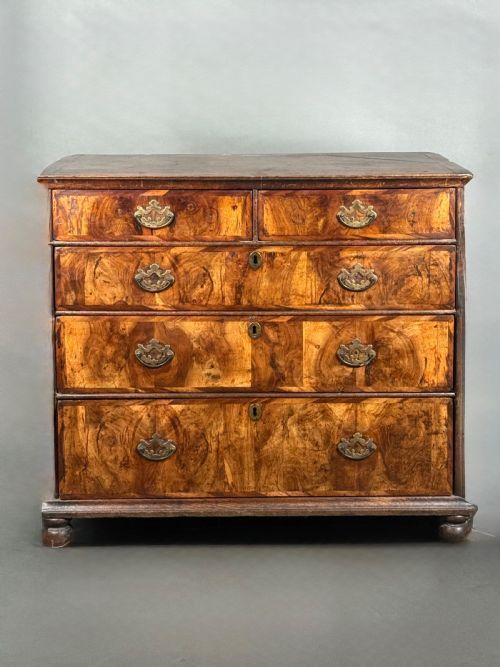
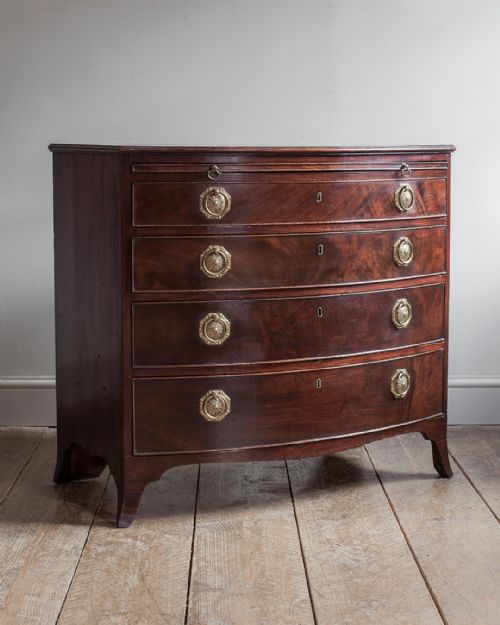
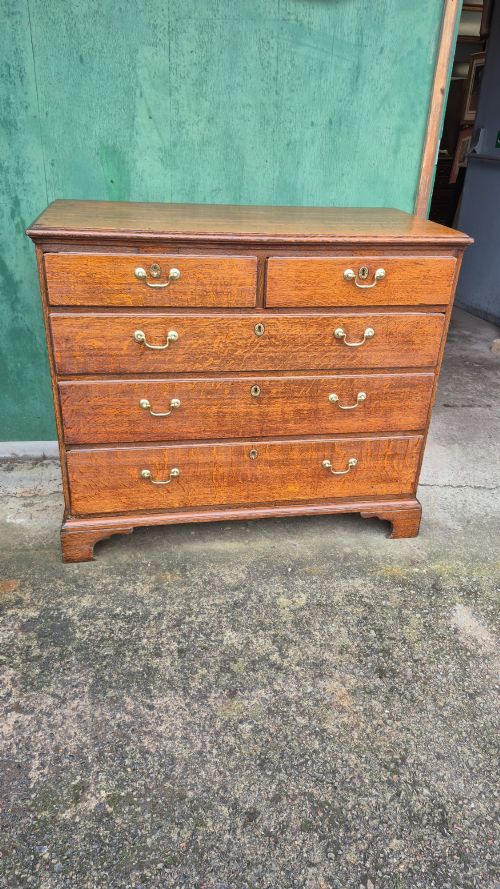
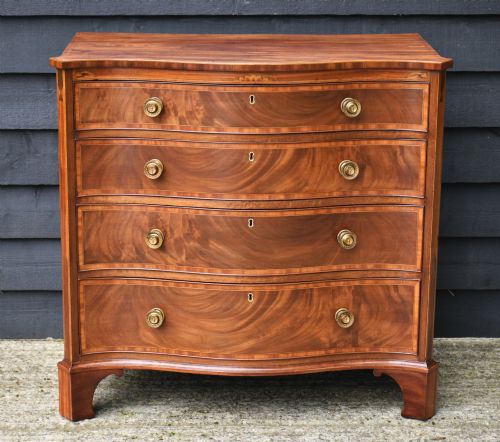
You meet straightforward oak and walnut pieces from the earlier decades alongside refined mahogany serpentine and bow-front chests from the later Georgian era.
Materials and construction methods
Cabinet makers utilised dense native and imported timbers, shaping solid and veneered mahogany, oak, walnut, cherrywood, satinwood, and pine into rigid carcases.
Joinery relied on tight dovetail joints for drawer construction and sturdy framing, complemented by cast brass handles and escutcheons secured to the drawer fronts.
Listings span oak, walnut, mahogany, cherrywood, satinwood, pine, and cedar wood, paired with brass hardware.
Distinctions in craftsmanship
The grade of timber selection largely dictates the standing of a piece, separating plain utility furniture from examples utilising highly figured walnut or richly grained mahogany crossbanding.
Execution of secondary details, such as the subtlety of serpentine or oxbow shaping on drawer fronts and the patination developed over centuries, marks the difference between standard production and master carpentry.
J Moorcroft
The 18th Century Bedroom Storage Glossary
- Chest on chest
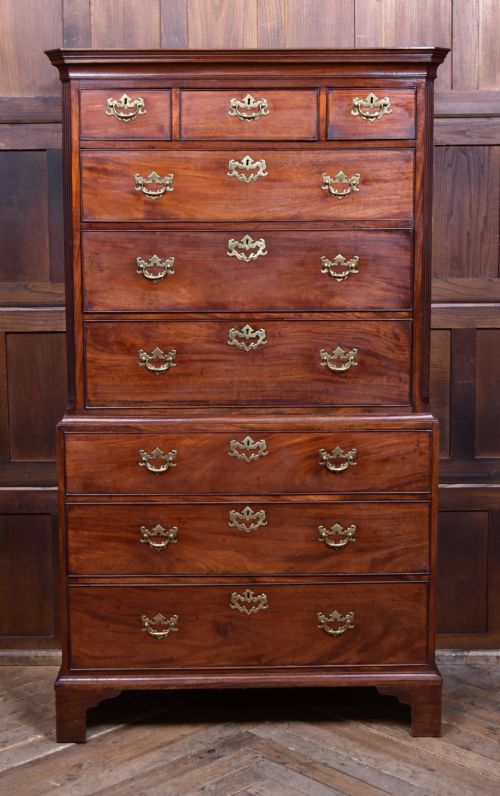
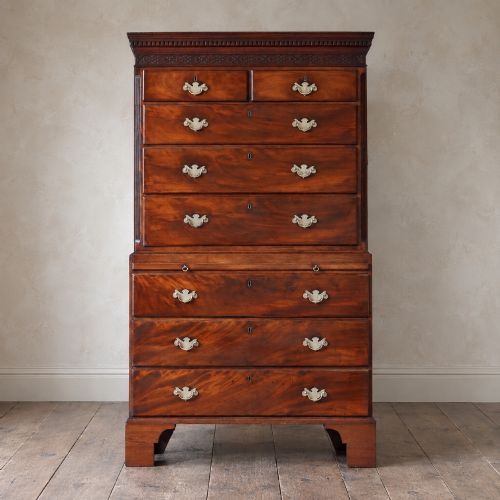
- A tall storage unit comprising one chest stacked directly on top of another, often called a tallboy. This form maximises vertical storage capacity while maintaining a compact footprint.
- Brushing slide
- A pull-out shelf integrated into the upper section of a chest, historically used for folding clothes or brushing garments. It sits neatly between the top drawers when pushed in.
- Serpentine
- A curved front profile that bends outward at the centre and inward toward the edges. This fluid line requires advanced woodworking skill to execute properly.
- Crossbanding
- A narrow strip of veneer laid around the border of a drawer front or top with the grain running perpendicular to the surrounding wood. It frames the primary wood panels for decorative contrast.
- Commode
- A low cabinet with drawers or doors, originating from French forms. These items often feature shaped cherrywood or mahogany construction.
18th Century Bedroom Storage: Frequently Asked Questions
What pieces count as 18th century bedroom storage?
The category encompasses chests of drawers, chests on chests, gentlemen's wardrobes, commodes, and bedside cabinets produced during the 1700s and early 1800s.
These utilitarian items were built to hold garments, linens, and personal possessions before fitted wardrobes became standard in homes.
How do walnut and mahogany pieces differ?
Walnut dominates the earlier decades of the century, offering rich, figured grain patterns and warm tones that often feature crossbanding or featherbanding details.
Mahogany rises to prominence in the later Georgian period, providing a denser surface that allowed for sharper carved mouldings and deep red patination.
What is a brushing slide used for?
A brushing slide functions as a pull-out shelf located just beneath the top surface of a chest.
In period use, individuals pulled it out to fold laundry or brush garments without laying them flat on the main timber top.
How do I spot a chest on chest?
A chest on chest consists of two separate carcass sections built to stack together, with a smaller chest resting on a wider base chest.
This format provides extensive vertical storage space while keeping the drawer configuration accessible from standing height.