

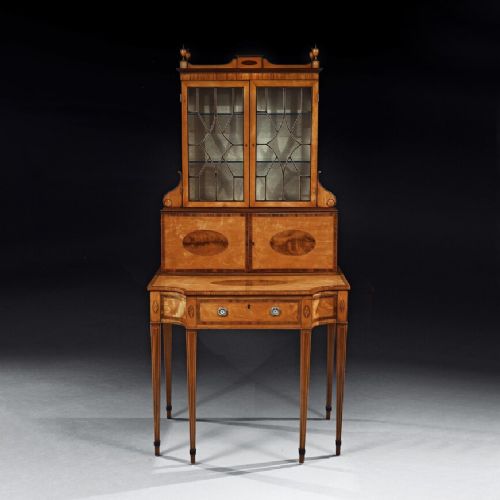


George III Satinwood Bureau
A george iii satinwood bureau brings warm timber tones and refined writing compartments to a room, offering both a practical desk and a distinguished focal point.
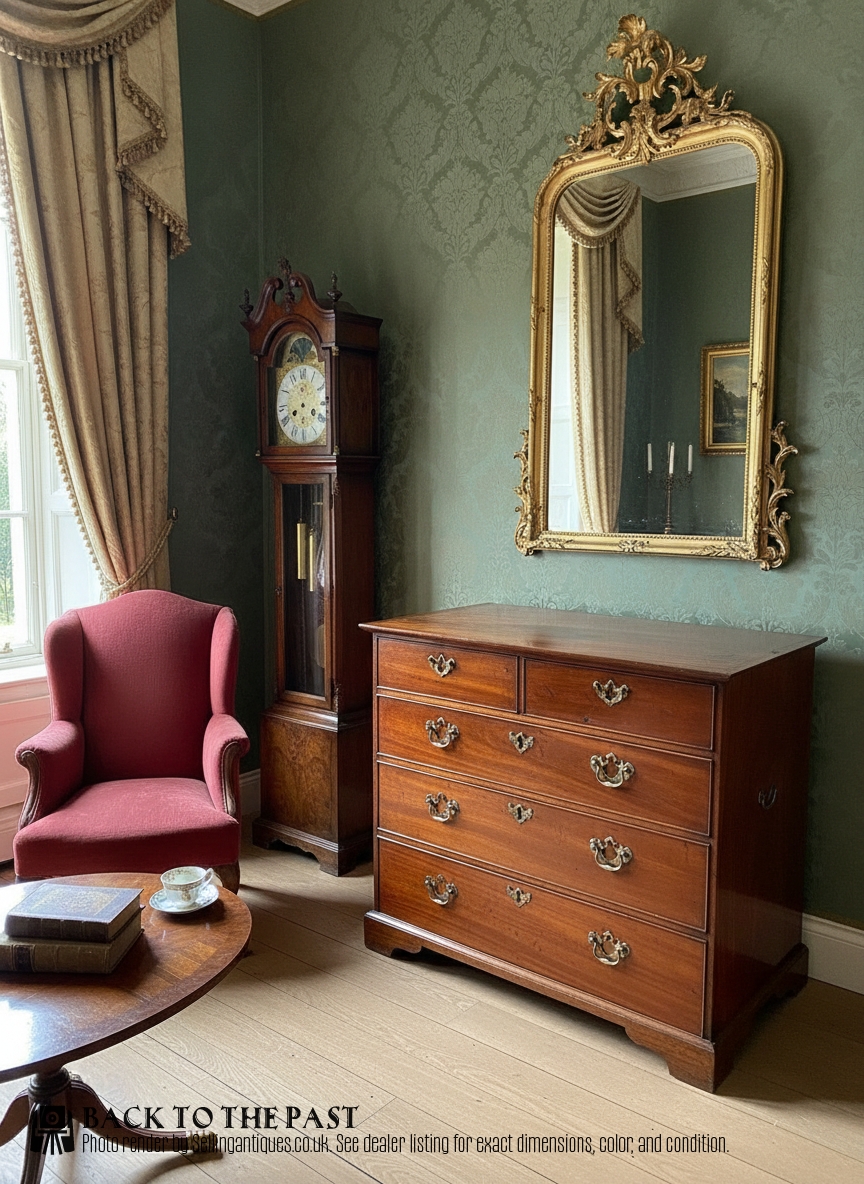
George III Satinwood Bureau
A george iii satinwood bureau combines practical writing compartments with rich decorative timber work characteristic of the Georgian period and later revival eras. Buyers searching for a george iii satinwood bureau encounter sophisticated writing furniture designed for private correspondence and estate management.
The pieces on this page span the eighteenth century and the nineteenth century, encompassing formal writing cabinets, bureau bookcases, and compact bonheur du jour forms. Satinwood surfaces frequently appear alongside mahogany, rosewood, and sabicu timbers, often enriched with detailed inlay work.
While traditional drop-front bureaux form part of the selection, related writing desks and cylinder secretaire cabinets also appear within the evidence. These varied forms share a reliance on figured veneers and refined proportions suited to period interiors.
Materials and construction methods
Inlay and banding techniques defined the Neoclassical and Sheraton styles, using dark woods to frame golden satinwood panels on drawer fronts and writing surfaces. Secondary timbers and hand-cut dovetails provide structural integrity to the interior compartments and drawer construction.
George III Satinwood Bureau Retail Price Guide 2026
Typical asking prices for george iii satinwood bureau among the pieces listed under this phrase on Sellingantiques today, from the lower quarter to the upper quarter. They describe what is for sale here now, not the wider market.
Listings span the eighteenth century, the nineteenth century, and specific revival periods, incorporating satinwood, mahogany, rosewood, and sabicu.
Assessing quality and execution
The sophistication of the timber selection dictates the visual impact, distinguishing modest utility pieces from highly figured cabinet work with balanced grain patterns. Rich contrast between satinwood veneers and darker banding demonstrates greater ambition in the workshop.
Interior architecture reveals the maker's hand through the complexity of pigeonholes, small drawers, and central doors within secretaire sections. Smooth mechanical action in cylinder desks and drop fronts separates superior cabinetmaking from standard production.
The George III Satinwood Bureau Glossary
- Satinwood
- A dense, durable tropical timber with a lustrous golden-yellow sheen that catches light from different angles. This wood forms the primary decorative surface for high-status Georgian and revival furniture.
- Bureau
- A sloping front desk that opens to reveal a fitted interior of small drawers and pigeonholes. Below the writing flap, several horizontal drawers provide storage.
- Secretaire
- A piece of furniture containing a pull-out drawer or drop-front flap that conceals a writing surface and small compartments. This versatile form allowed a cabinet or bookcase to double as a desk.
- Bonheur du Jour
- A light lady's writing desk featuring a small tiered superstructure with shelves and drawers above the main work surface. Introduced in France, this delicate form gained popularity in Georgian England.
- Sabicu
- A heavy, durable dark wood resembling mahogany, used for structural elements and contrasting accents in eighteenth-century cabinet work. It provides robust stability alongside decorative veneers.
- Inlay
- A technique where contrasting pieces of wood or other materials are inserted into depressions within a solid timber base to create decorative patterns.
George III Satinwood Bureau: Frequently Asked Questions
How do I care for satinwood?
Satinwood surfaces require protection from direct sunlight and excessive heat to prevent the delicate golden veneers from drying or fading.
Periodic polishing with appropriate natural waxes maintains the timber's characteristic lustre without building up heavy residues.
Are these desks practical for daily use?
Many pieces provide functional writing surfaces and organised storage compartments that suit contemporary laptop use or letter writing.
Interior configurations offer numerous small drawers and pigeonholes for organising modern stationery and small items.
What distinguishes Sheraton Revival pieces?
Sheraton Revival furniture dates from the late nineteenth century and reinterprets eighteenth-century neoclassical designs with lighter proportions and delicate satinwood veneers.
These later interpretations reflect Victorian and Edwardian admiration for Georgian elegance and refined cabinetwork.