


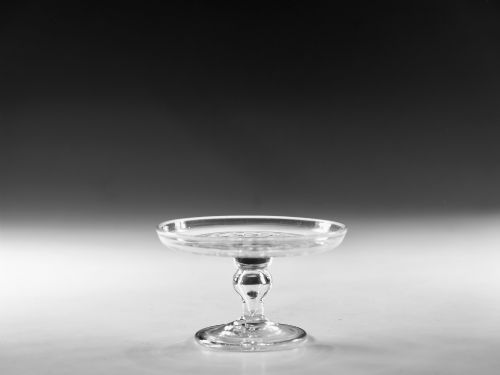


18th Century Baluster Glass
These heavy, tactile 18th century baluster glass pieces offer collectors solid Georgian drinking vessels formed from rich lead crystal.
18th Century Baluster Glass
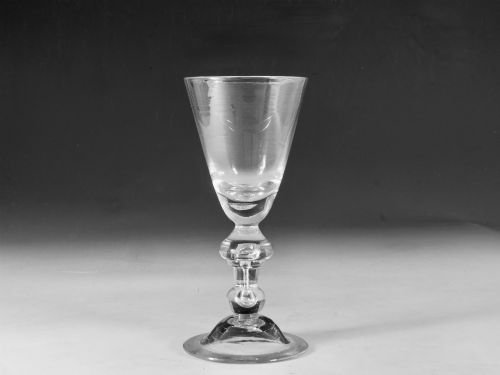
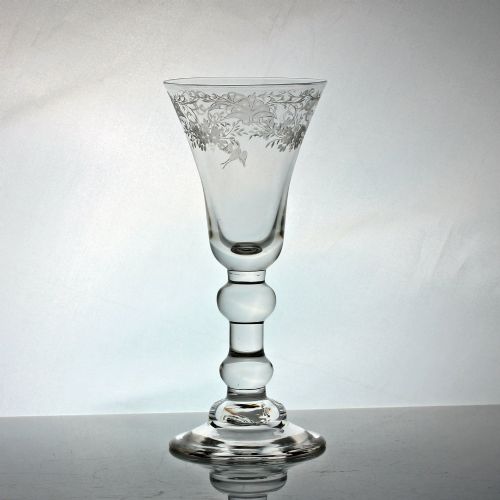
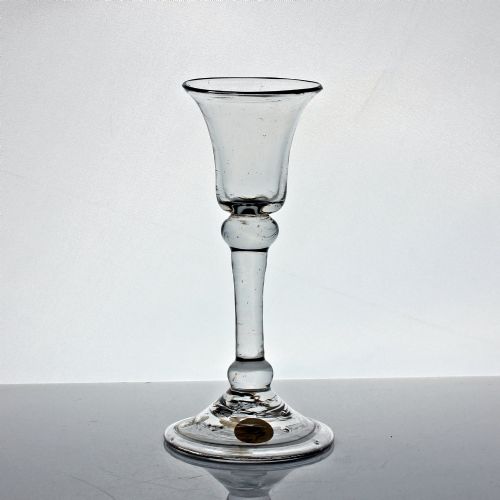
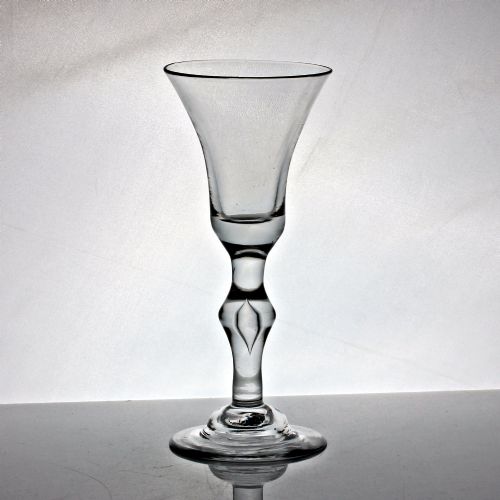
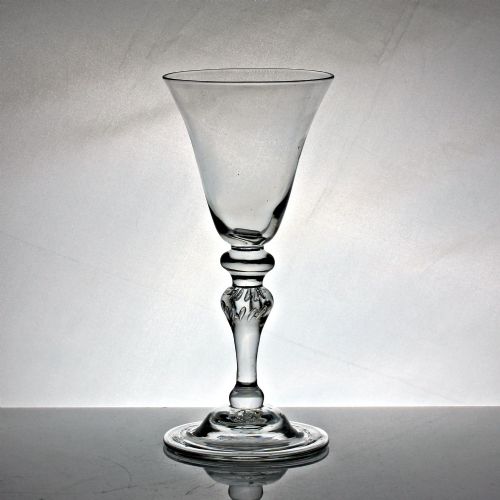
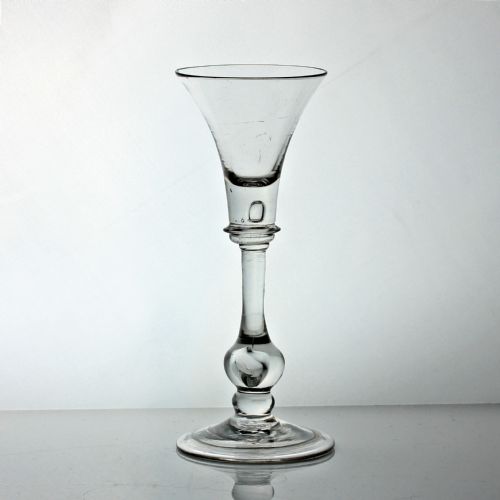
An 18th century baluster glass brings substantial weight and sturdy proportions to the table, usually taking the form of a wine glass, dram glass, or goblet from the Georgian period.
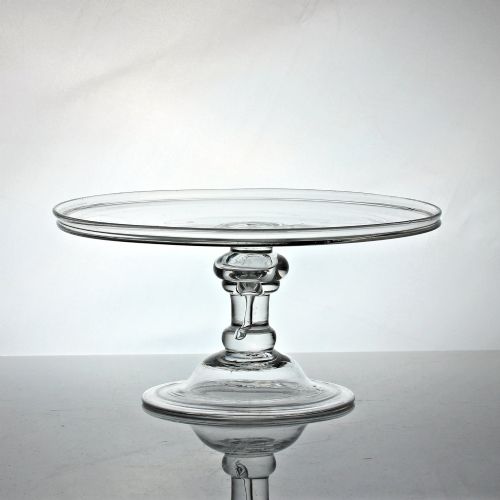
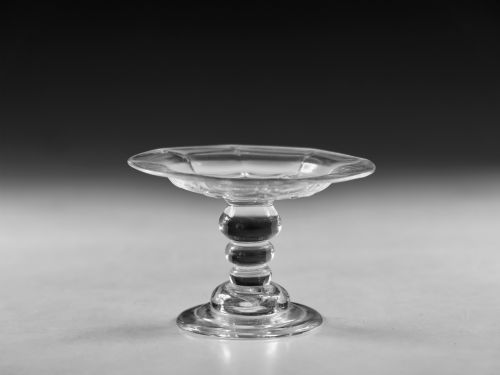
The objects seen here span serveware like tazzas and patch stands alongside various stemware, with the wine glass remaining the most frequent form encountered by collectors.
Moulded and shaped during the reigns of Queen Anne and George II, these drinking vessels display robust stems and deep bowls that reflect early British glassmaking traditions.
Materials and formation
Makers utilised lead glass, flint glass, and clear lead crystal to achieve high refractive index and heavy handle.
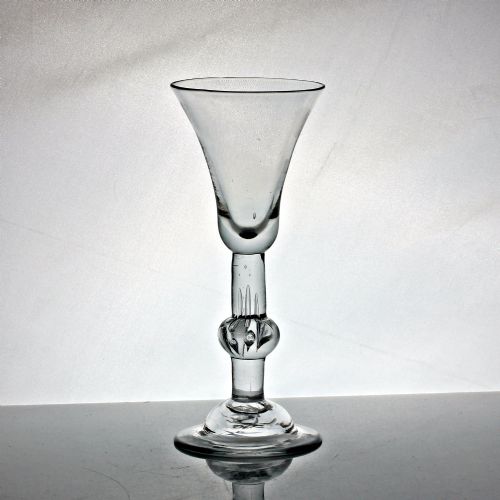
The characteristic stems were shaped by hand, incorporating knops, tears, and balustroid profiles that required considerable skill from the glasshouse workers.
18th Century Baluster Glass Retail Price Guide 2026
Typical asking prices for 18th century baluster glass among the pieces listed under this phrase on Sellingantiques today, from the lower quarter to the upper quarter. They describe what is for sale here now, not the wider market.
Toastmaster glasses kept hosts sober during lengthy political toasts by letting them hold a full-looking glass that only contained a sip.
Quality and proportion
Balance and weight separate the finest examples from simpler pieces, as a well-formed stem and heavy foot provide the stability expected in early lead crystal.
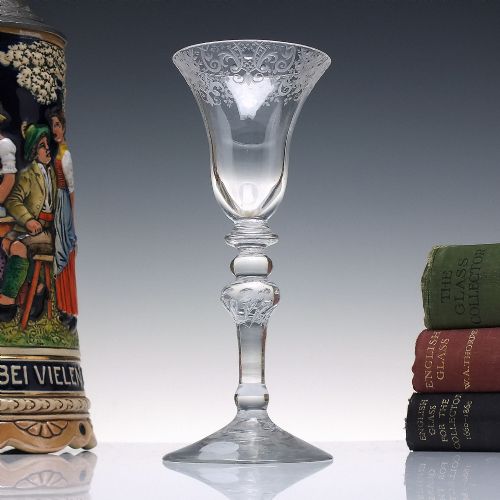
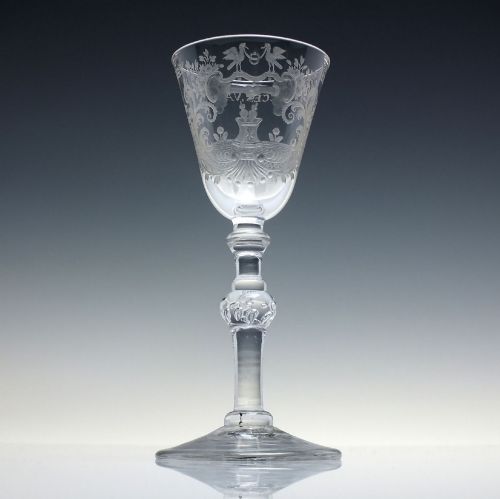
Engraving quality differs significantly, ranging from plain, unadorned bowls to detailed Rococo flourishes and commemorative marriage or friendship inscriptions.
The 18th Century Baluster Glass Glossary
- Baluster
- A heavy, swelling stem form derived in architecture, adapted for early English drinking glasses. It provides substantial weight to the lower half of the object.
- Tazza
- A small raised dish or pedestal plate used for serving sweetmeats or fruit. These flat-topped pieces share the heavy lead glass material of contemporary goblets.
- Teardrop
- An enclosed bubble of air deliberately trapped within the stem of a glass. This internal inclusion refracts light and decorates the centre of the handle.
- Dram glass
- A small, thick-walled drinking vessel designed for consuming spirits. Many incorporate deceptive bowls with solid lower sections that reduce the internal capacity.
- Ratafia glass
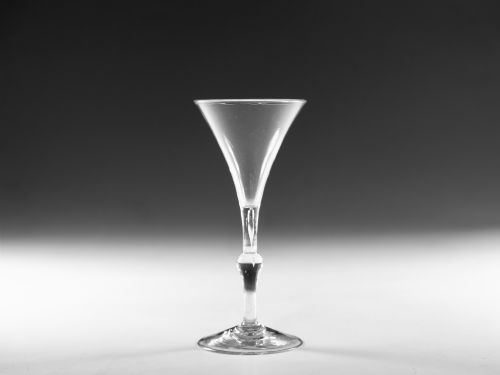
- A slender drinking vessel made for sweet aromatic cordials. The narrow bowl sits atop a sturdy balustroid stem typical of mid-Georgian manufacture.
18th Century Baluster Glass: Frequently Asked Questions
What is an 18th century baluster glass?
An 18th century baluster glass is a heavy lead crystal drinking vessel produced during the Georgian era, characterised by a prominent swelling stem.
These pieces were made in English and Dutch workshops for wine, beer, and spirits, serving as both functional tableware and display items.
How do you date an 18th century baluster glass?
Dating relies on observing changes in stem formation, bowl shape, and foot profile across reigns from Queen Anne to George II.
Earlier pieces from around 1710 feature heavier proportions and larger knops, while later examples towards 1750 tend to adopt lighter baluster or balustroid forms.
What is a deceptive bowl on a glass?
A deceptive bowl contains a solid plug of glass beneath a shallow well, making the vessel appear to hold much more liquid than it actually does.
This historical feature is frequently found on dram glasses and toastmaster glasses used during long drinking sessions.
How were these glasses used originally?
They functioned primarily as dining table serveware for wine, champagne, cordials, and sweetmeats during formal Georgian meals.
Specialist forms like patch stands and tazzas held small cosmetic items or confectionery rather than drinks.