


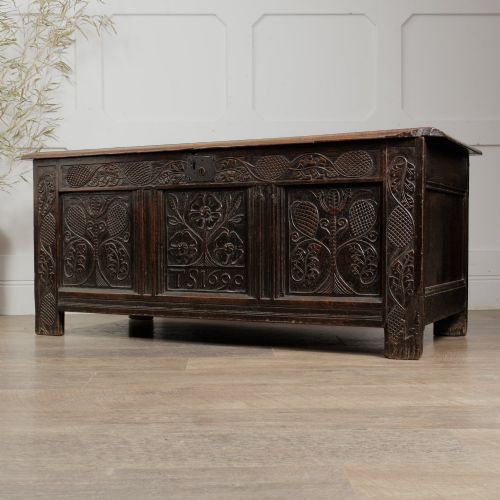
17th Century Wooden Trunk
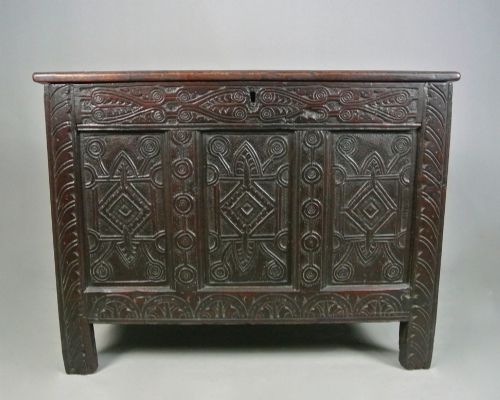
A 17th century wooden trunk brings centuries of history into a room, offering robust storage built from solid oak and elm.
17th Century Wooden Trunk
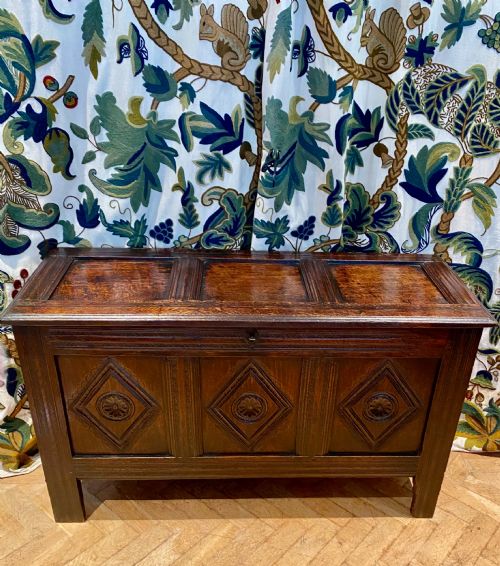
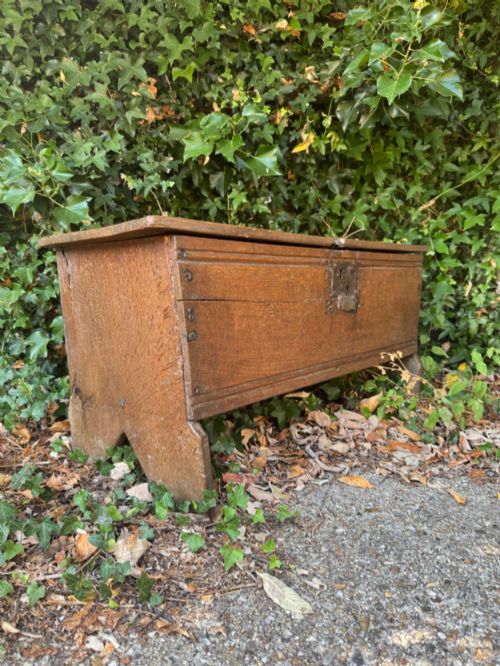
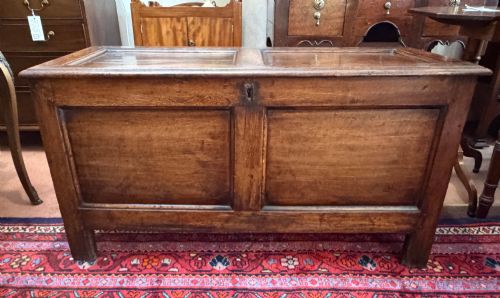
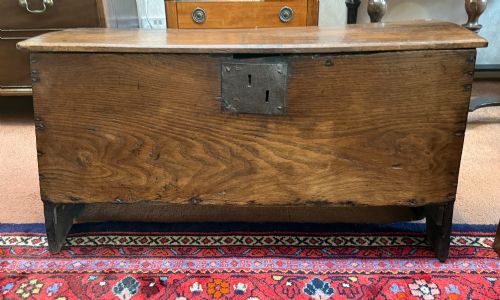
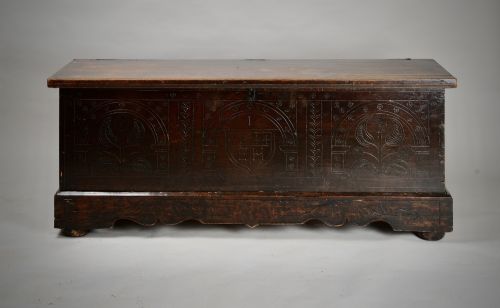
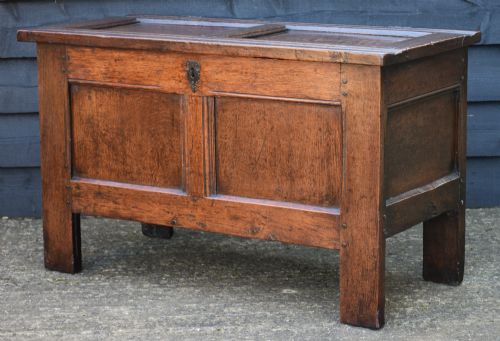
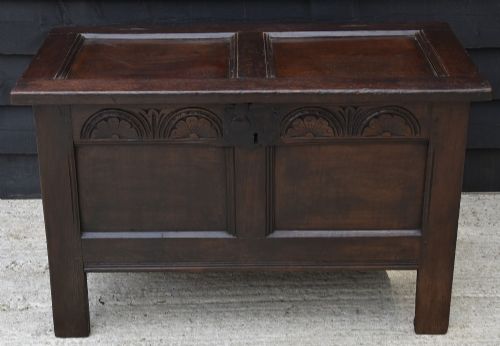
A 17th century wooden trunk generally takes the form of a coffer, chest, or mule chest designed for household storage. Buyers seeking this phrase encounter sturdy joined construction, panelled designs, and occasionally simpler six-plank vernacular pieces.
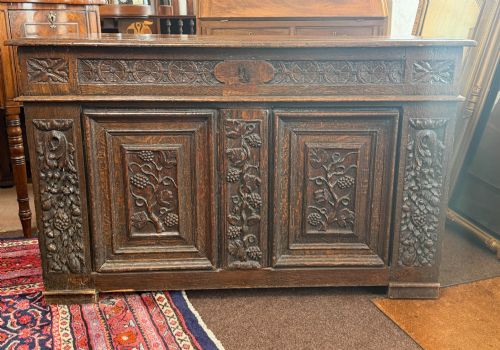
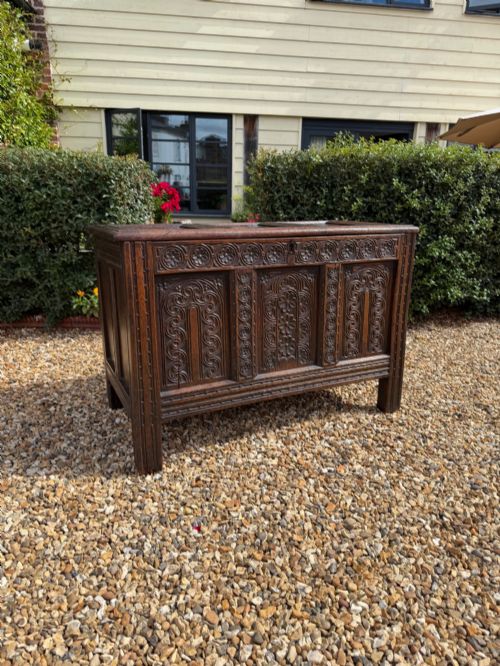
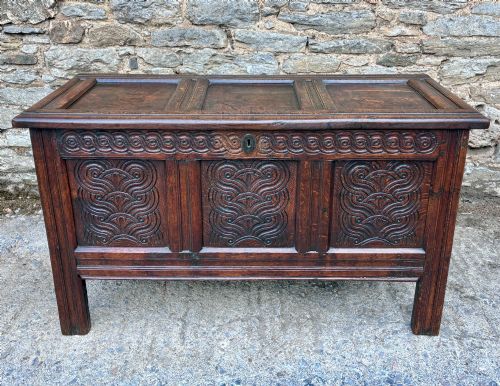
The dominant material across these examples is oak, frequently showing regional British characteristics such as Welsh or Dorset origins. Pieces range from plain joined boxes to carved formats reflecting Jacobean or Gothic styles.
Beyond standard domestic chests, the category encompasses specialised forms such as sword chests, document boxes, and cassone variants. These objects served utilitarian functions in domestic, ecclesiastical, or colonial settings.
How they were made
Construction relies heavily on solid oak, elm, and cypress, shaped through traditional joined framing and panel assembly. Joiners utilised tongue-and-groove techniques alongside pegged mortise and tenon joints to build rigid rectangular carcasses.
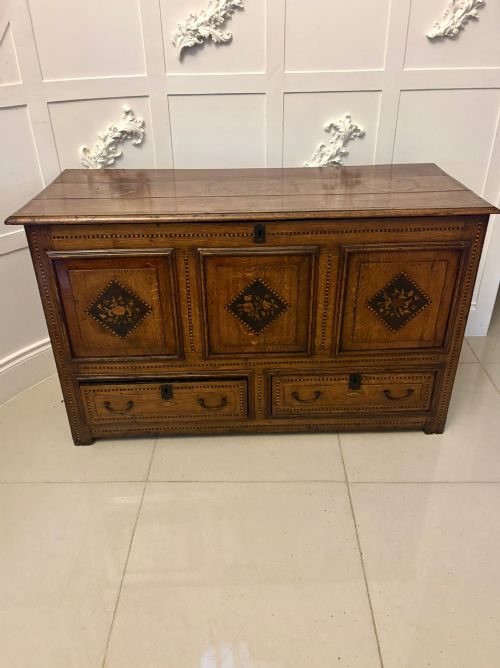
Surface ornamentation involved hand carving, chip carving, and occasionally marquetry inlay using mixed woods. Iron and brass fittings such as hinges, straps, and locks reinforced the structural integrity of the timber lids and bodies.
What varies in quality
Quality in these trunks is dictated by the crispness of the original timber carving and the integrity of the joined structure. Pieces retaining deep patination, original boarded lids, and minimal timber replacement hold greater aesthetic coherence.
The presence of sophisticated decorative elements, such as intricate marquetry inlay, regional vernacular detailing, or documented provenance, distinguishes standard domestic storage from exceptional examples.
The 17th Century Wooden Trunk Glossary
- Mule chest
- A storage chest distinguished by one or more drawers built into the base beneath the main compartment. This form bridges the evolution between the simple coffer and the chest of drawers.
- Six-plank coffer
- A primitive chest constructed from six individual boards joined directly at the edges with pegs or nails. This vernacular method represents an early and straightforward form of box construction.
- Cassone
- A traditional Italian chest used for holding bridal trousseau items. These pieces frequently incorporate detailed carving, inlay, or painted decoration.
- Joined oak
- Furniture constructed using interlocking mortise and tenon joints secured by wooden pegs rather than simple nailed boards. This technique provides structural stability and longevity.
17th Century Wooden Trunk: Frequently Asked Questions
What were these trunks used for originally?
These trunks served as secure domestic containers for storing textiles, family valuables, and important documents. In ecclesiastical settings, they held church plate and vestments.
Their heavy construction and iron locks provided practical security in households before fitted wardrobes and cupboards became common.
How do I care for a historic wooden trunk?
Maintain the timber by keeping the trunk away from direct heat sources and sudden humidity changes. Apply occasional traditional wax polish to nourish the dry surface.
Avoid harsh modern cleaning chemicals that can strip the historic patination accumulated over centuries.
How can I tell a genuine period piece from a revival?
Examine the timber shrinkage, tool marks, and construction methods used inside the joints. Period pieces display hand-cut joinery, pegged framing, and natural wear consistent with age.
Revival items often show uniform machine milling, modern adhesives, or applied decoration lacking the integration of original construction.
Where were these regional chests made?
Many examples originate from specific British regions like Wales, Dorset, or Cornwall, reflecting local vernacular styles. Others demonstrate continental European origins including Italian, Flemish, and Portuguese colonial workshops.
Regional variations appear in the choice of secondary timbers like elm and cypress, alongside distinct carving motifs.