





Early Oak Panel Coffer
An early oak panel coffer brings sturdy historical utility to a room, offering robust timber construction designed to store household goods for centuries.
Early Oak Panel Coffer
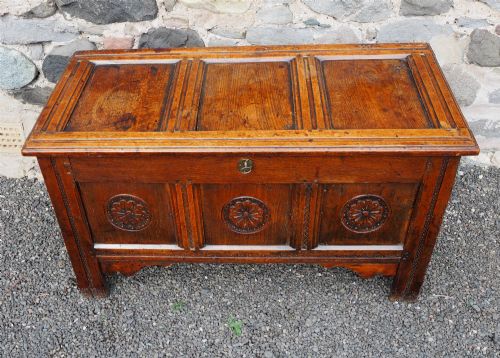
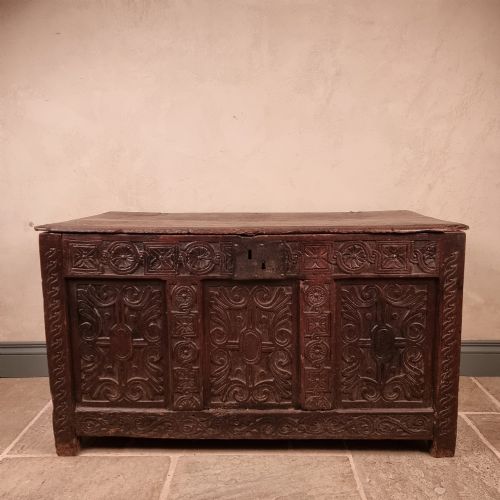
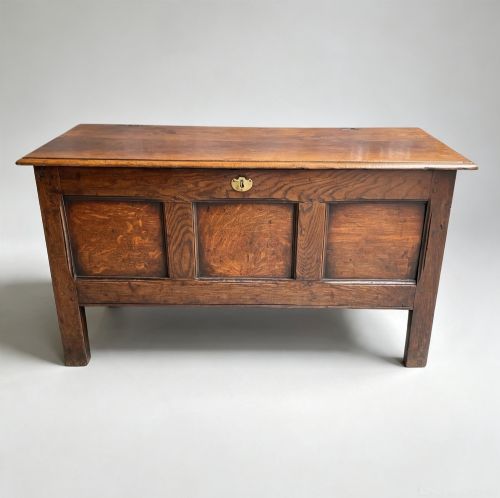
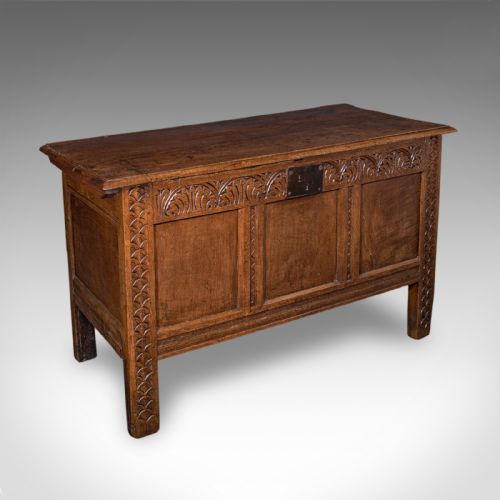
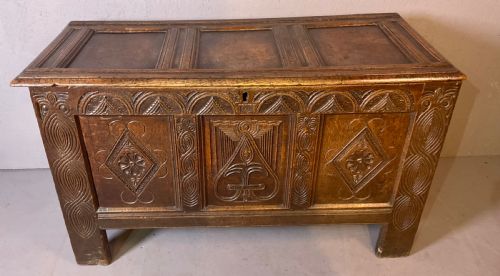
When searching for an early oak panel coffer, buyers encounter solid storage chests originating primarily from the sixteenth, seventeenth, and eighteenth centuries. These pieces span Jacobean, Tudor, and early Georgian eras, often featuring panelled construction designed to hold blankets, linens, and documents.
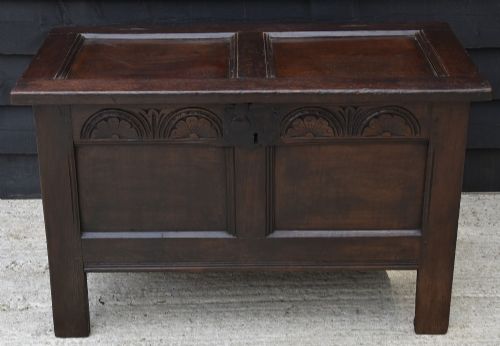
The most common examples on this page date from the seventeenth and early eighteenth centuries, displaying constructed panel fronts and robust box forms. Regional variations such as Welsh coffers also appear alongside standard English country versions.
Beyond traditional storage chests, related forms occasionally surface in the listings, including settles, mule chests, and isolated wall panels. These items share the same heavy timber heritage and period joinery.
Materials and Construction Techniques
Makers built these chests predominantly from solid oak, frequently utilising joined frame and panel construction to accommodate seasonal wood movement. Additional materials such as walnut, fruitwood, iron, and brass appear in hinges, locks, and secondary timbers.
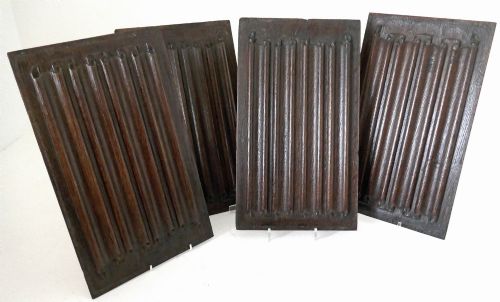
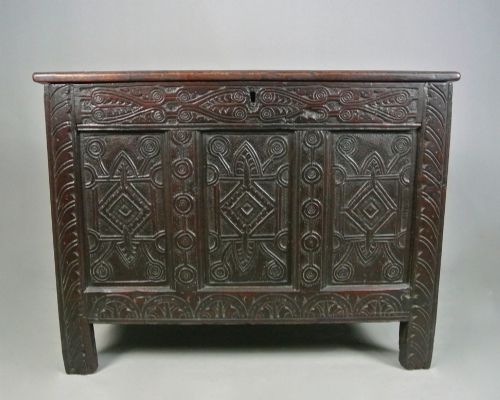
Surface ornamentation relied on hand woodworking techniques, incorporating carved linenfold designs, geometric arcading, and relief work directly into the structural panels. Joinery relied on pegged mortise and tenon joints rather than modern fasteners.
Listings feature items spanning from the sixteenth century through the Georgian era, constructed primarily in oak with occasional fruitwood and walnut.
Distinctions in Quality and Survival
The integrity of the original construction largely determines the standing of a coffer, particularly the survival of uncompromised panelled lids, floorboards, and period hardware. Pieces retaining their initial joined framework and untouched timber surfaces hold greater historical coherence.
The depth and crispness of the hand carving distinguish standard utility boxes from more ambitious workshop productions. Finer examples display well-defined linenfold or geometric motifs executed with deliberate control across the front panels.
The Early Oak Panel Coffer Glossary
- Panel coffer
- A storage chest constructed with wooden panels fitted into grooved frames to prevent warping. This technique forms the primary structural method for early joined boxes.
- Linenfold
- A style of relief carving mimicking folded fabric, commonly seen on sixteenth-century panels. It is frequently associated with Tudor and Elizabethan woodwork.
- Joined
- A term describing furniture assembled using tight mortise and tenon joints secured with wooden pegs. This method defined sixteenth and seventeenth-century cabinet making before the widespread adoption of nails.
- Mule chest
- A storage chest featuring one or more drawers beneath the main internal compartment. They combine the traditional coffer box with early drawer storage.
- Arcading
- A decorative row of carved arches applied to friezes or panels. This motif appears frequently on seventeenth-century Jacobean furniture.
Early Oak Panel Coffer: Frequently Asked Questions
What were early oak coffers used for?
These heavy wooden chests served primarily to store valuable textiles, household linen, and important documents securely in domestic settings.
Due to their flat tops and sturdy construction, they also functioned as impromptu benches, tables, or window seats within early homes.
How can I tell a 17th-century coffer from an 18th-century one?
Seventeenth-century pieces often display heavier framing, joined panel construction with pegged joints, and carved motifs such as geometric arcading or floral patterns.
Eighteenth-century examples tend towards simpler raised panels, cleaner lines, and occasional integration of drawers at the base as seen in early mule chests.
Are these coffers suitable for modern daily use?
The solid oak construction provides exceptionally durable storage for blankets, bulky winter clothing, or household items while functioning as a coffee table or hallway bench.
Their substantial weight and historic timber mean they require stable indoor humidity to prevent wood movement.
What does linenfold carving look like?
Linenfold carving is a decorative relief pattern shaped to resemble vertical folds of stiff cloth or folded linen resting on a flat board.
This technique is characteristic of Tudor and sixteenth-century English woodwork.