


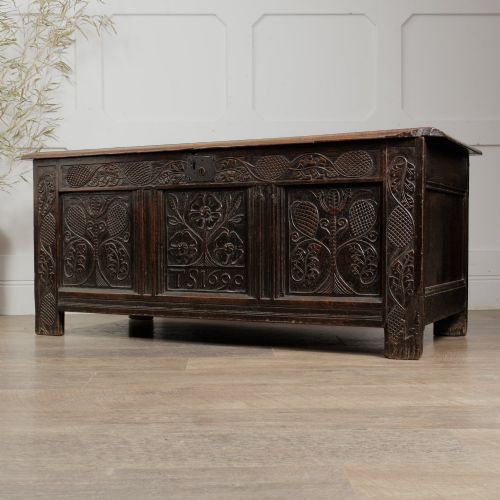
17th Century Wooden Box
A 17th century wooden box provides tactile connection to early domestic storage, offering robust construction and aged timber that anchor a room.
17th Century Wooden Box
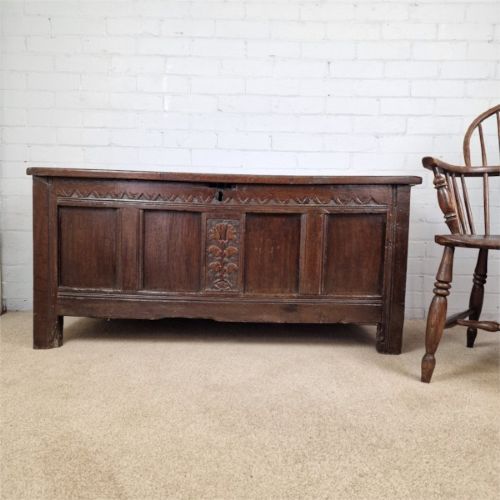
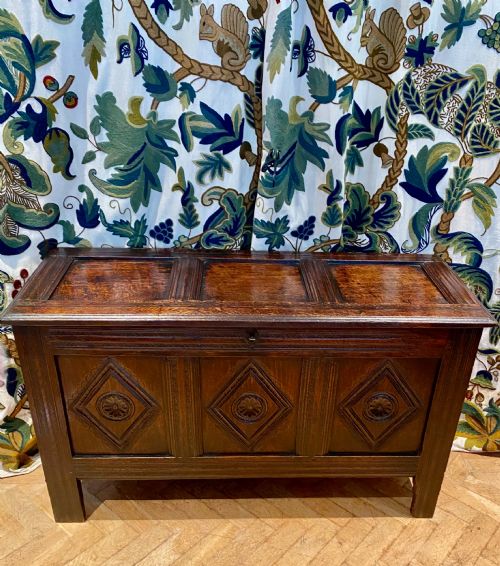
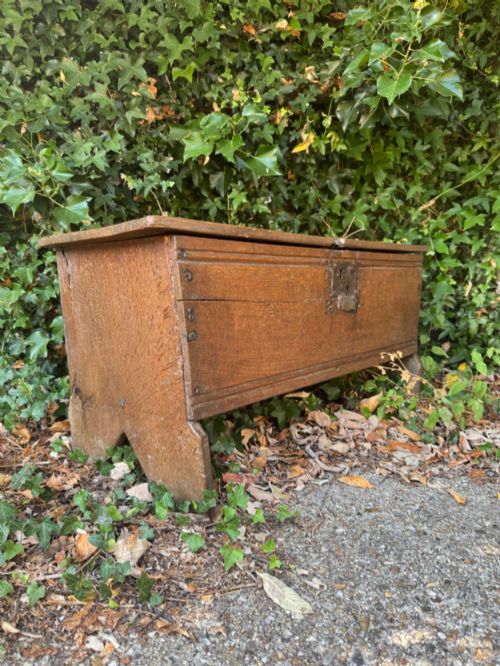
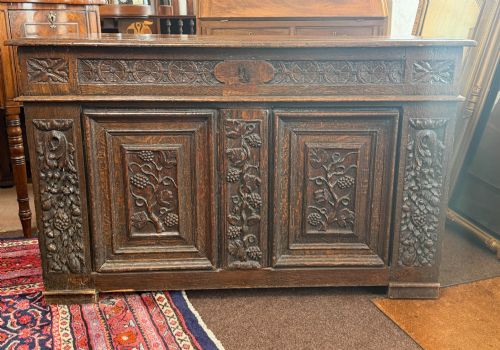
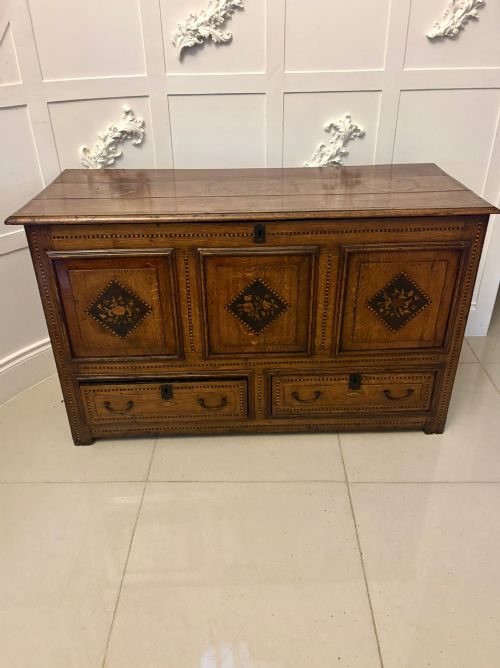
When you search for a 17th century wooden box, you encounter heavy functional storage items designed for security and transport. The pieces range from small table boxes and bible boxes to larger boarded coffers, mule chests, and storage chests.
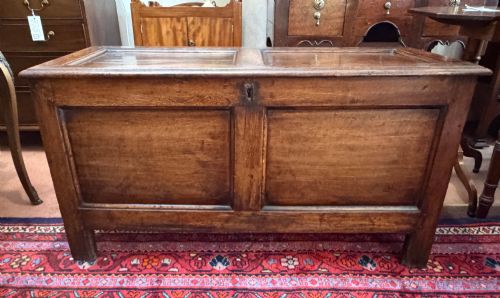
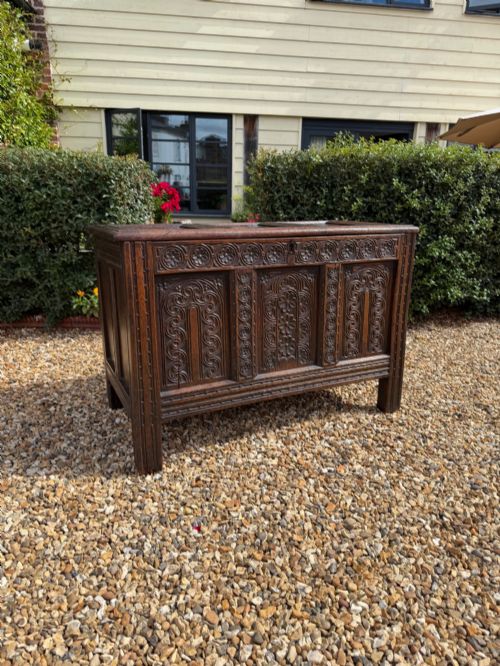
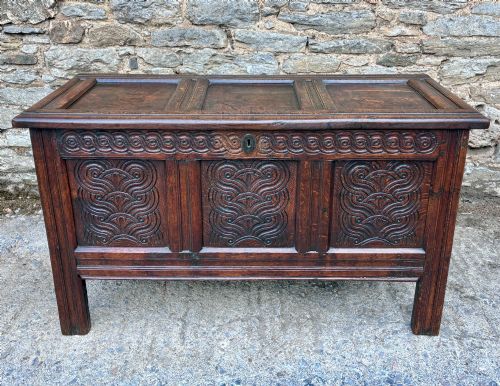
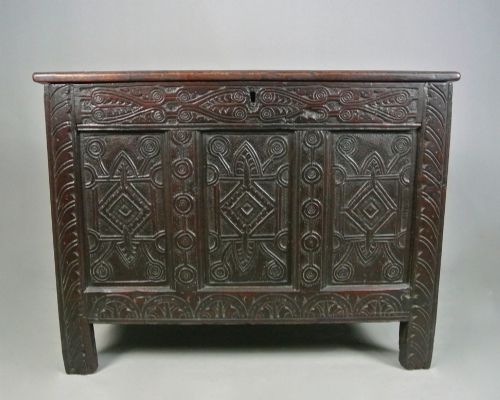
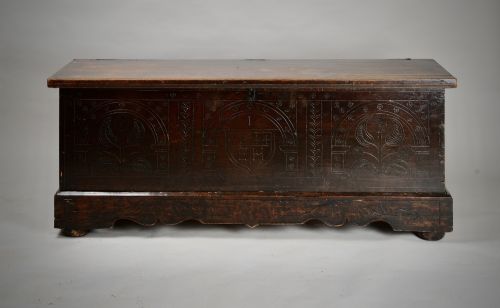
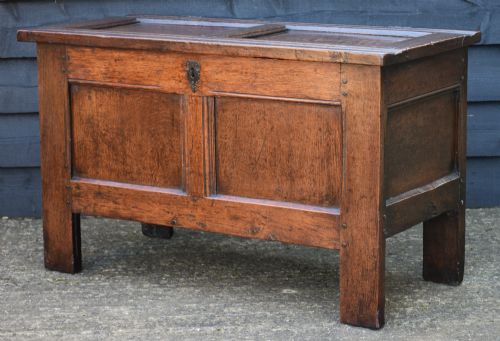
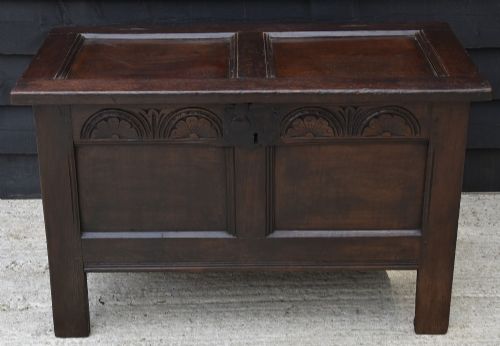
The version you are most likely to meet on this page is an oak coffer or panelled chest. These domestic containers served multiple purposes in early households, storing documents, textiles, and valuables while doubling as seating or tables.
Regional variations appear frequently among the listings, encompassing English, Welsh, Flemish, Italian, and Portuguese colonial origins. Woods such as elm, fruitwood, and cypress supplement the predominant oak structures.
How they were made
Makers utilised solid timber, predominantly oak along with elm, fruitwood, and cypress, constructed using joined, panelled, or six-plank framing techniques. Boards were often cleft and joined with pegged mortise and tenon joints to accommodate seasonal wood movement.
Surface decoration involved carving, such as geometric strapwork or Gothic motifs, alongside marquetry inlay utilising mixed woods. Hardware typically consisted of hand-forged iron hinges, locks, and brackets, occasionally complemented by brass elements.
Some survival pieces bear traces of red paint alongside ancient iron hardware, hinting at bright medieval polychrome tastes lingering into later centuries.
What varies in quality
The standard of carving and inlay execution distinguishes utilitarian boxes from high-status commissions. Crisp, deeply carved geometric patterns and sophisticated marquetry indicate workshop skill rather than basic provincial carpentry.
The survival of original surface patination, timber integrity, and unaltered iron hardware dictates desirability. Retaining original hinges, lids, and minimal structural replacement preserves the historical authenticity of the piece.
The 17th Century Wooden Box Glossary
- Coffer
- A large wooden chest used historically for storing valuables, textiles, or documents. These sturdy containers often featured heavy locking mechanisms and flat lids suitable for seating.
- Mule chest
- A storage chest featuring one or more drawers beneath the main compartment. This form bridges the evolution from the simple coffer to the modern drawer-base chest.
- Bible box
- A small tabletop box constructed with a sloping lid designed to hold sacred texts or writing materials. Examples often include internal small drawers for keeping ink and quills.
- Six-plank
- A primitive construction method utilising six simple boards pinned together at the edges to form a box. This vernacular technique represents early utilitarian cabinet making.
- Marquetry inlay
- The art of applying decorative pieces of wood veneer to a structural surface to create pictorial or geometric patterns. Skilled artisans used mixed woods to achieve contrasting tones.
17th Century Wooden Box: Frequently Asked Questions
What were these boxes used for?
These boxes stored essential domestic goods, textiles, legal documents, and church plate securely within early households. Their robust construction allowed them to double as benches or tables in modest spaces.
Smaller desk boxes and bible boxes held writing equipment and sacred texts on tables. Larger coffers travelled between residences or secured family valuables against theft and dampness.
How do I identify a 17th century box?
Authentic pieces display construction methods characteristic of the period, such as pegged mortise and tenon joints, hand-sawn panels, and forged iron hardware. Timber surfaces exhibit deep patination accumulated through centuries of handling and wax polishing.
Stylistic cues include Jacobean carving, geometric strapwork, and vernacular board construction. Regional traits also point toward specific English, Welsh, or continental origins.
Where were these boxes made?
Production occurred across domestic workshops in England, Wales, and various continental European centres including Flanders and Italy. Local joiners utilised native timbers available in their immediate geographic regions.
Colonial trade routes also brought exotic hardwoods like mahogany into circulation for overseas administrative and merchant use. Regional cabinet-making traditions dictated the distinct forms found today.
How do I care for antique oak?
Maintain stable indoor humidity levels and keep wooden boxes away from direct heat sources and strong sunlight. Sudden environmental shifts cause unyielding historical timbers to split and joints to weaken.
Apply occasional traditional beeswax polish to nourish the dry wood and preserve the surface sheen. Avoid modern liquid polishes containing silicones that damage aged patination.