




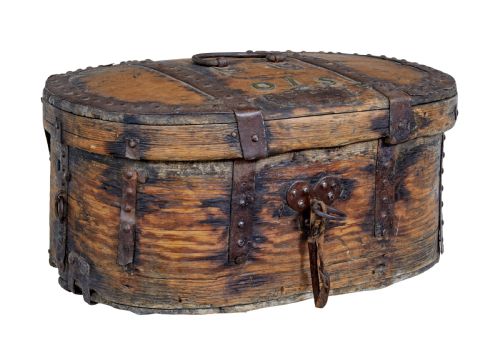


Wrought Iron Bound Coffer
These wrought iron bound coffer pieces are heavy timber storage boxes secured with metalwork, built to protect valuables through centuries.
Wrought Iron Bound Coffer
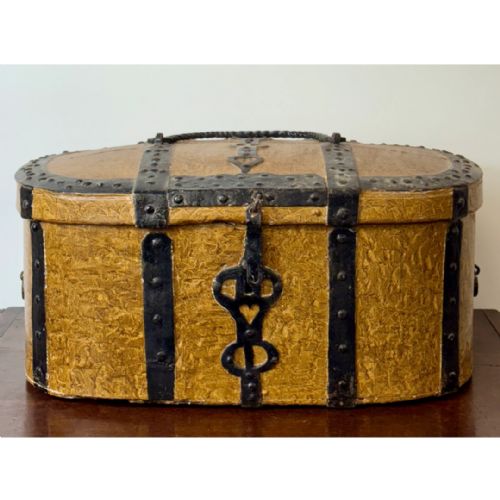
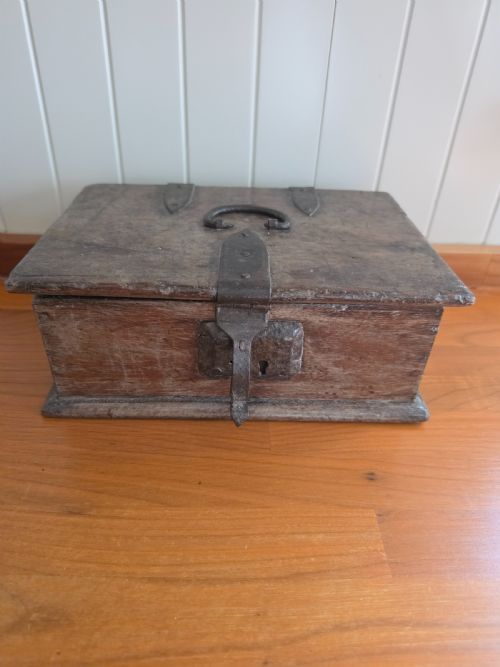
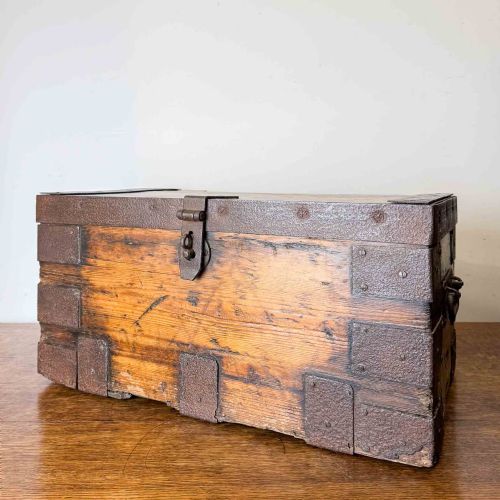
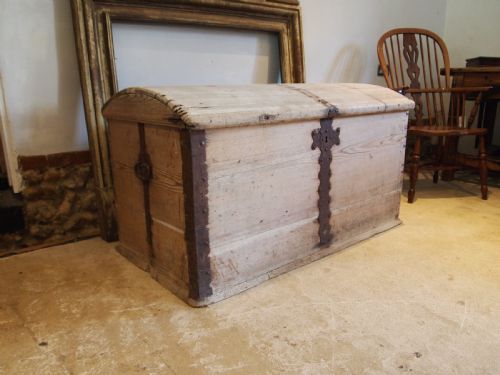
When you search for a wrought iron bound coffer, you are looking at substantial timber storage chests and boxes reinforced with metal straps, bands and hinges. The selection on this page ranges from early oak travelling strongboxes to painted Scandinavian folk art marriage chests and French elm cannonball boxes.
Most examples you will meet span from the sixteenth century through the Georgian era into the early twentieth century, drawing on rustic country, baroque and Scandinavian folk traditions. Forms vary from small tabletop boxes to large marriage trunks and substantial iron and wood strongboxes built for security.
How they were made
Construction relies on solid timbers such as oak, pine, elm and wood assembled into robust boxes and trunks. These wooden bodies are then secured with heavy wrought iron bands, straps, hasps and corner brackets fastened to resist forced entry.
Many examples incorporate hand-painted decoration, particularly on Scandinavian pine and oak marriage boxes featuring folk art motifs and dark finishes. Locks, hinges and carrying hoops are forged from iron, often paired with working mechanisms.
Listings feature timbers including pine, oak, elm and wood alongside painted finishes and wrought iron hardware spanning several centuries.
What varies in quality
The standard of a wrought iron bound coffer rests in the integration of its timber body with the blacksmith's ironwork. Hand-forged straps, complex locking mechanisms and substantial gauge metal distinguish finer work from simpler utilitarian boxes.
Original surface treatments, such as early painted decoration or untouched patination on oak and pine, elevate certain pieces. The integrity of the original construction, including period locks and functional side lifting handles, defines the better examples.
The Wrought Iron Bound Coffer Glossary
- Wrought iron
- Iron that has been heated and shaped by a blacksmith's hammer, showing fibrous texture and hand-forged irregularities. It provides the structural reinforcement for these coffers.
- Strongbox
- A secure chest or box designed for holding money, documents or valuables, usually fitted with complex internal locking mechanisms and heavy iron bands.
- Marriage chest
- A celebratory box commissioned or given for a wedding, frequently decorated with painted motifs, dates or names associated with Scandinavian and European folk traditions.
- Hasps
- A slotted metal plate that fastens over a staple and is secured with a pin or padlock. It forms a key part of the closing mechanism on iron bound boxes.
- Baroque
- An artistic style prevalent in the seventeenth and eighteenth centuries characterised by ornate detail and robust proportions. It appears on several oak and metal bound boxes from this period.
Wrought Iron Bound Coffer: Frequently Asked Questions
What were wrought iron bound coffers used for?
These pieces served primarily to store and transport money, legal documents, silverware and other high-value items securely. Their heavy iron strapping deterred thieves during travel or in domestic settings.
Over time, many functioned as marriage chests or general storage trunks within homes across Europe and other regions.
How do I date an iron bound box?
Dating relies on combining the timber species, construction methods, style of ironwork and any painted decoration present. Earlier pieces often employ joined oak with hand-forged strapwork, whilst later examples utilise pine or elm with different locking configurations.
Stylistic cues such as seventeenth-century baroque carvings or eighteenth-century Scandinavian folk art provide further chronological markers.
Are the locks on these coffers still working?
Some pieces retain their original working locks and keys, whilst others operate primarily through hasps, pins or latches. Over centuries of use, internal mechanisms may have been altered or replaced by period blacksmiths.
It is common for surviving boxes to function with modern security adaptations or to serve as decorative storage without active locking mechanisms.
How do I care for a wooden and iron chest?
Keep the piece away from direct heat sources and extreme humidity fluctuations to protect the aged timber and ironwork. Gentle dusting with a dry cloth maintains the surface without stripping patination or painted decoration.
Applying microcrystalline wax occasionally helps preserve dry wood and protects exposed iron surfaces from moisture.