






Seventeenth Century Document Box
A seventeenth century document box preserves legal papers and correspondence in solid oak, leather, and iron.
Seventeenth Century Document Box
A seventeenth century document box serves as a portable repository for deeds, letters, and valuables during a period when security relied on heavy timber and complex metalwork. Buyers search for these pieces to own a tangible fragment of domestic history that sits easily upon a table or desk.
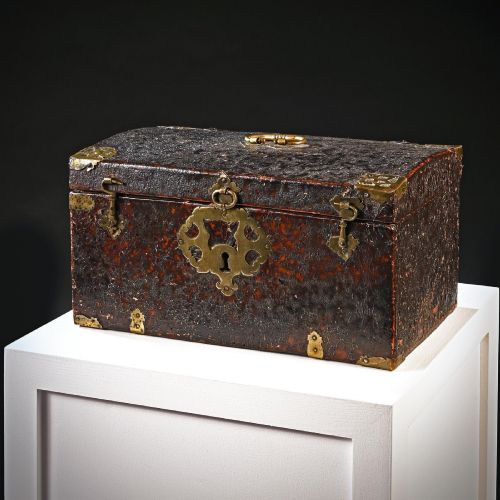
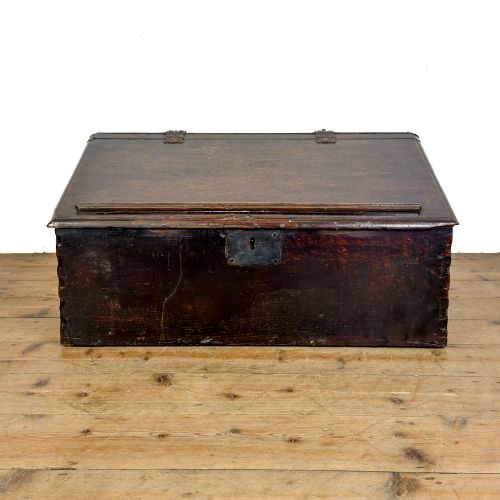
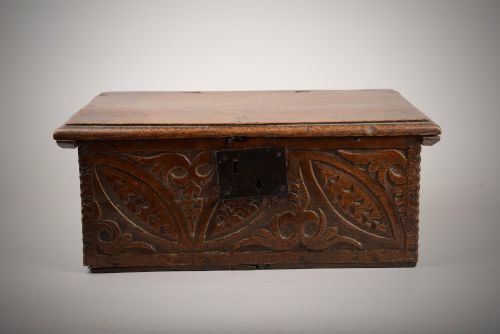
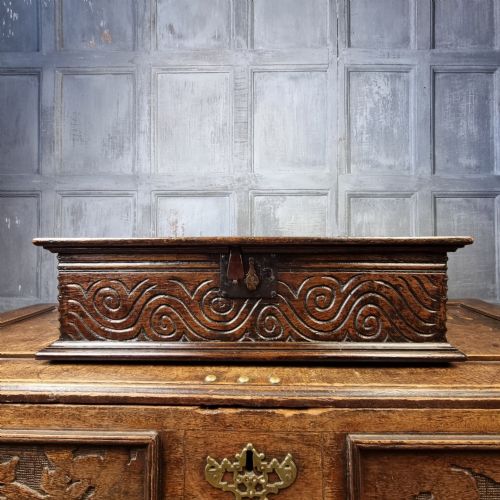
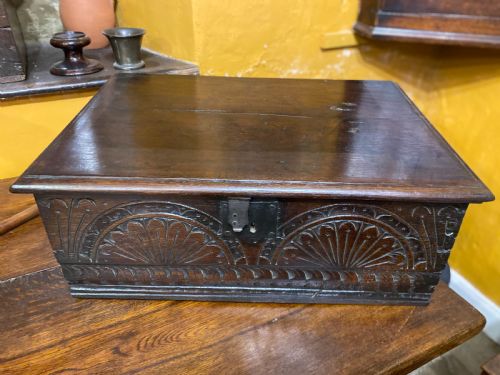
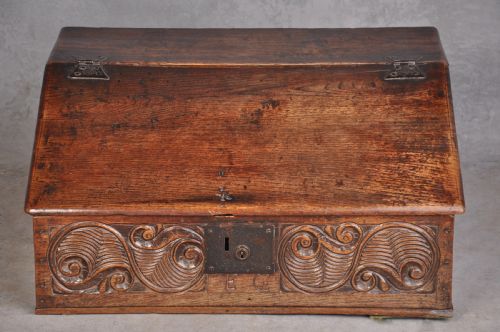
The versions most commonly met on this page take the form of sturdy oak bible boxes, desk boxes, and travelling chests rendered in regional vernacular styles. These objects often display chip carving, panelled construction, and occasionally specialised internal compartments for papers.
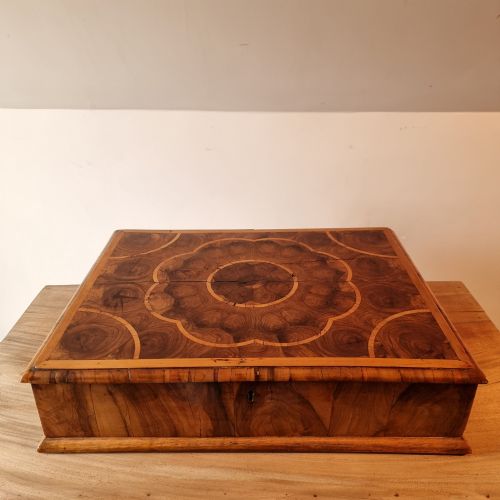
Examples span the Jacobean, Charles II, and William and Mary periods, sometimes showing later adaptation or floral marquetry enrichment alongside foundational seventeenth century elements. Regional variations include Welsh chip carved pieces and specific dated domestic boxes bearing initials.
Materials and construction
Carpenters built these boxes primarily from solid oak, utilising joined boards and hinged lids designed to withstand heavy daily use in domestic and administrative settings. Secondary materials such as walnut and oyster veneer appear on finer examples from later decades.
Iron and steel provide the structural security through strap hinges, corner braces, and complex internal locking mechanisms fixed to the lids. Brass keyplates and leather coverings also feature on specific travelling variants intended for mobility.
Several boxes bear deliberate initials and precise dates carved directly into the oak, leaving a permanent record of the original owner.
Assessing quality and character
The standard of surface ornamentation and timber selection distinguishes everyday utility pieces from finer decorative examples. Crisp chip carving, well-figured oak boards, and intact historical hardware elevate a piece above plain vernacular containers.
The survival of original internal components, such as small drawers and complex working steel locks with keys, marks a higher degree of preservation. Alterations or later additions to surfaces and panels influence how closely an item reflects its original seventeenth century manufacture.
The Seventeenth Century Document Box Glossary
- Bible box
- A sloping-lidded wooden chest originally constructed to hold a family bible or important manuscripts. These pieces typically rest on flat surfaces and double as writing slopes.
- Chip carving
- A decorative technique where small chips are removed from the surface of the wood to create geometric patterns. This method appears frequently on regional Welsh and English boxes.
- Oyster veneer
- Slices cut transversely from small branches to create circular ripple patterns across a wooden surface. This technique characterises higher status cabinet work.
- Jacobean
- The stylistic period spanning the reign of James I, noted for sturdy construction and geometric carved ornamentation. Pieces from this era form a baseline for seventeenth century box design.
Seventeenth Century Document Box: Frequently Asked Questions
How were they used?
These boxes held valuable manuscripts, legal deeds, lace, and household ledgers safely away from dampness and theft.
Owners placed them on tables or desks, utilising the flat or sloping lids for writing correspondence.
Where were they placed?
Households kept them in parlours, chambers, or administrative rooms where important papers required secure storage.
Because they were portable, owners moved them between rooms or carried them during travel.
How do I spot later alterations?
Examine the timber grain, tool marks, and hardware fixings for consistency across the entire box.
Replaced hinges, mismatched wood types, or modern screws often indicate subsequent repairs or decorative enhancement.
Are all pieces English?
While the majority of listings reflect seventeenth century English and Welsh vernacular traditions, continental and other regional examples do appear.
Construction methods and timber choices usually point to the specific geographic origin of the maker.