
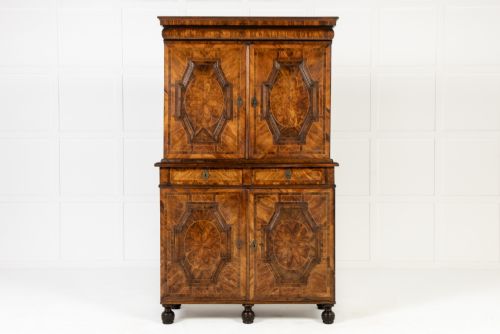


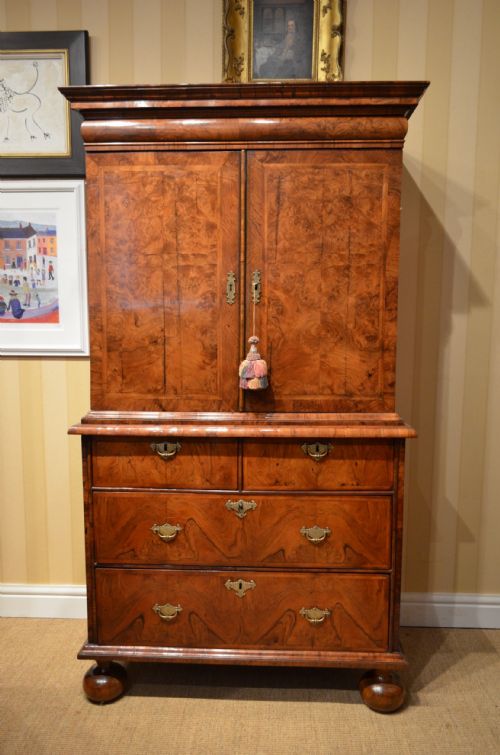


17th Century Walnut Cupboard
These 17th century walnut cupboards bring rich timber and bold baroque proportion straight into a room.
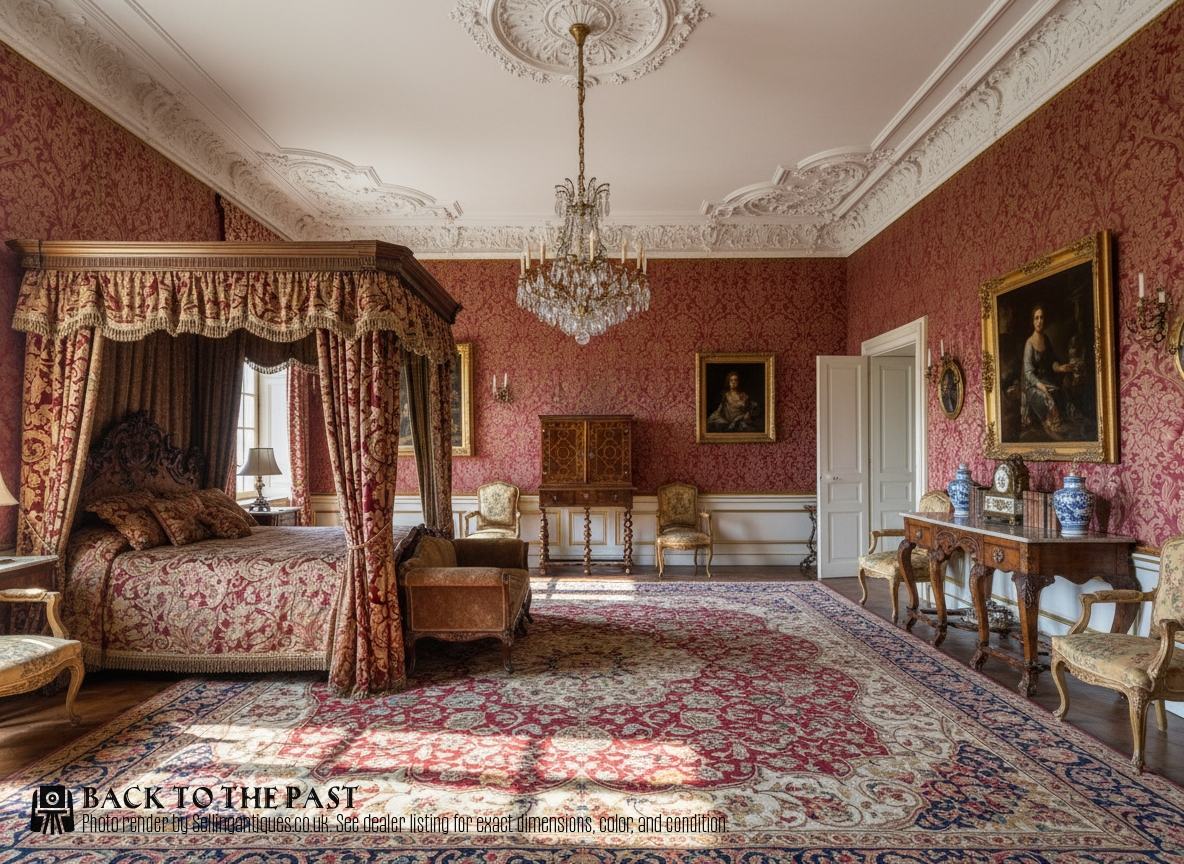
17th Century Walnut Cupboard
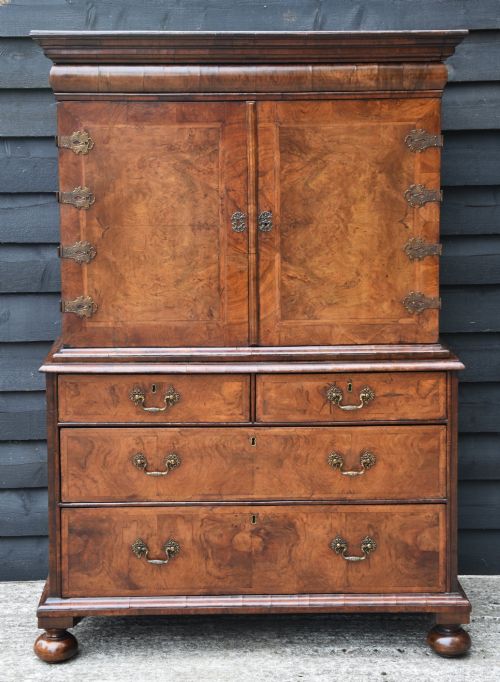
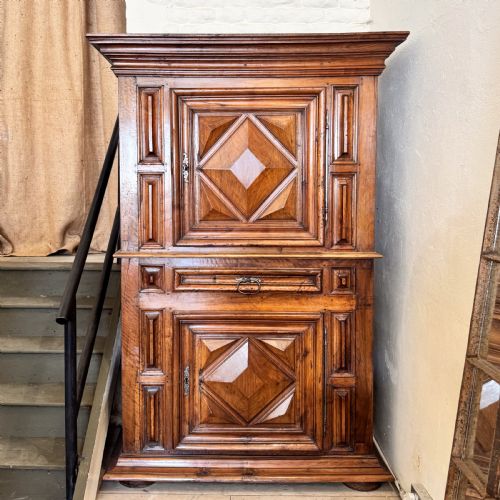
A 17th century walnut cupboard appears in several distinct structural forms, spanning cabinets on stands, cabinets on chests, and traditional side cabinets. Most pieces belong firmly to the seventeenth century, though later nineteenth-century interpretations also surface alongside older examples.
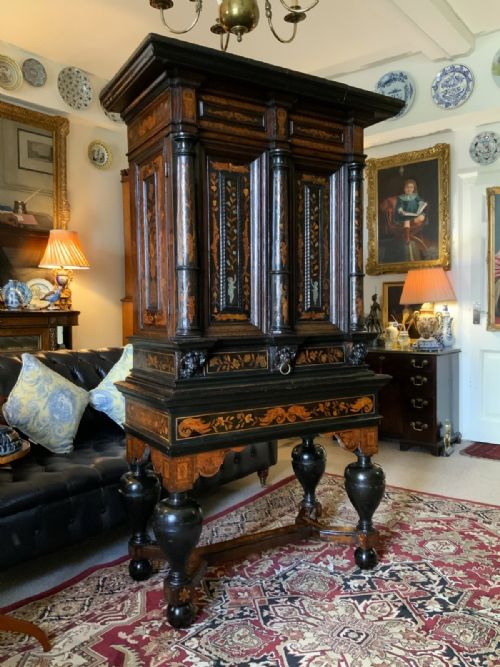
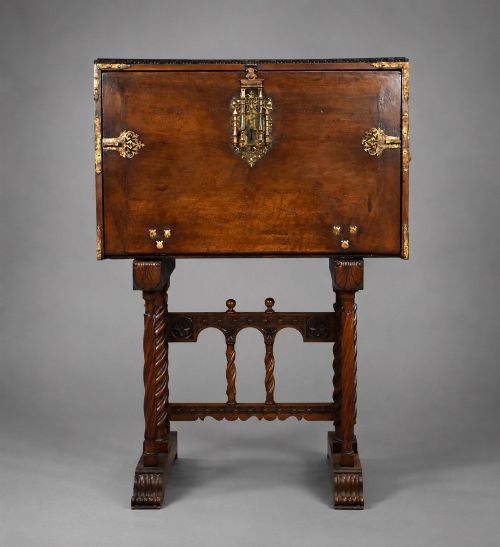
Makers across Europe shaped these forms during distinct regional movements, creating Spanish bargueños, Dutch marquetry cabinets, and William and Mary pieces. Buyers encounter various scales, from large storage units down to miniature cabinets.
The primary material is walnut, frequently enriched with burr walnut, fruitwood, and boxwood, while internal configurations vary from simple shelving to complex nests of small drawers.
Materials and construction
Cabinetmakers built these carcases using primary timbers like walnut and oak, applying decorative veneers such as oyster cuts and seaweed marquetry to the exterior surfaces. Intricate inlay work often incorporates pewter, boxwood, and fruitwood to create contrasting geometric patterns.
Structural hardware relied heavily on brass and iron for hinges, drop handles, and locking mechanisms, which secured doors and fall-front writing surfaces.
Listings feature walnut, burr walnut, fruitwood, boxwood, oak, pewter, brass, and iron across seventeenth-century and later revival periods.
Distinctions in quality
The sophistication of the surface decoration determines much of the distinction between pieces, particularly the intricacy and precision of oyster veneers and marquetry panels. Elaborate inlay work involving multiple woods and metal requires advanced joinery skills that elevate the standing of a cabinet.
Proportion and the preservation of original stands or bases play a major role, as many cabinets on stands suffered separation over the centuries. Cohesion between the upper cabinet and its supporting base dictates the integrity of the piece.
The 17th Century Walnut Cupboard Glossary
- Oyster veneer
- Small circular or oval sections of branchwood sliced across the grain to create repeating patterns resembling oyster shells. This technique flourished during the seventeenth century on walnut furniture.
- Marquetry
- Elaborate veneer patterns formed by fitting together thin pieces of different coloured woods or materials like pewter. Dutch and English makers utilised this method on cabinet facades.
- Bargueño
- A specific style of Spanish writing cabinet featuring a fall-front door that opens to reveal numerous small drawers and compartments. These units typically rest upon a dedicated stand.
- Seaweed marquetry
- A very fine, intricate form of marquetry resembling seaweed or marine growth, popular in late seventeenth-century English cabinetmaking. It creates a dense, flowing surface design.
- Cabinet on stand
- A freestanding storage compartment raised on a distinct supporting frame with legs and stretchers. This form elevates the primary storage volume off the floor.
17th Century Walnut Cupboard: Frequently Asked Questions
How do I care for walnut furniture?
Keep these timber pieces away from direct heat sources and sudden humidity changes to prevent veneer lifting. Apply gentle beeswax occasionally to nourish the historic wood.
Avoid modern liquid polishes containing silicones, which can damage old finishes over time. A soft, dry cloth is best for routine dusting.
What is a bargueño cabinet?
A bargueño is a traditional Spanish drop-front cabinet designed to hold valuables and documents. The hinged front folds down to serve as a writing surface.
Inside, numerous small drawers and decorated compartments secure personal items. They typically sit on matching open-leg wooden stands.
How can I date a walnut cabinet?
Examine the construction methods, secondary timbers, and hardware types used inside the drawers and carcase. Hand-cut dovetails and forged iron fixings indicate earlier periods.
Compare the veneer style, such as oyster cutting or floral marquetry, against known seventeenth-century design traits. Regional characteristics also help narrow down the origin.
Where should I place a cabinet on stand?
Position these tall storage pieces against a stable wall where their proportions can anchor the room. Ensure they avoid heavy foot traffic that might risk the lower stand or stretchers.
Adequate indirect lighting helps highlight the grain patterns and veneer work without fading the timber.