
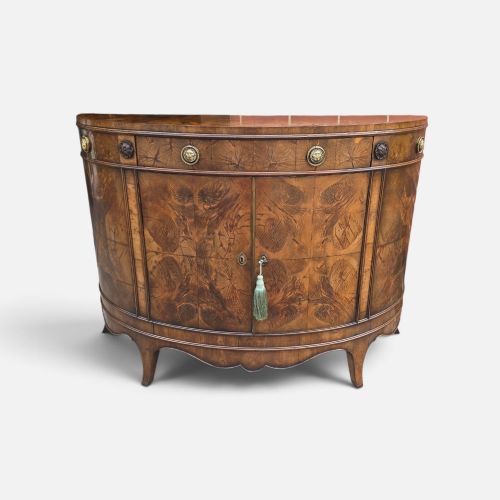


Oyster Veneered Cabinet
An oyster veneered cabinet brings cross-cut branch timbers into rich, circular patterns that define seventeenth-century craftsmanship.
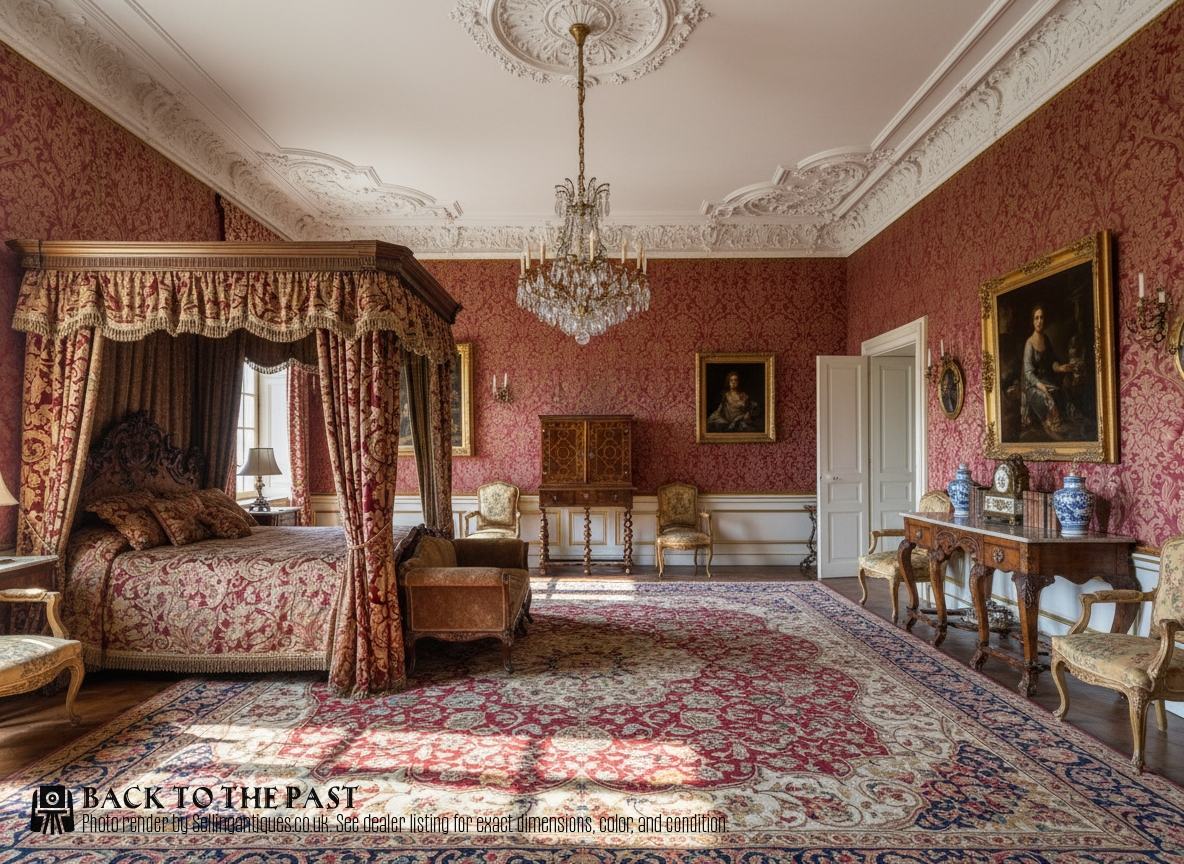
Oyster Veneered Cabinet
An oyster veneered cabinet showcases circular slices of wood arranged in intricate geometric surfaces across doors, drawers, and stands. These striking forms emerge primarily from seventeenth-century periods associated with William and Mary styles, alongside later revivals from the early twentieth century.
How they were made
Cabinetmakers sliced small branches and boughs at an angle to produce the characteristic circular and oval oyster veneers. These delicate sections were then fitted closely together across carcases of oak or pine, creating dense decorative patterns.
Workshops utilised contrasting timbers such as boxwood, walnut, and kingwood to border the oyster veneers, occasionally incorporating floral marquetry and brasses. The timber was polished to emphasise the natural grain patterns within each individual slice.
Cabinetmakers turned humble tree branches into luxurious surfaces simply by slicing them like carrots.
What varies in quality
Quality rests in the precision of the veneer layout and the richness of the chosen timber, such as burr walnut or figured olive wood. Finer examples maintain tight, uniform patterns across every surface without awkward disruptions or mismatched grain orientation.
The sophistication of the underlying form, whether an elaborate cabinet on stand or a well-proportioned chest of drawers, dictates the stature of the piece. Period authenticity from the seventeenth century commands greater attention than twentieth-century revival interpretations.
The Oyster Veneered Cabinet Glossary
- Oyster veneering
- The method of cutting small branches transversely to produce circular and oval wooden roundels resembling oyster shells. These pieces are then arranged closely together to form decorative parquet surfaces.
- Escritoire
- A sloping or fall-front writing cabinet fitted with internal drawers and pigeonholes. These pieces combine storage with a dedicated writing surface.
- Marquetry
- The art of forming decorative patterns by fitting together thin slices of various woods and other materials. This technique often introduces floral or geometric motifs alongside oyster veneers.
- Carcase
- The main structural body or frame of a piece of furniture before drawers, doors, and veneers are applied. Oak and walnut serve as the primary foundational woods.
- Stringing
- Thin, narrow strips of contrasting timber inlaid into channels cut into the surface of the cabinet. Boxwood is frequently used for this linear detailing.
Oyster Veneered Cabinet: Frequently Asked Questions
What is an oyster veneered cabinet?
An oyster veneered cabinet is a case piece decorated with cross-cut roundels of timber. These circular slices create distinctive patterned surfaces across doors and drawer fronts.
Most examples date from the seventeenth century or appear as later revival pieces from the twentieth century. They encompass cabinets on stands, chests of drawers, and escritoires.
Where were these cabinets placed?
These cabinets occupied principal reception rooms in seventeenth-century homes to display wealth and refined taste. Their elaborate surfaces were designed to catch candleligh in parlours and bedchambers.
Today, they function as focal storage pieces in studies and living areas. Their compact stands and chests suit both traditional and modern interiors.
How do I distinguish period pieces?
Distinguishing period pieces involves examining the construction methods, secondary woods, and patination of the timber. Seventeenth-century examples display hand-cut carcase construction and aged finishes.
Twentieth-century revival pieces often reveal different tool marks and cleaner uniformity in the veneer work. Comparing the secondary woods helps confirm the era of manufacture.