



17th Century Strongbox
A 17th century strongbox offers heavy security in miniature, holding precious documents and coinage behind complex ironwork.
17th Century Strongbox
When you search for a 17th century strongbox, you encounter heavy functional containers designed to secure valuables in an era before modern banking. These pieces primarily manifest as robust chests, coffers, and travel boxes built for domestic or mercantile safety.
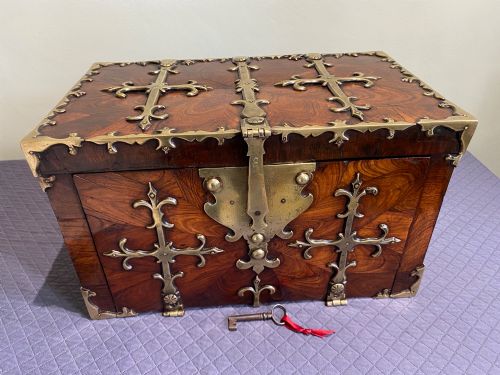
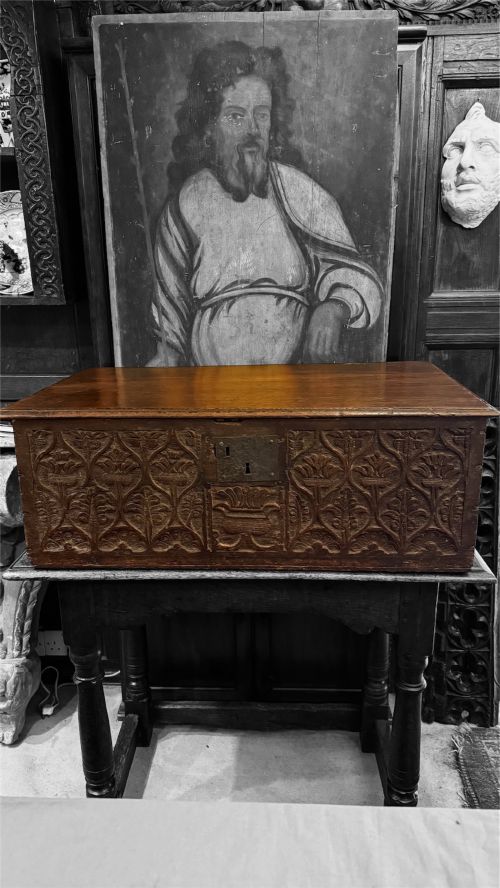
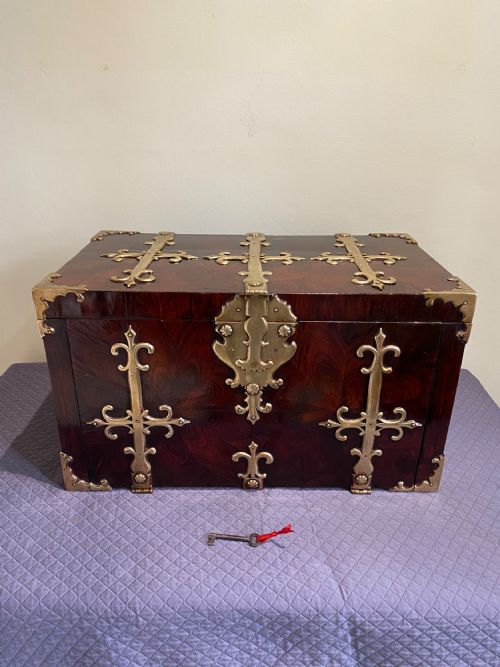
The versions most likely to meet you on this page span the sixteenth, seventeenth, and eighteenth centuries, with English oak examples and continental kingwood veneered pieces appearing frequently. Styles range from plain Jacobean utility to ornate Baroque and Iberian work.
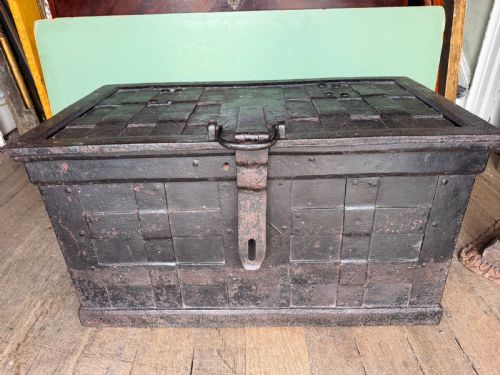
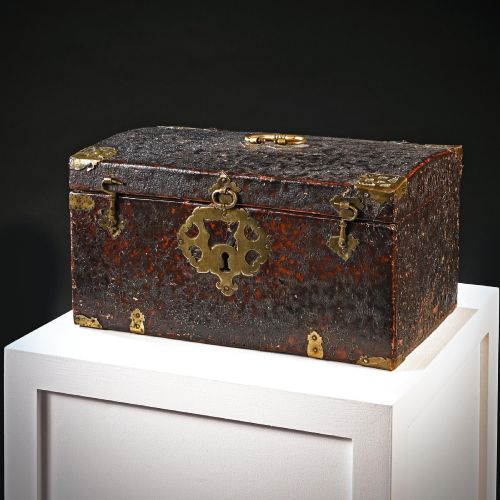
Beyond the standard oak document and Bible boxes, you will find specialised forms such as leather-covered travelling boxes and iron-strapped Armada chests. Each object reflects the specific security needs of its period, whether for a merchant desk or a carriage journey.
Materials and construction
Makers built the foundational frames of these containers using sturdy timbers such as oak, chestnut, and burr wood, often reinforced with heavy wrought iron bands. Joinery relied on traditional methods to withstand the immense weight of internal locking mechanisms.
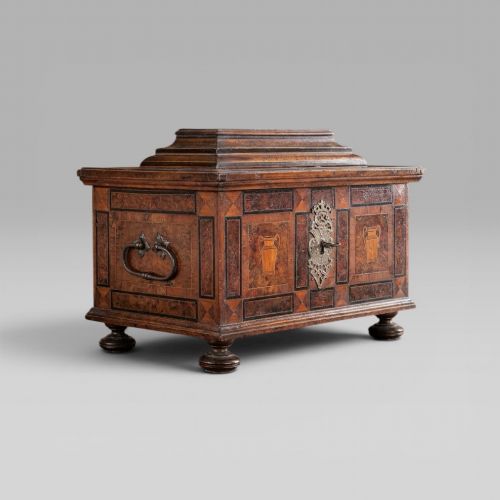
Surface decoration utilised specialised techniques including kingwood veneers, oyster veneers, and intricate marquetry. Leather coverings and brass studwork also appear, protecting the underlying wood while providing a finished appearance for travel.
Internal security depended entirely on complex steel locks, which frequently engaged multiple bolts across the lid underside. These mechanisms required specialised keys and were integrated directly into the lid interior or protected by engraved steel shrouds.
17th Century Strongbox Retail Price Guide 2026
Typical asking prices for 17th century strongbox among the pieces listed under this phrase on Sellingantiques today, from the lower quarter to the upper quarter. They describe what is for sale here now, not the wider market.
Listings feature periods spanning the sixteenth, seventeenth, and eighteenth centuries, incorporating oak, kingwood, leather, and wrought iron.
Distinctions in quality
Quality in these pieces separates according to the sophistication of the internal steel lockwork and the complexity of its engagement. Simpler box latches contrast sharply with intricate multi-bolt mechanisms that dominate the lid interior.
The treatment of exterior surfaces further distinguishes standard utility boxes from high-status examples. Elaborate kingwood oyster veneers, marquetry patterns, and Gothic carving require significantly greater cabinet-making skill than plain joined oak.
Originality defines the upper tier of surviving examples, particularly the survival of complex original steel locks and matching keys. Altered hinges, replaced linings, or later decorative elements alter the historical integrity of the piece.
The 17th Century Strongbox Glossary
- Coffre fort
- A strongbox or chest designed for securing money and valuables. These continental pieces often feature elaborate internal locking systems.
- Armada chest
- An iron-banded storage chest built with a complex lid-locking mechanism. They served as portable strongrooms for money and documents.
- Oyster veneer
- Cross-grain timber slices cut from small branches to create circular oyster-like patterns. This technique was popular on high-status seventeenth-century furniture.
- Marquetry
- Inlaid wood patterns forming decorative pictures or geometric designs on box surfaces. Artisans used contrasting woods to achieve tonal depth.
- Document Bible box
- A small sloped or flat-topped timber box used for storing texts and important papers. They frequently date to the seventeenth century.
17th Century Strongbox: Frequently Asked Questions
What were strongboxes actually used for?
These boxes protected valuable currency, legal documents, and small precious items from theft and fire in homes and offices. Their heavy construction and complex locks deterred unauthorized access during a time of frequent travel and domestic risk.
Merchants and officials also used smaller travelling versions to carry coinage and seals safely across borders or between properties. The internal mechanisms were designed to keep contents secure even if the outer container was handled roughly.
How do I care for wood and leather boxes?
Keep wooden and leather containers away from direct sunlight and stable environmental humidity to prevent timber splitting and leather shrinkage. Gentle dusting with a dry cloth maintains the surface without stripping historical finishes.
Avoid applying modern polishes or oils to antique leather or vulnerable veneers like kingwood and oyster cut timber. Professional conservation advice should be sought if the internal steel lock requires cleaning or mechanical attention.
How can I tell the period of a box?
Dating relies on examining construction methods, timber species, and stylistic indicators such as Gothic carving or Baroque veneer patterns. Earlier sixteenth and seventeenth-century pieces typically show heavier joined oak construction and hand-wrought ironwork.
Later seventeenth and eighteenth-century examples introduce sophisticated decorative surfaces like kingwood veneers and more refined brass hardware. Lock design also evolves from simple box hasps to intricate multi-bolt internal mechanisms.
Were these boxes made for travel?
Many examples, specifically designated as travelling boxes or strongboxes, were explicitly engineered for transit on carriages or horseback. They feature robust iron carrying handles and tough leather or thick timber exteriors to withstand rough journeys.
Stationary domestic strongboxes, by contrast, remained fixed in a single room or merchant office, relying on sheer weight and complex locks rather than portability. Examining the presence of side handles helps distinguish travel-ready pieces from stationary ones.