


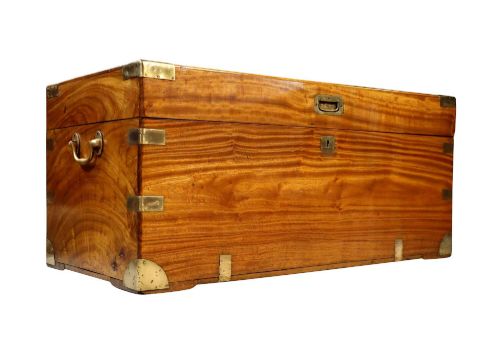
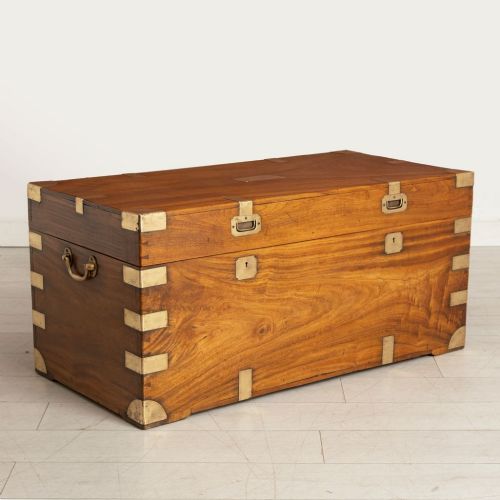
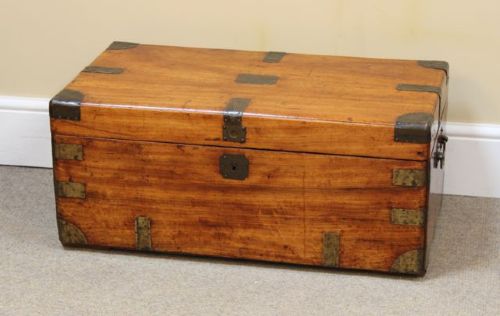
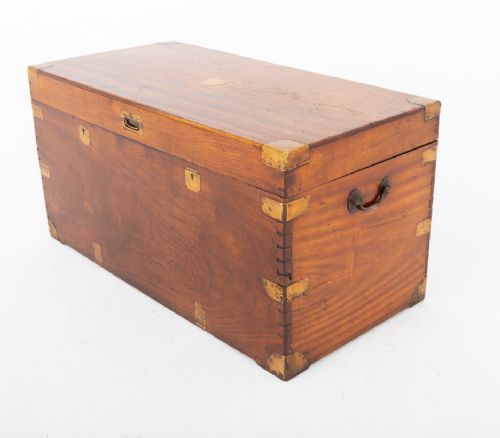

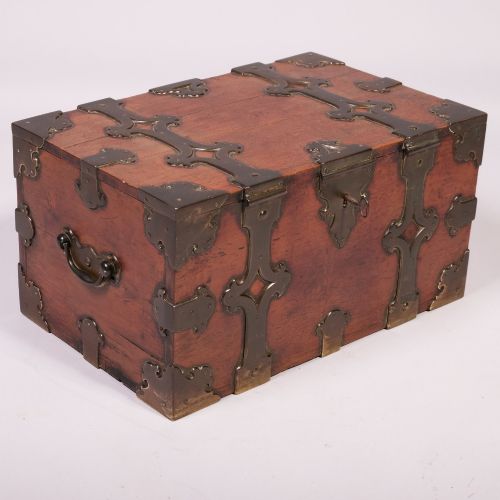
Brass Bound Wood Chest
When you examine a brass bound wood chest, you hold a piece of portable history built to survive long journeys across the seas.
Brass Bound Wood Chest
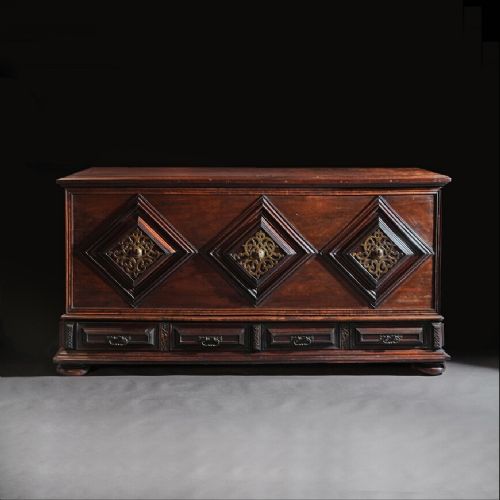
A brass bound wood chest encompasses sturdy trunks, campaign boxes, and cellarettes designed for travel and domestic utility across several centuries. The selection on this page relies heavily on 19th-century camphor wood and mahogany examples built for military officers and merchants.
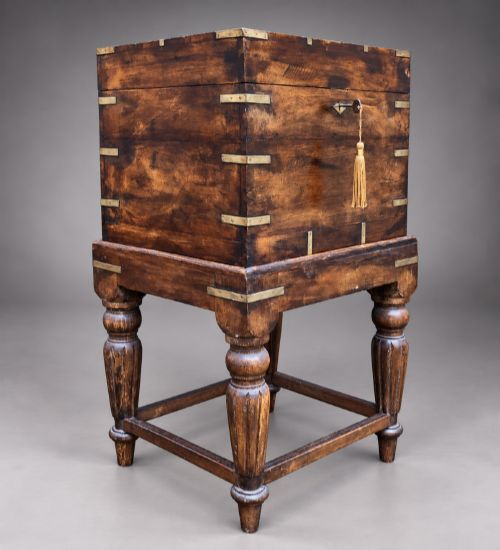
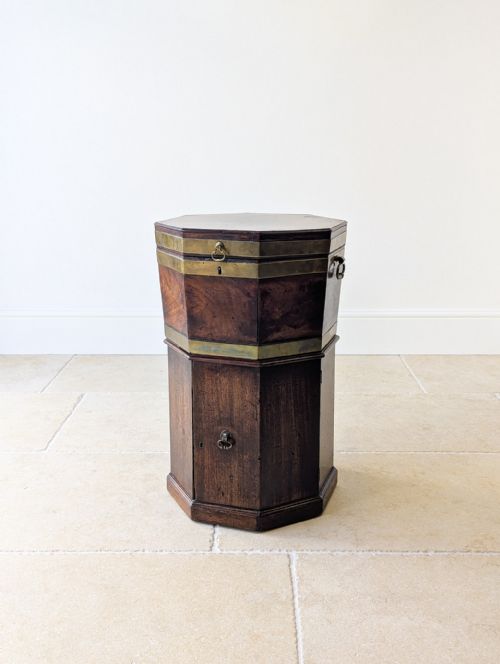
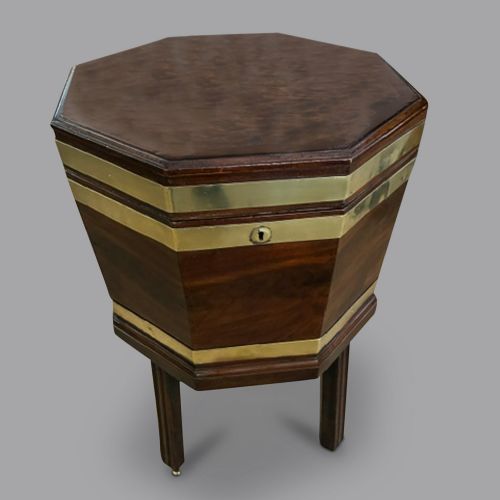
Forms range from two-part campaign chests of drawers to large blanket boxes and octagonal wine coolers. Many pieces originate from British colonial contexts, including Anglo-Indian and Chinese export workshops, reflecting global trade routes.
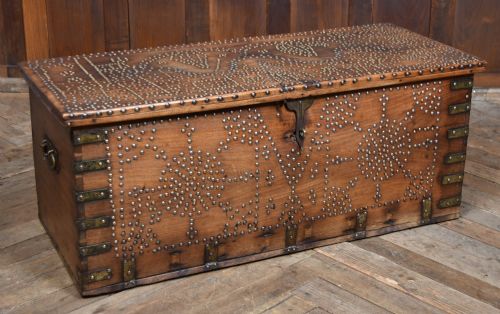
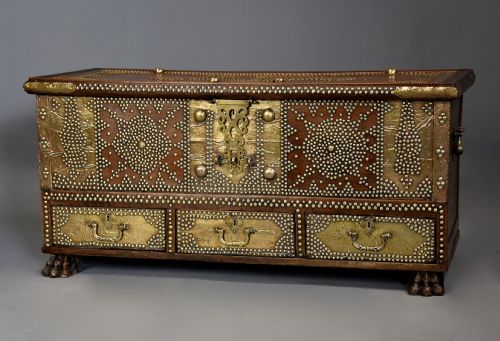
Buyers will encounter simple utilitarian trunks alongside highly decorative Zanzibar chests featuring elaborate brass studwork and strapwork. The core function remains secure storage, augmented by robust metal reinforcements that protected corners and edges during transit.
Materials and construction methods
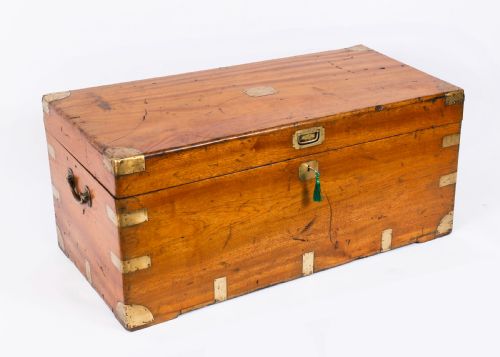
Carpenters utilised resilient timbers such as camphor wood, mahogany, padouk, teak, and kingwood to construct these chests. Camphor wood served a practical purpose by repelling insects from stored textiles, while dense hardwoods provided structural integrity.
Sheet brass and iron formed corner plates, strapping, and flush-fitting drop handles that prevented snagging in tight spaces. Metal hardware was frequently secured with numerous small brass pins or screws, reinforcing the joints against the rigours of travel.
Many camphor wood trunks still retain a faint, unmistakable trace of their natural forest scent after nearly two centuries.
Assessing craftsmanship and condition
Quality shows in the weight and thickness of the timber, the precision of the dovetail joints, and the density of the brass binding. Superior pieces retain their original flush-fitting hardware, working locks, and fitted interior compartments rather than later replacements.
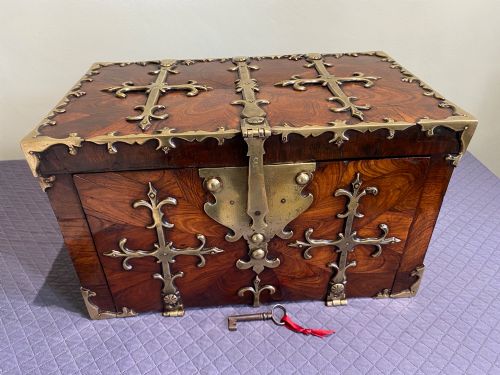
The finish of the wood and the complexity of the brass strapwork separate standard utilitarian trunks from luxurious export models made for wealthy patrons. Original surfaces with rich patination demonstrate careful maintenance over generations.
The Brass Bound Wood Chest Glossary
- Campaign chest
- A modular chest of drawers built in two or more sections with recessed brass handles and corner brackets for easy transport by military officers.
- Cellarette
- A lockable container designed to hold bottles of wine or spirits, often octagonal in shape and lined to maintain temperature.
- Coffre forte
- A heavy strongbox or chest reinforced with metal bands, used historically for storing valuables and documents.
- Zanzibar chest
- An ornate trunk originating from or influenced by East African trade, characterised by heavy brass studding, applied geometric motifs, and intricate hasps.
- Padouk
- A dense tropical hardwood prized for its deep reddish hue and durability, frequently selected for colonial furniture.
Brass Bound Wood Chest: Frequently Asked Questions
What is a brass bound wood chest?
These items are portable storage trunks and cabinets reinforced with metal strips and corners to withstand heavy travel. They were widely utilised by military personnel and merchants.
The listings here feature numerous camphor wood and mahogany examples spanning the eighteenth and nineteenth centuries. Their sturdy build allowed them to endure long sea voyages.
How were campaign chests used?
Military officers used these modular chests to transport uniforms, documents, and personal belongings during overseas postings. The design allowed quick disassembly into manageable sections.
Recessed handles and protective brass corners prevented damage and saved space in tents or cabins. Many included fold-down writing surfaces for field administration.
Why use camphor wood?
Carpenters chose camphor wood for its natural aromatic qualities, which deterred moths and other insects from damaging stored woollens and linens. The timber is also lightweight yet resilient.
Over decades, the wood develops a distinct warm tone beneath the protective varnish. This material remains a hallmark of British colonial and Asian export trunks.
How do I date these chests?
Dating relies on construction methods, timber choice, and the style of the brass hardware. Eighteenth-century pieces often feature hand-cut dovetails and simpler iron or brass mounts.
Nineteenth-century Victorian examples typically display standardised brass strapwork and flush handles. Examining secondary woods and interior linings provides further chronological clues.