




17th Century Panelled Chair
A 17th century panelled chair provides solid timber construction and historic character, grounding a room with centuries of vernacular tradition.
17th Century Panelled Chair
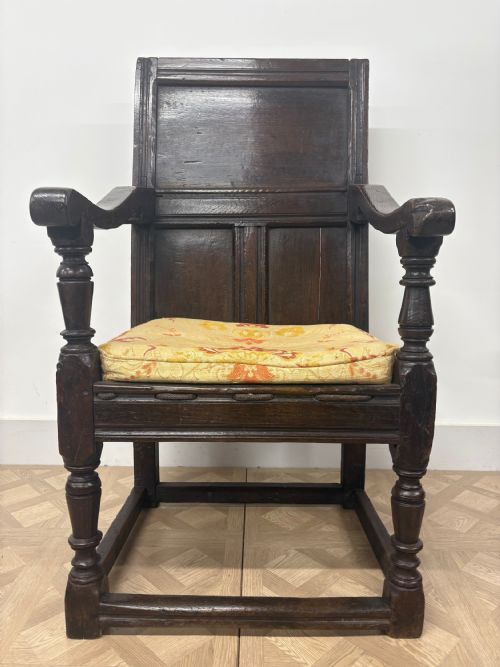
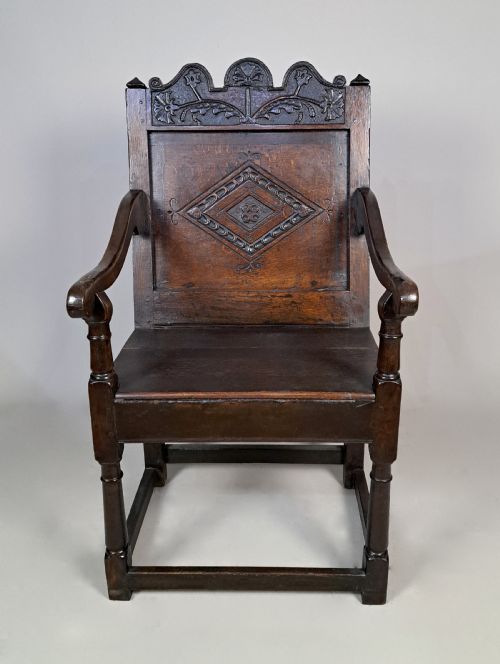
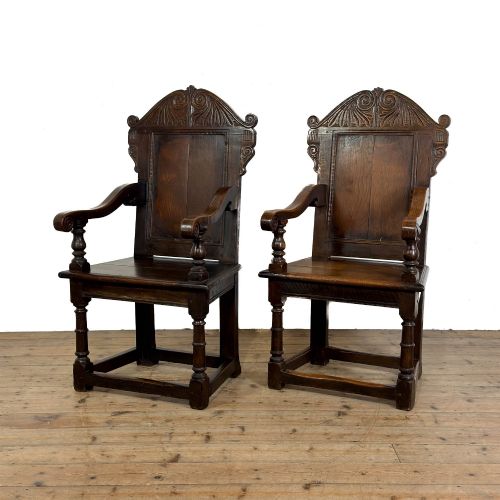
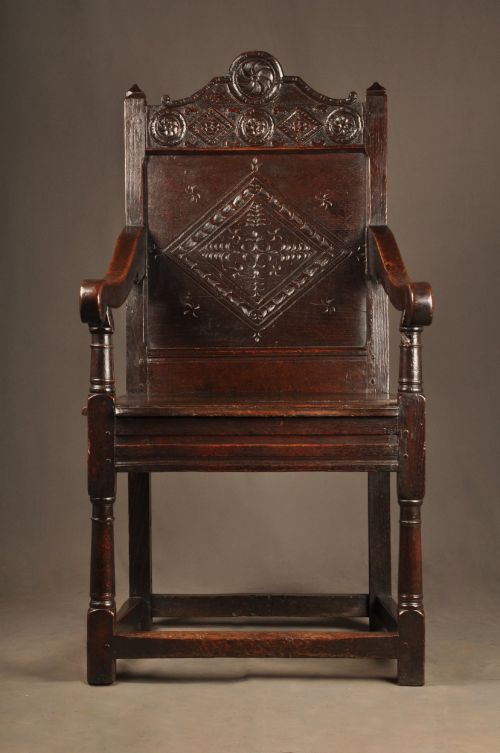
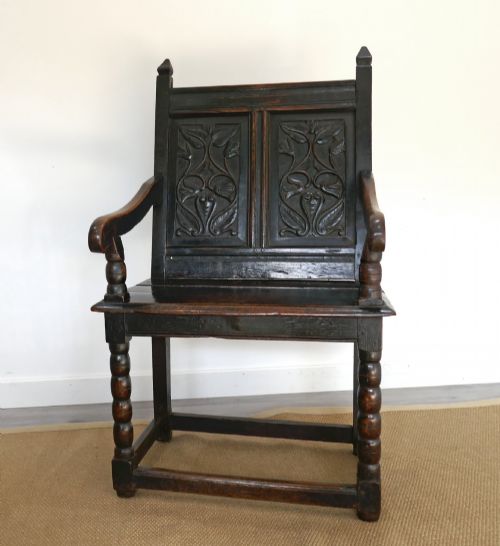
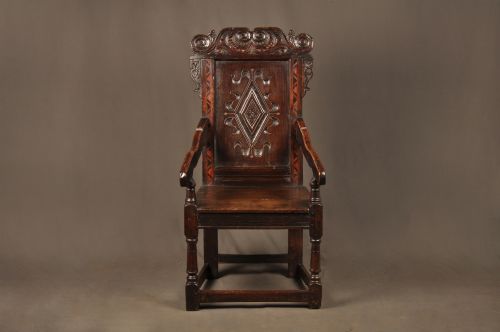
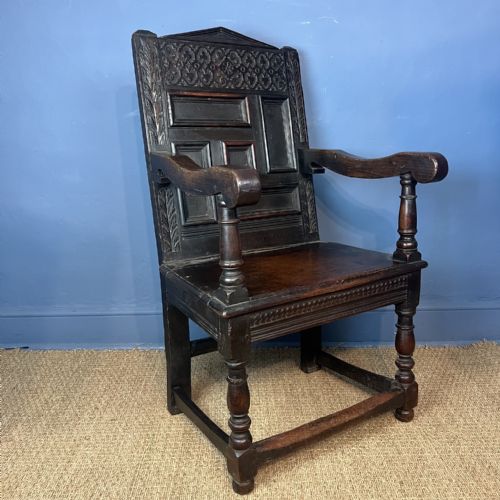
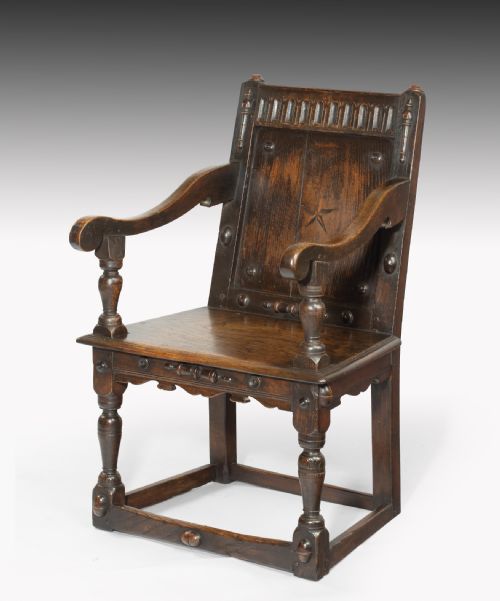
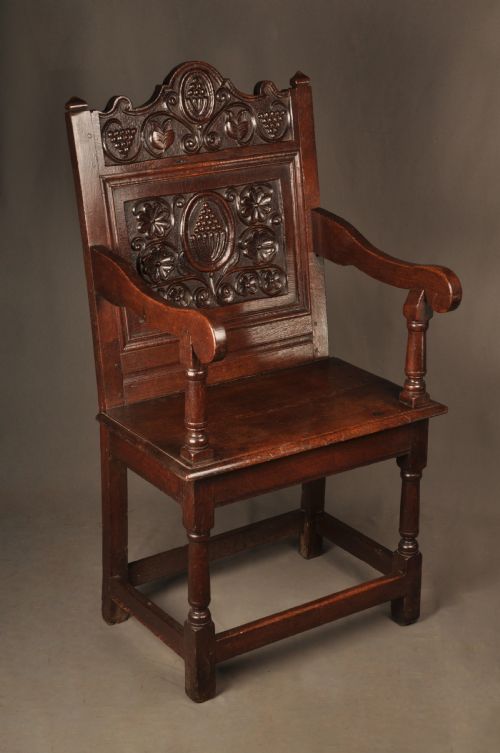
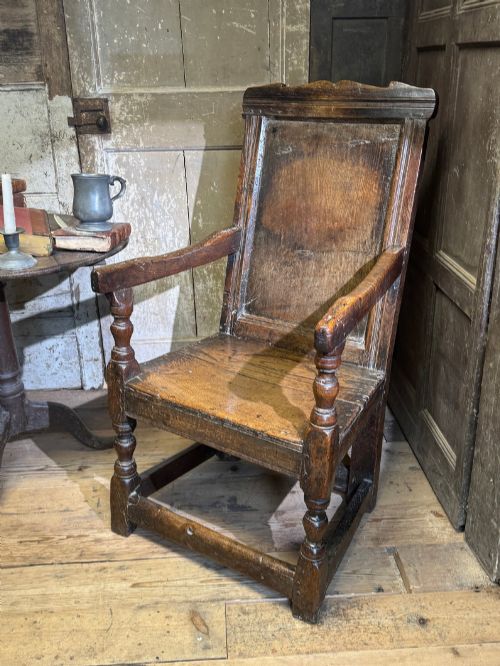
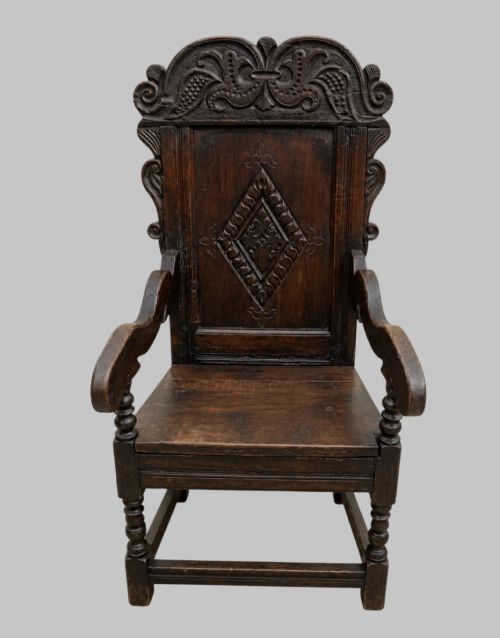
A 17th century panelled chair, frequently encountered as a wainscot armchair, uses rigid wooden framing and inset panels to form a sturdy seat. These heavy chairs appear primarily in oak, reflecting domestic and civic interiors from the seventeenth century onward.
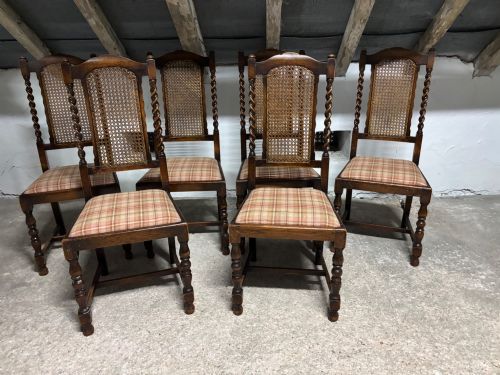
Regional variants across Yorkshire, Lancashire, Wales, and Scotland demonstrate distinct regional carving traditions and proportions. Later revival pieces from the nineteenth century emulate these early forms using similar solid timbers.
The inventory encompasses armchairs, side chairs, and enclosed forms, alongside dining sets and benches adapted from these foundational seventeenth-century archetypes.
How they were made
Carpenters constructed these chairs from solid oak using mortise and tenon joints locked with wooden pegs, creating a rigid frame that required no metal fastenings. Backrests utilise flat or carved wooden panels fitted securely into grooved uprights.
Surface ornamentation relies on hand chisels and gouges to produce geometric strapwork, scrolling foliage, and crested top rails. Selected examples incorporate wood inlay or traces of polychrome paint to enhance the architectural detailing.
Some diminutive armchairs were built specifically for children or ladies, preserving miniature mortise joints for smaller households.
What varies in quality
The depth and crispness of hand carving distinguish superior examples from plain or heavily restored work. Crisp relief work on the crest rail and panel indicates confident handling by the original carpenter.
Proportion and timber figure dictate visual strength, as well-figured oak boards with rich natural colour hold presence in a room. Structural integrity depends on the retention of original pegged joinery rather than modern replacements.
The 17th Century Panelled Chair Glossary
- Wainscot chair
- A heavy wooden armchair constructed with panelled backrests and solid wooden seats, typical of the seventeenth century.
- Joint stool
- A low wooden seat built with mortise and tenon joints and turned legs, sharing structural techniques with panelled seating.
- Strapwork
- Carved flat bands interlaced in geometric patterns, commonly seen on the crest rails of seventeenth-century chairs.
- Backstool
- An early term for a upholstered or panelled side chair without arms, designed for dining or parlour use.
17th Century Panelled Chair: Frequently Asked Questions
How do I spot a 17th century panelled chair?
Look for pegged mortise and tenon joints, solid oak construction, and panelled backrests characteristic of early carpentry.
Examine the wear patterns on the seat and arms to understand the age and handling of the timber.
Are 19th century revival chairs authentic?
Nineteenth-century revival pieces replicate seventeenth-century styles using traditional oak and historic joinery techniques.
These chairs serve as period-appropriate seating while reflecting Victorian interpretations of earlier furniture.
Where were these chairs made?
Regional workshops across Yorkshire, Lancashire, Wales, and Scotland produced distinct variants with local carving motifs.
English country makers utilised local timber stocks to build sturdy furniture for domestic halls and farmhouses.
How do I care for historic oak furniture?
Maintain stable indoor humidity levels and keep wooden furniture away from direct heat sources to prevent timber splitting.
Apply traditional beeswaxes sparingly to nourish the oak surface and preserve its natural colour.