


17th Century Oak Moulding
These pieces of 17th century oak moulding bring substantial seventeenth-century timber and geometric design into a room.
17th Century Oak Moulding
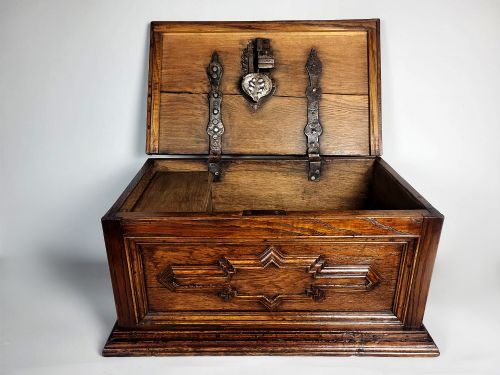
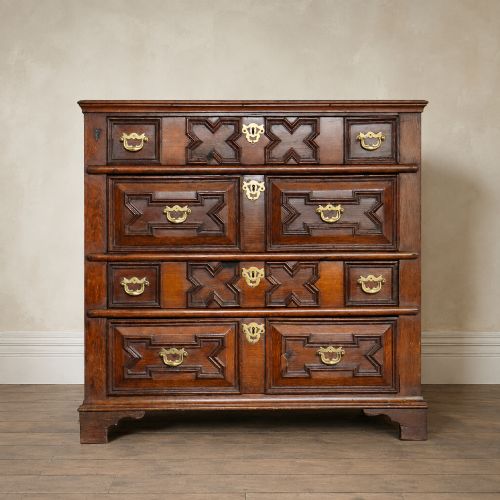
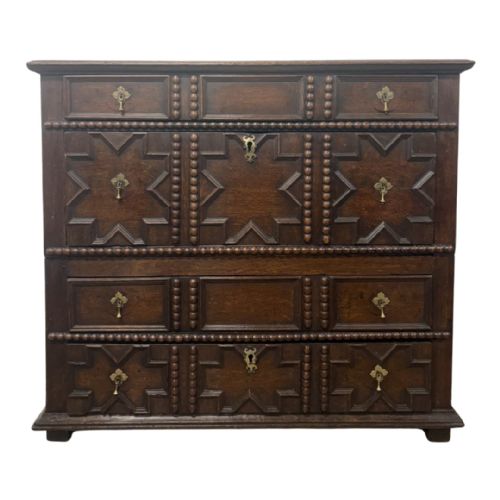
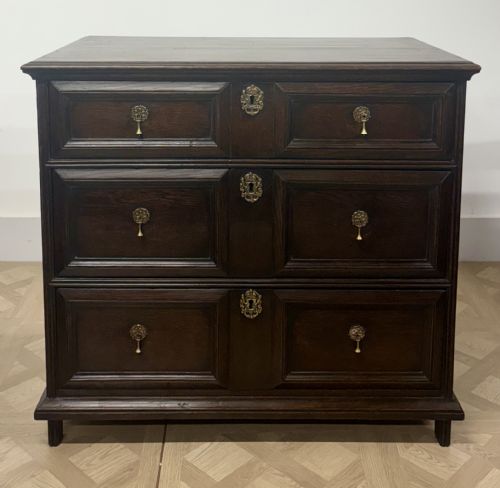
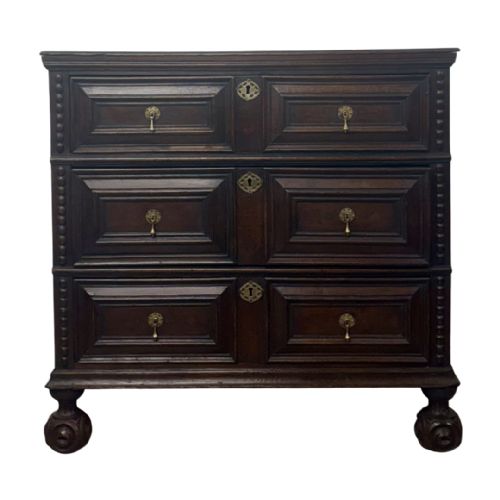
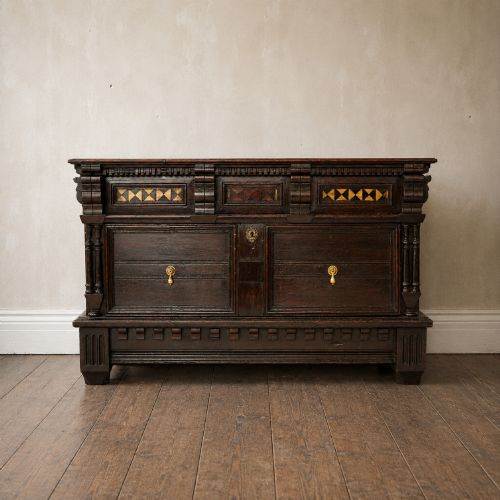
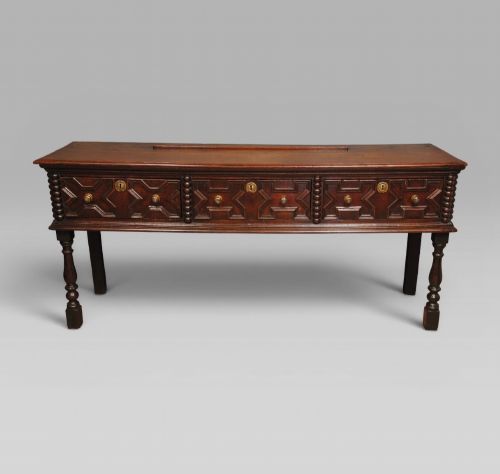
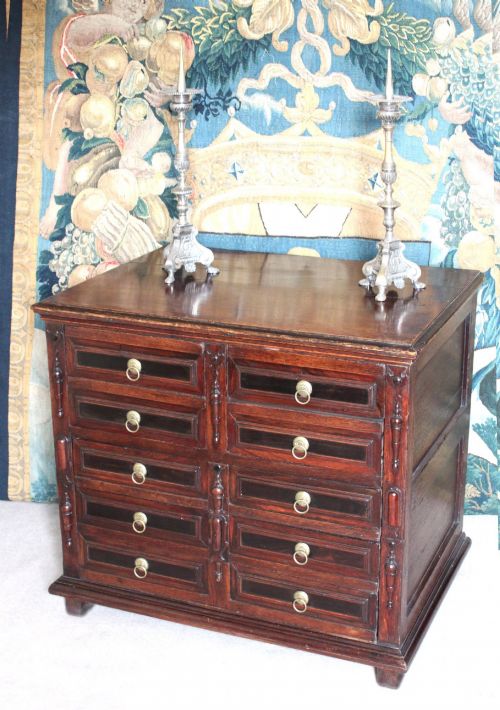
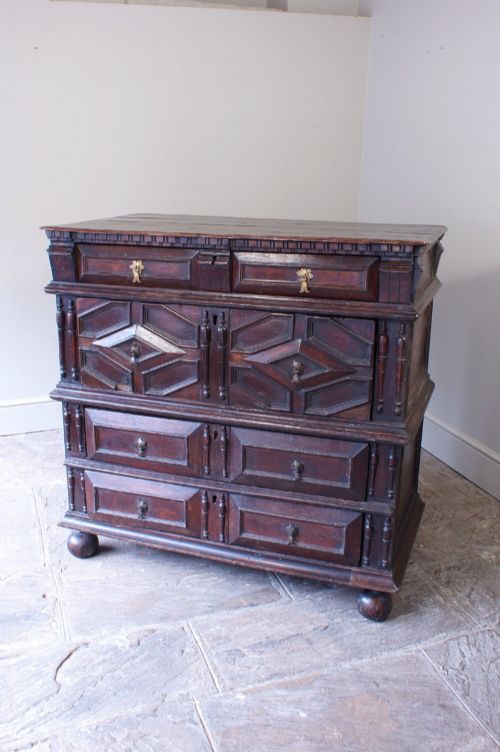
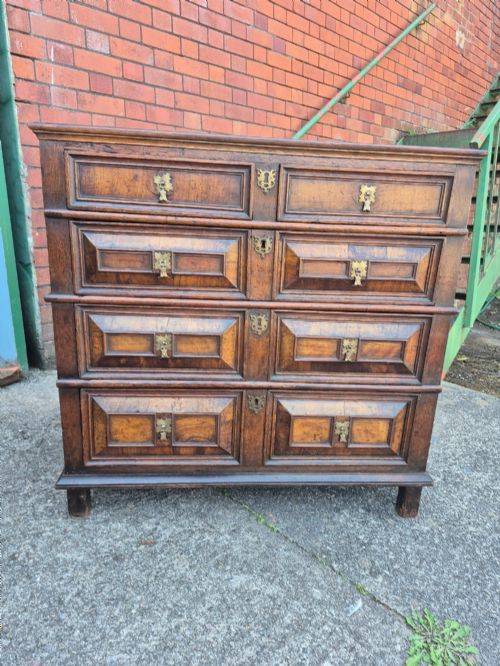
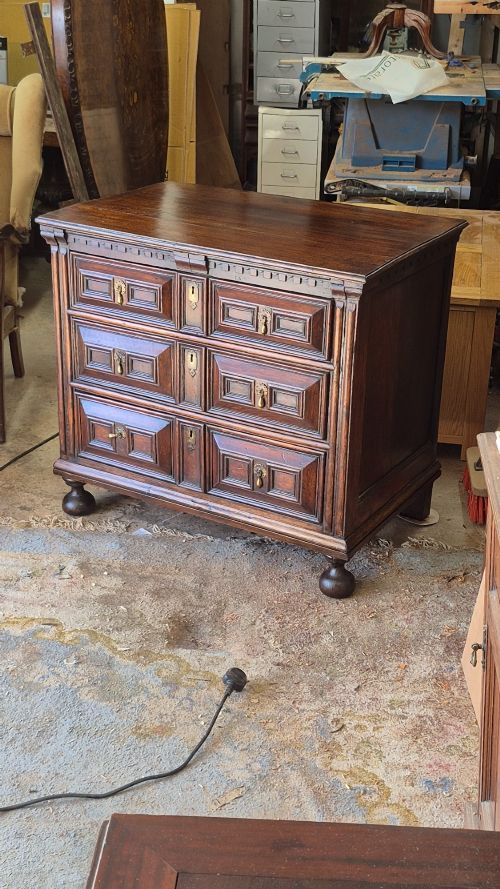
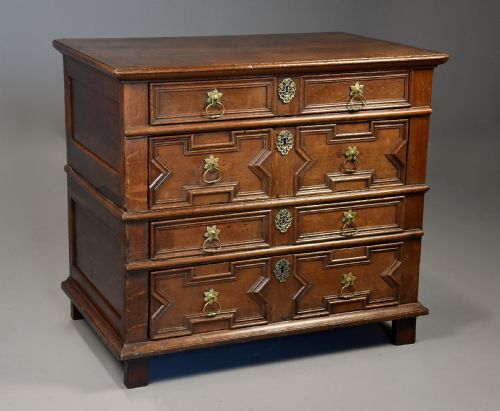
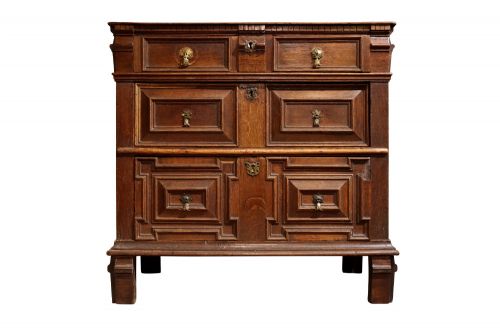
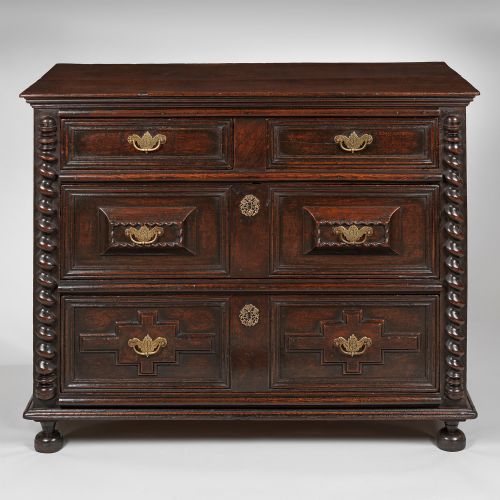
When you search for 17th century oak moulding, you encounter heavy storage furniture and architectural fragments defined by applied geometric decoration. The selection here centres overwhelmingly on chests of drawers from the Charles II and Jacobean periods, alongside dresser bases and servers.
Makers of this era constructed drawer fronts using applied mitred mouldings to create panels, crosses, and octagonal patterns. These timber constructions rely on solid oak frameworks, frequently enriched with contrasting veneers and secondary timbers.
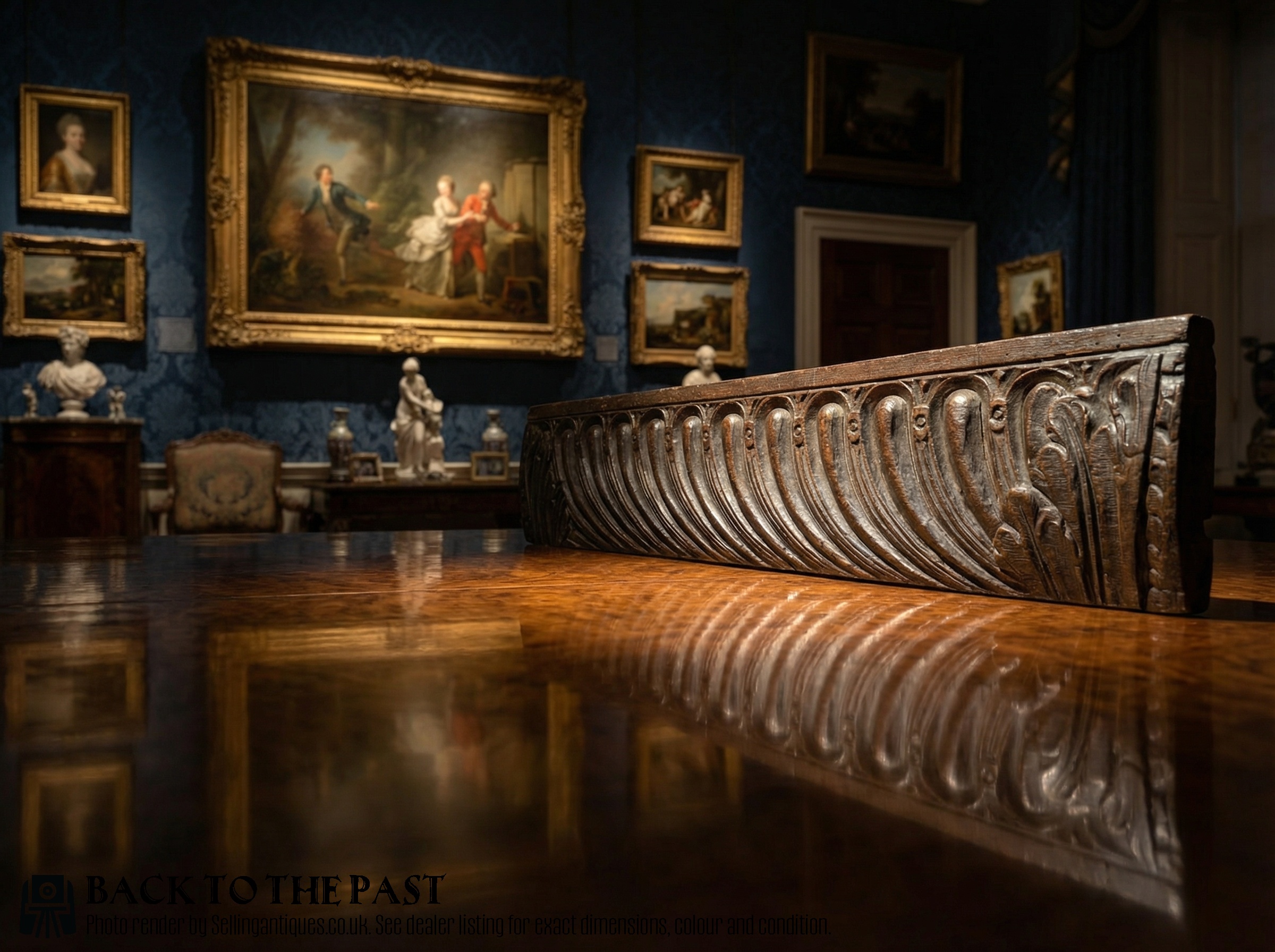
Beyond chests, the inventory holds architectural salvage, safe boxes, and occasional writing desks. Each surviving piece demonstrates the transition from plain boarded construction to intricate relief work on domestic storage.
How they were made
Joiners built these carcases from solid oak, utilising pegged mortise and tenon joints for structural rigidity. Drawer fronts received applied mouldings cut from fruitwood, walnut, or snakewood to form raised geometric patterns.
Surfaces often incorporate oyster veneering, where small branch wood sections are sliced to create concentric circular patterns. Original hardware involves wrought iron locks and brass drop handles mounted on backplates.
Several chests feature snakewood and fruitwood decorations, proving that seventeenth-century joiners enjoyed exotic flair just as much as plain English oak.
What varies in quality
The refinement of the applied geometric mouldings dictates the level of craftsmanship in each piece. Crisp mitres, balanced panel proportions, and intact cross-grain mouldings separate superior examples from plain utility furniture.
Surface integrity and the retention of original timber elements define desirability. Variations arise in the choice of secondary woods like walnut and fruitwood, and whether the drawer linings and backboards remain undisturbed over the centuries.
The 17th Century Oak Moulding Glossary
- Geometric moulding
- Applied strips of wood arranged in rectilinear or octagonal patterns on drawer fronts. This technique defined British case furniture during the latter half of the seventeenth century.
- Oyster veneer
- Thin slices cut transversely from small branches to display circular growth rings. Cabinet makers arranged these patterns across drawer fronts during the late Stuart period.
- Two-part chest
- A chest of drawers constructed in two separate stackable sections. This format facilitated transport in seventeenth-century households.
- Dresser base
- A low sideboard fitted with drawers above open space or cupboards. These heavy oak pieces served domestic storage needs in dining rooms and kitchens.
17th Century Oak Moulding: Frequently Asked Questions
How do I date these pieces?
Dating relies on construction methods, timber choice, and the style of applied mouldings. Pieces from the Charles II period often exhibit complex geometric fronts on two-part carcases.
Hardware placement and lock mechanisms also provide chronological markers. Later adaptations typically disturb the uniformity of the original seventeenth-century construction.
Where were these pieces used?
These storage items stood in chambers, halls, and parlours of seventeenth-century homes. Chests held textiles, documents, and valuables securely under lock.
Dresser bases functioned in service rooms and large kitchens for storing tableware and provisions. Their heavy timber build suited the domestic routines of the period.
How do I care for oak moulding?
Maintain stable humidity levels in the room to prevent timber shrinkage and veneer lifting. Direct sunlight will fade the natural colour and dry out the old wood.
Apply traditional beeswax sparingly to nourish the surface. Avoid modern liquid polishes that build up a residue over the old patina.
Are these pieces entirely original?
Many surviving examples incorporate repairs, updated handles, or later board replacements accumulated over centuries of use. Descriptions indicate whether elements like feet or cupboard additions date to later periods.
Examining the interior construction reveals the extent of replacement timber. Original locks and backboards enhance the historical integrity of the piece.