


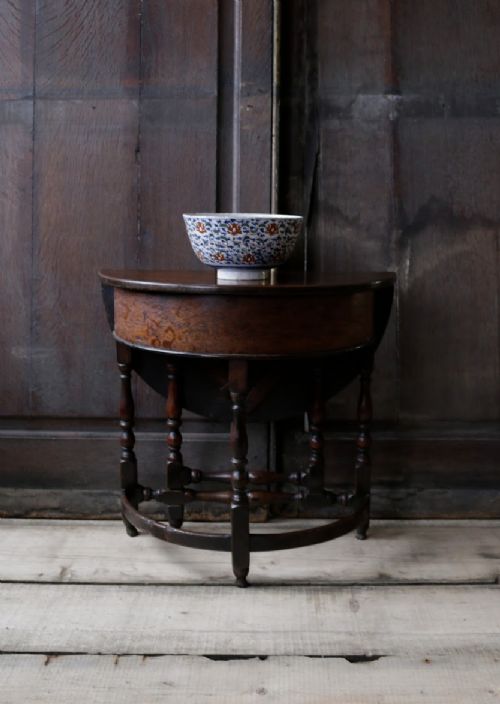



17th Century Joined Furniture
These pieces of 17th century joined furniture offer solid oak construction and pegged framing that bring authentic seventeenth-century craft directly into a home.
17th Century Joined Furniture
When someone searches for 17th century joined furniture, they encounter sturdy domestic utilitarian objects constructed using mortise and tenon joints secured with wooden pegs. The selection on this page focuses heavily on oak storage and seating forms originating from English and Welsh workshops.
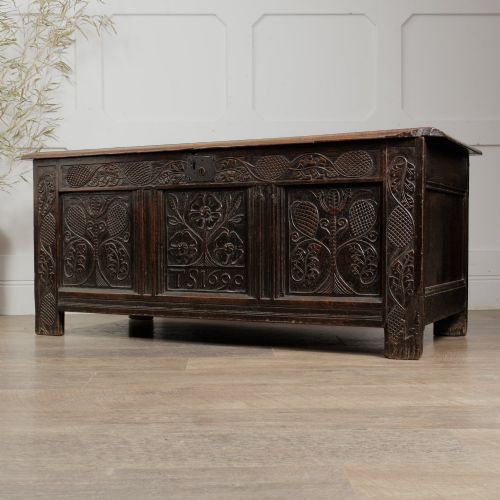
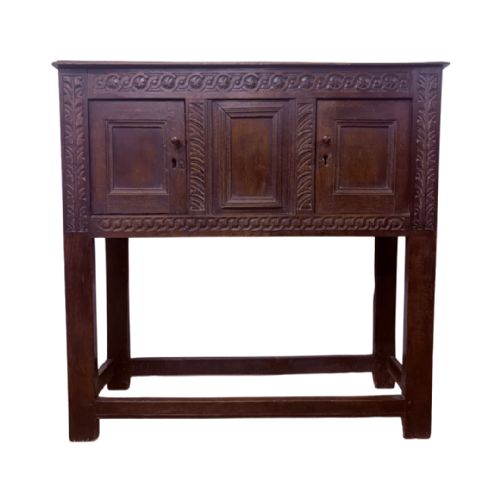
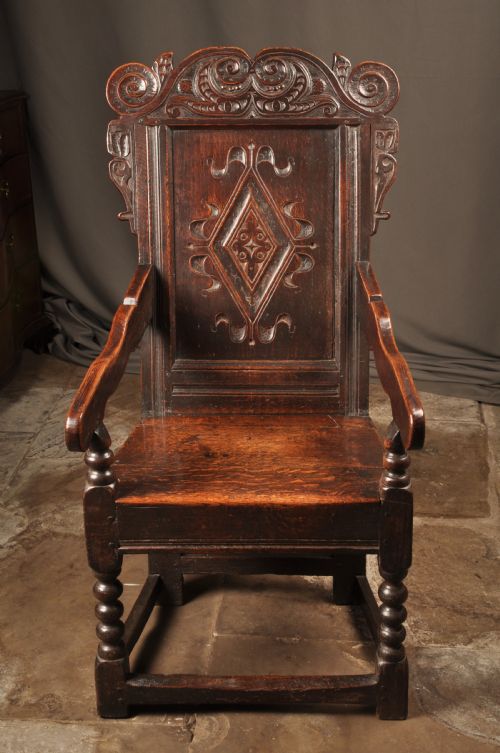
The most common survival from this period is the oak coffer or chest, alongside joined stools, wainscot armchairs, and court cupboards. These items served essential storage and seating functions in domestic interiors before freestanding case furniture became widespread.
Regional variations appear frequently, including examples from Yorkshire, Lancashire, and the Gower Peninsula that display distinct regional carving patterns and proportions. While many pieces date strictly to the seventeenth century, later adaptations and Georgian examples also emerge within the broader category.
How they were made
Joinery techniques define these works, relying on precise mortise and tenon joints locked together with driven wooden pegs rather than iron nails. Frameworks of solid English oak enclose panels that allow timber to expand and contract naturally with seasonal humidity changes.
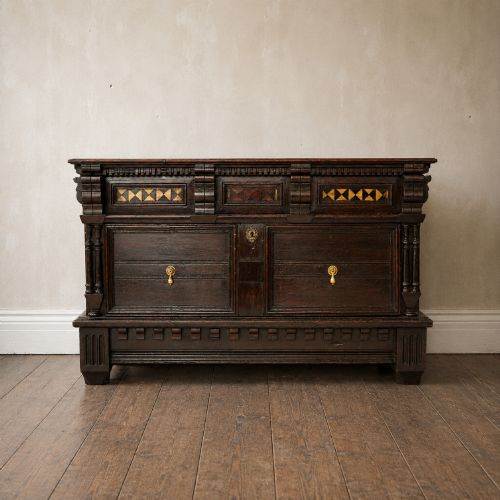
Secondary timbers such as elm appear alongside primary oak structures, while fittings incorporate wrought iron and brass elements for hinges and locks. Wood inlay and surface carving ornament structural members on finer forms like court cupboards and panelled chests.
Current listings span the seventeenth century through the Georgian era, uniting oak, elm, brass, iron, and wood inlay within functional domestic forms.
What varies in quality
The integrity of the original joined framework separates superior survivals from heavily altered or restored examples. Intact pegging and minimal replacement to structural timber preserve the original proportion and physical presence of a coffer or armchair.
Depth and crispness of carved ornamentation distinguish standard regional production from more ambitious workshop output. Patina accumulated through centuries of daily use provides a tactile depth that chemical stripping or heavy modern finishing entirely eliminates.
The 17th Century Joined Furniture Glossary
- Joined furniture
- Furniture constructed by a joiner using interlocking mortise and tenon joints pegged together, as distinct from earlier boarded construction or later cabinet-made pieces.
- Wainscot armchair
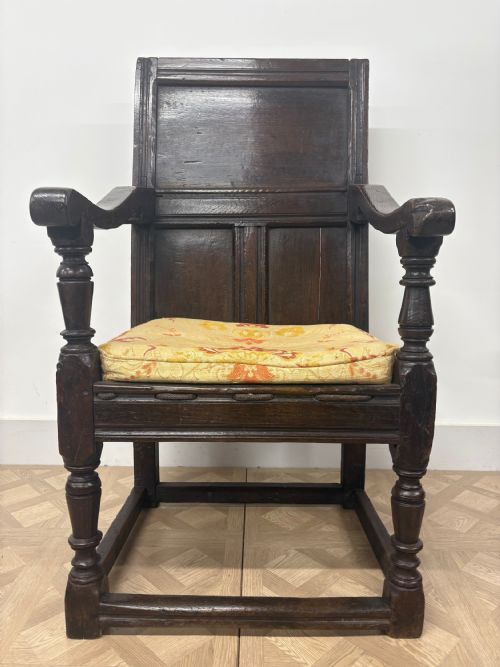
- A heavy wooden armchair constructed with panelled backboards and solid seat platforms, common in seventeenth-century domestic settings.
- Joint stool
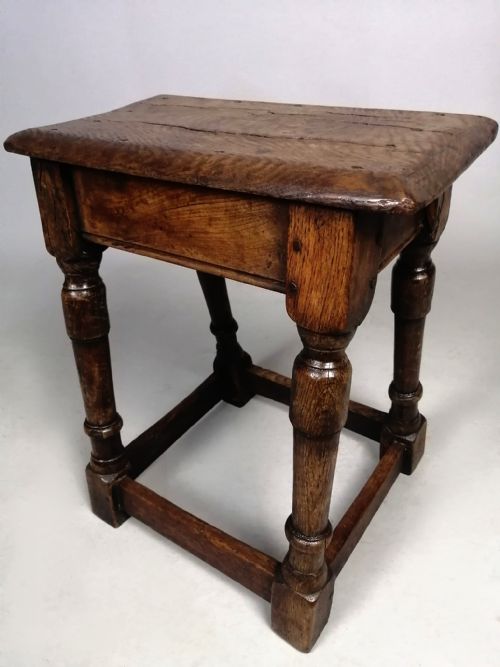
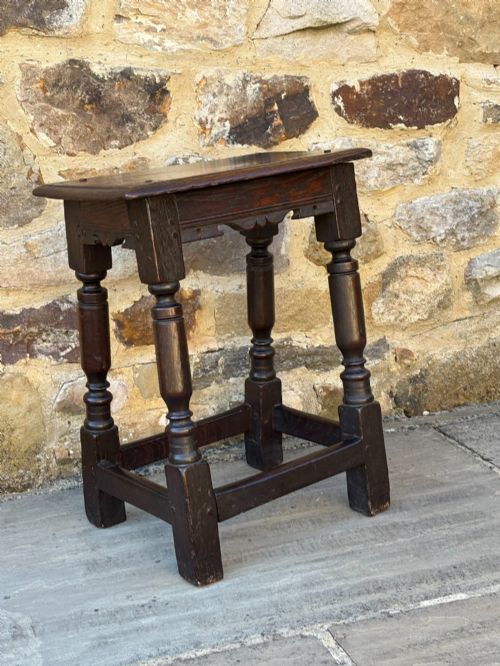
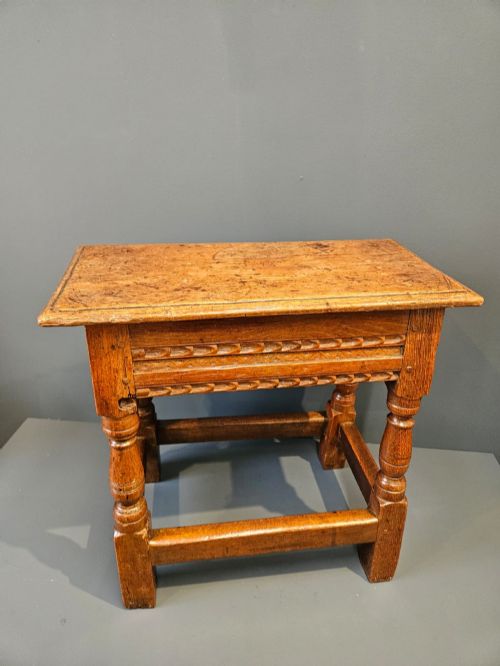
- A sturdy wooden stool built with joined framing and pegged mortises, frequently used for seating or as a small side support.
- Coffer
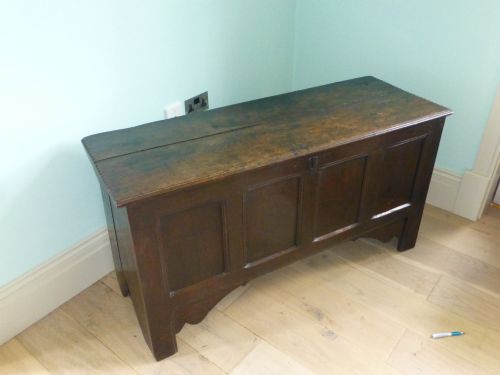
- A large wooden chest with a hinged lid, utilised primarily for storing textiles, valuables, and domestic provisions.
- Court cupboard
- An elaborate joined storage piece featuring recessed upper tiers and enclosed lower compartments used for displaying plate and storing household goods.
17th Century Joined Furniture: Frequently Asked Questions
How do I use a coffer today?
A coffer functions effectively as a blanket chest at the foot of a bed or as a low storage table in a living space.
Its interior capacity accommodates linens and bulky items while providing a flat wooden top surface.
What is a wainscot chair?
A wainscot chair is an imposing wooden armchair featuring panelled back construction and heavy turned supports.
These chairs served as principal seats of authority in seventeenth-century households.
How do I care for old oak?
Maintain old oak furniture by avoiding direct sunlight and excessive heat sources that dry out the timber.
Applying occasional traditional wax preserves the natural sheen and protects the wood surface.
Are joint stools sturdy?
Joint stools are engineered with pegged mortise and tenon framing that provides exceptional structural rigidity.
They function reliably as occasional seating or small bedside tables.