

Jacobean Oak Dining Chair
A jacobean oak dining chair brings sturdy construction and historic carved detail to the dining table.
Jacobean Oak Dining Chair
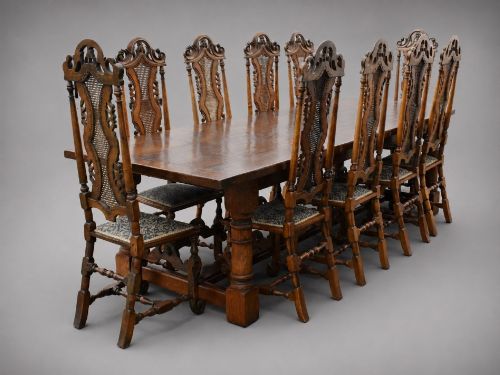
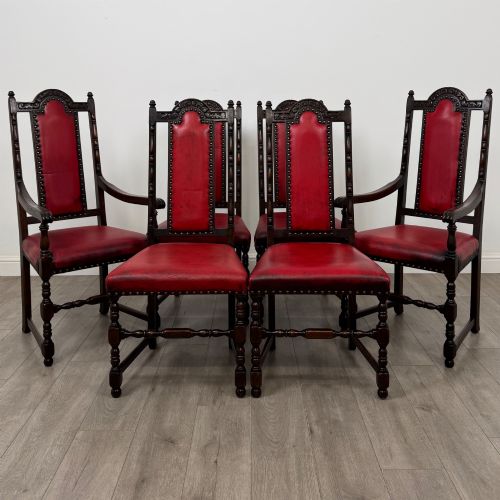
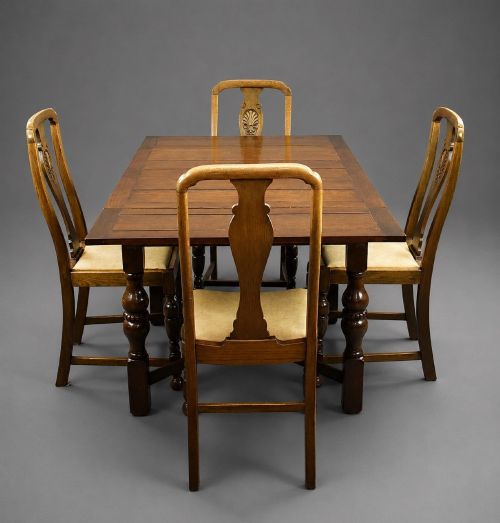
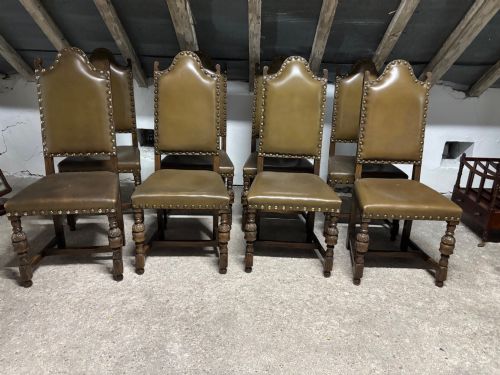
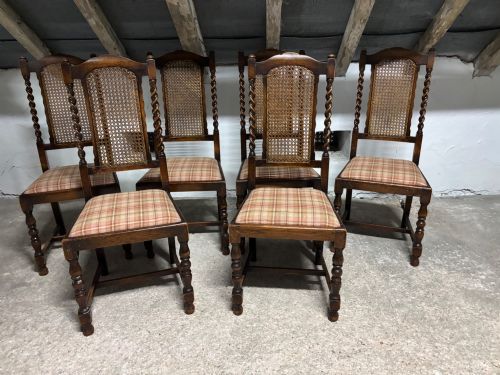
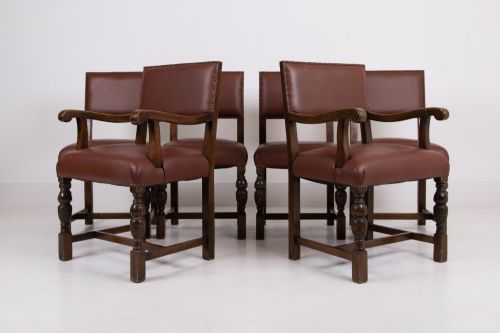
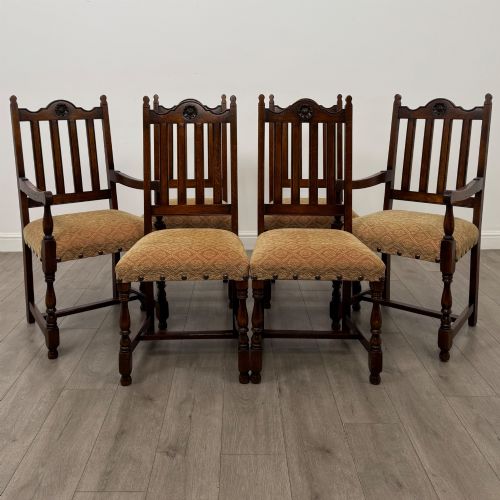
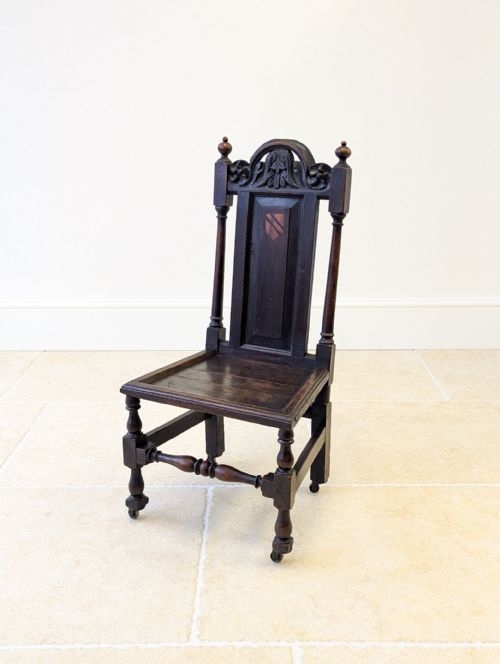
A jacobean oak dining chair encompasses both genuine seventeenth-century survivals and later revival interpretations from the Victorian, Edwardian, and interwar periods. These pieces include high-back dining chairs, side chairs, armchairs, and backstools featuring straight or turned uprights and panelled or upholstered seats.
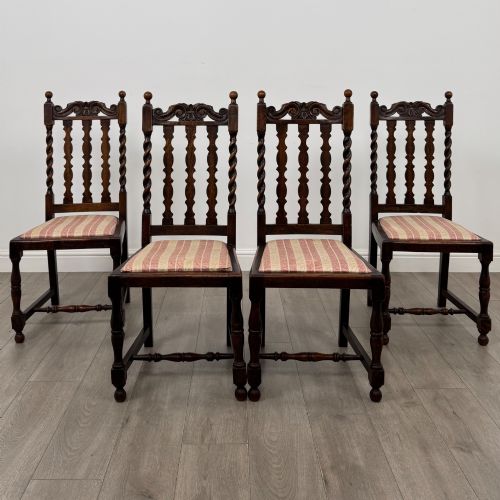
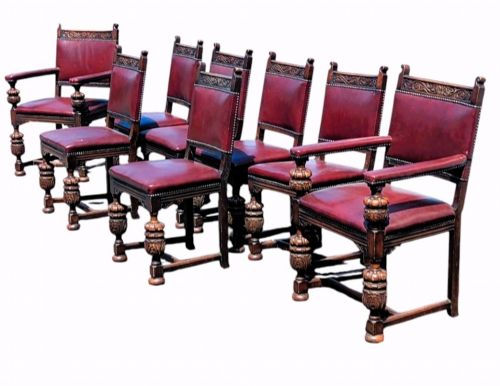
While original seventeenth-century examples appear occasionally, buyers frequently encounter matched or large sets produced during the nineteenth and twentieth-century Jacobean revival. These later suites emulate the early proportions, heavy turned legs, and carved crest rails of the original models.
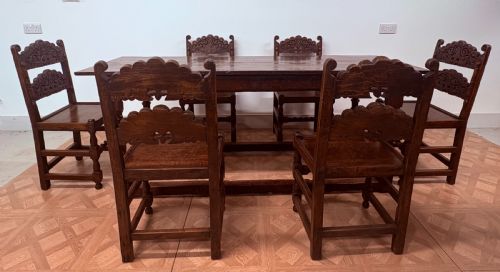
The form adapts to domestic use across different eras, serving as individual hall chairs or forming parts of extensive dining sets alongside refectory tables. Regional variants such as Yorkshire and Derbyshire types also emerge within the broader selection.
How they were made
Joinery forms the foundation of these chairs, utilising pegged mortise and tenon joints to secure the heavy timber framework without reliance on metal fasteners. Craftsmen shaped the solid oak using hand tools, producing robust stretchers, uprights, and panelled backs.
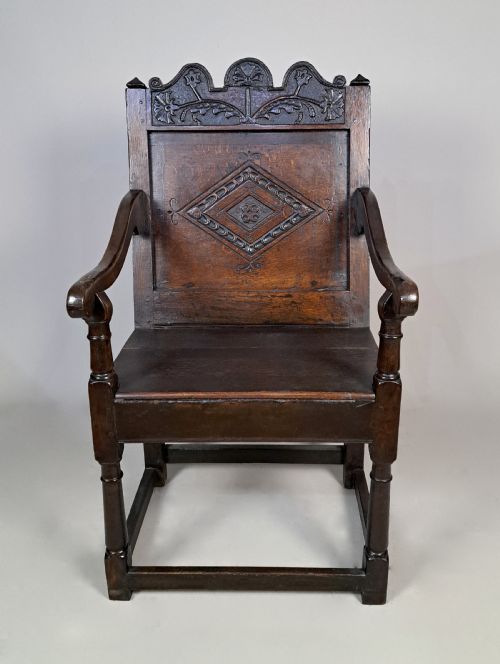
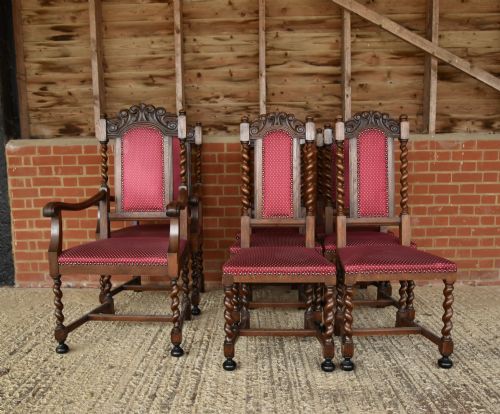
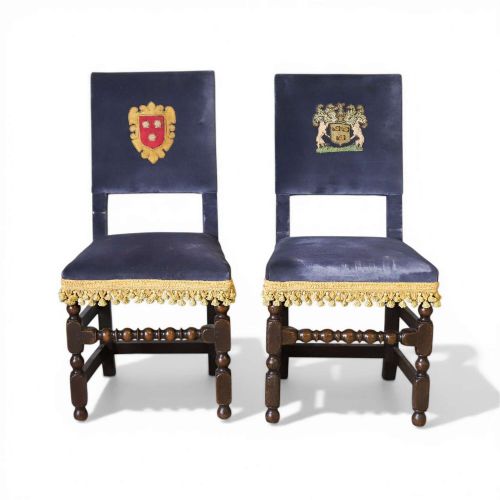
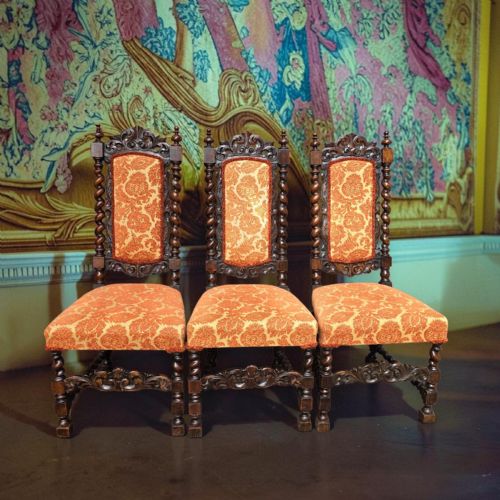
Turnery techniques such as barley twist and bobbin turning shape the legs and stretchers, appearing extensively in both seventeenth-century workshops and subsequent revival periods. Carving decorates the crest rails and splats, featuring geometric strapwork, foliate motifs, and heraldic crests.
Upholstery relies on traditional materials including leather, fabric, cane, velvet, and textiles secured with brass tacks. Caned panels provide flexible seating on lighter side chairs, while heavy leather and velvet cover padded backs and seats on formal dining chairs.
The inventory records dining sets, refectory tables, armchairs, hall chairs, and backstools in various revival styles.
What varies in quality
Construction integrity distinguishes the better examples, where the tight fit of original pegged joints maintains stability across centuries or decades of use. Lesser pieces suffer from loose framing or excessive timber shrinkage that compromises the load-bearing strength of the legs and stretchers.
Carving depth and execution separate standard production from superior craftsmanship, with crisp, deeply incised details indicating skilled hand work rather than shallow machine milling. The quality of the oak itself, reflected in straight grain and rich colour, elevates the standing of the piece.
The integrity of the upholstery materials, whether original leather, hand-woven cane, or textile, influences the overall standard. Intact canework and well-preserved hide upholstery demonstrate careful ownership and superior initial materials.
The Jacobean Oak Dining Chair Glossary
- Backstool
- An early term for a chair without arms, essentially a stool fitted with an upright backrest. These items typically feature solid wooden panels or plain uprights.
- Barley twist
- A decorative turning technique resembling a spiralling rope, commonly utilised on the legs and stretchers of seventeenth-century and revival seating.
- Wainscot chair
- A heavy wooden armchair constructed with panelled framing, popular in domestic interiors during the early seventeenth century. This form utilises solid oak boards for the back and seat.
- Derbyshire chair
- A regional seventeenth-century style characterised by an open arcaded back with carved rails and turned supports. These chairs often feature wooden seats and slender proportions.
- Joinery
- The method of connecting pieces of timber using wood joints rather than metal nails or screws. Pegged mortise and tenon joints typify this traditional form of construction.
Jacobean Oak Dining Chair: Frequently Asked Questions
How do I date a jacobean oak dining chair?
Dating relies on examining tool marks, timber shrinkage, and construction methods to distinguish seventeenth-century originals from nineteenth and twentieth-century revival pieces. Wear patterns around the footings and stretchers also offer clues to the age of the woodwork.
Revival furniture often exhibits standardised machine turning and uniform timber conditioning compared to the hand-riven boards and irregular hand-carved details of earlier centuries.
Are these chairs comfortable for daily dining?
High-backed solid wood and leather upholstered variants provide upright support suitable for formal dining settings. Seat heights and back angles reflect the ergonomic standards of their respective periods of manufacture.
Adding loose cushions can improve comfort on wooden or caned seats during extended sitting periods while preserving the structural fabric of the chair.
How should I care for antique oak furniture?
Maintaining oak timber involves keeping pieces away from direct heat sources and sudden humidity changes that cause the wood to split or warp. Regular dusting with a soft, dry cloth preserves the finish without sealing the grain.
Leather and cane elements require specific conditioners to prevent brittleness, while applied waxes help maintain the natural lustre of the oak surfaces.
Can I mix different sets at the dining table?
Matching large sets proves difficult, so pairing a refectory table with armchairs at the heads and side chairs along the sides creates a balanced arrangement. Matched pairs and smaller sets of four or six integrate well when sharing similar turnings or wood tones.
Coordinating pieces through shared characteristics like barley twist legs or dark oak finishes maintains visual harmony across a mixed dining room suite.