




17th Century Dresser Base
A 17th century dresser base delivers grounded utility and timber character, offering deep storage surfaces shaped by centuries of domestic life.
17th Century Dresser Base
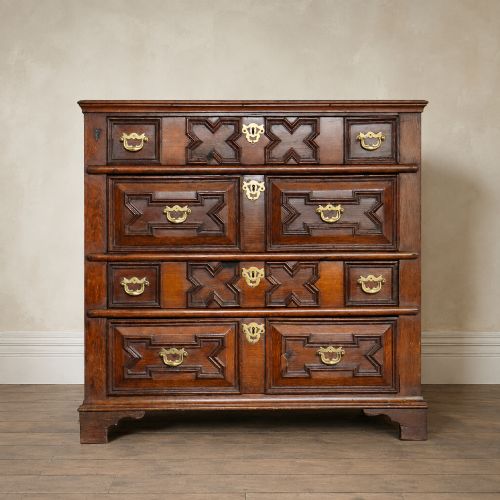
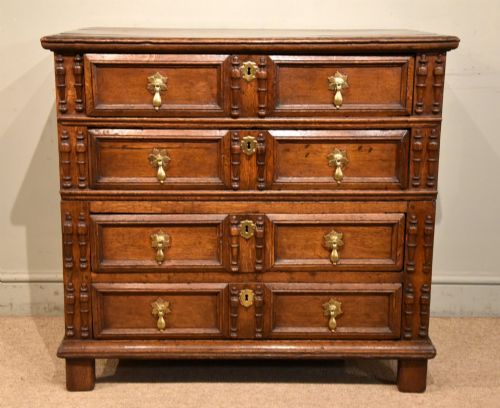
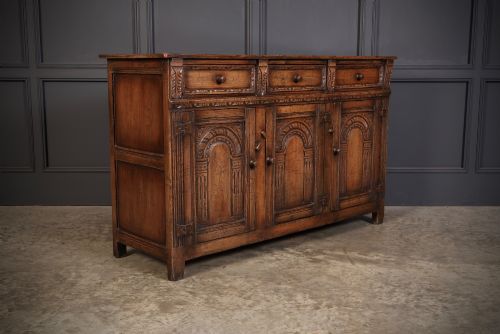
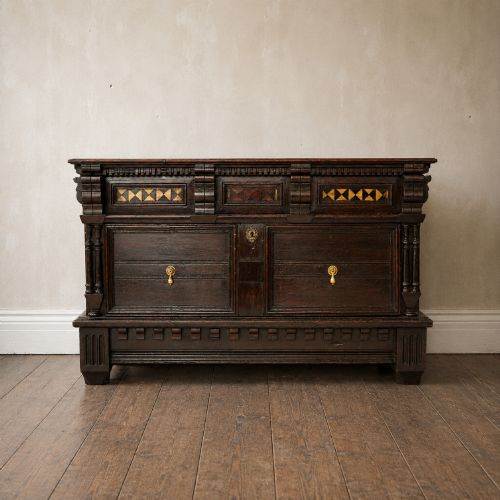
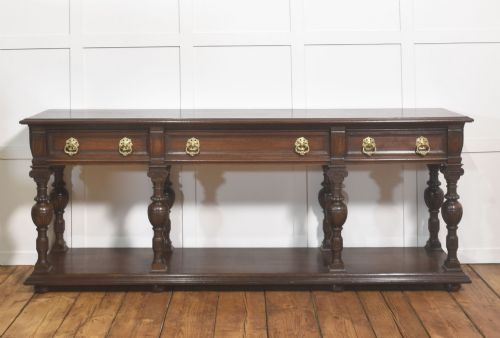
A 17th century dresser base functions as a low, heavy sideboard or serving surface designed for practical storage in traditional interiors. These pieces appear alongside closely related forms like chest of drawers, court cupboards, and low dressers.
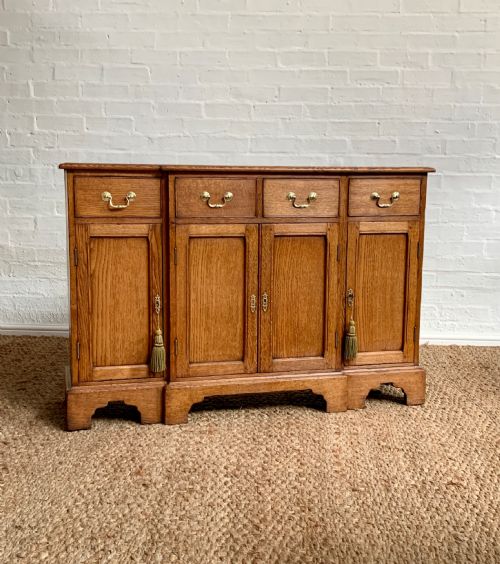
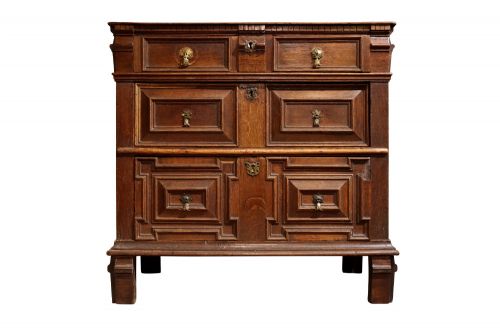
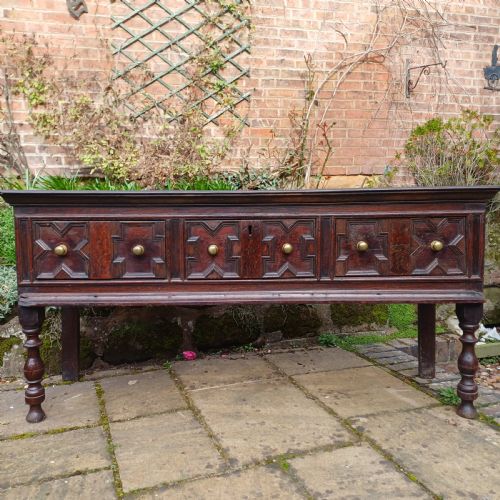
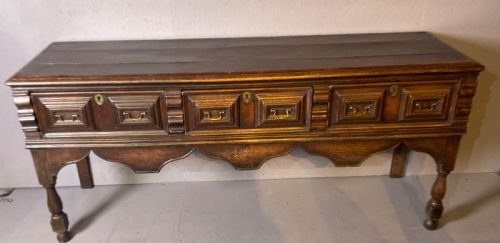
The selection ranges from period originals dated to the seventeenth century through to later revival interpretations from the early twentieth century. Oak dominates the form, supplemented by walnut, painted finishes, and occasional wood inlay.
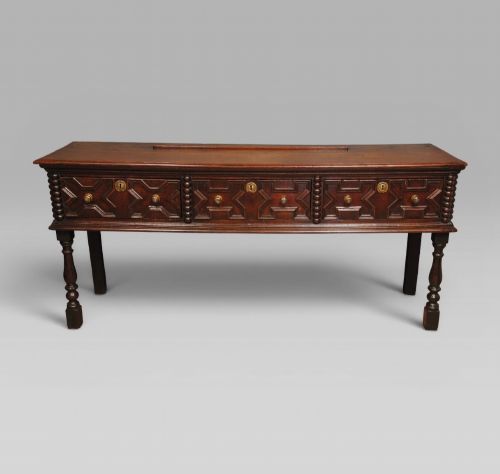
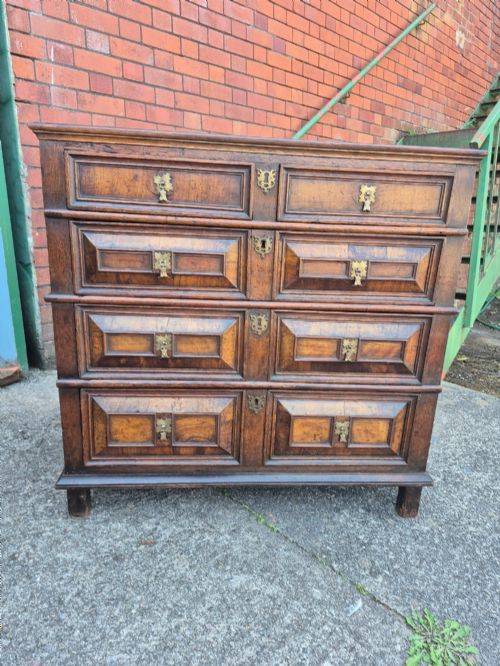
Structural variations include block fronts, cushion moulding, geometric mouldings, and turned legs. Buyers encounter examples spanning simple rustic utility to more elaborate joined construction.
What varies in quality
The integrity of the timber framing and the depth of the surface patina dictate the character of each piece. Original construction methods, such as pegged joints and period handles, carry more weight than heavily restored surfaces.
Proportion and execution separate utilitarian items from finer examples of the period. Subtle details in the geometric moulding and the crispness of carved elements distinguish seventeenth-century work from later revivals.
Some drawers hide secret compartments built behind heavy geometric mouldings to guard family silver.
The 17th Century Dresser Base Glossary
- Dresser base
- A low, heavy wooden sideboard with drawers or cupboards, historically used for food preparation and serving. These items sit lower than modern sideboards.
- Cushion moulding
- A convex, rounded moulding projecting from drawer fronts, popular in seventeenth-century joinery. This technique creates a pronounced three-dimensional effect.
- Joined construction
- A method of building furniture using interlocking timber joints secured with wooden pegs rather than metal nails. This technique provides immense structural durability.
- Geometric moulding
- Applied strips of timber forming repeating patterns on drawer fronts and panels. Such decoration reflects the aesthetic preferences of the mid to late seventeenth century.
- Court cupboard
- An enclosed antique sideboard featuring upper and lower tiers with doors. These pieces often share the timber and construction methods of dresser bases.
17th Century Dresser Base: Frequently Asked Questions
What was a 17th century dresser base used for?
These pieces served as heavy serving surfaces and practical storage units in domestic kitchens and halls. Households utilised the drawers and cupboards to store tableware and provisions.
Over time, their role shifted from utilitarian workhorses to prominent display and storage furniture in living spaces. Their sturdy construction allowed them to withstand heavy daily use.
How do I identify a period piece?
Examination of the timber, joinery methods, and hardware reveals the age of the item. Period examples display hand-cut peg joints, oxidised oak surfaces, and traditional construction wear.
Revival pieces from later centuries often utilise machine-cut elements or softer timbers. Comparing the moulding styles and wear patterns helps clarify the manufacturing era.
Where should I place a dresser base at home?
A dresser base fits well in dining rooms, hallways, or living spaces as a sideboard or console. Its low profile makes it suitable for mounting a mirror or displaying ceramics above.
Keep the timber away from direct heat sources and dramatic humidity shifts to protect the wood. Regular polishing with traditional wax maintains the finish.
What is the difference between oak and walnut models?
Oak models form the vast majority of surviving inventory, featuring visible grain and heavy joined construction. Walnut variants introduce darker tones and finer veneer work, often associated with high-status commissions.
Both timbers provide durability, but walnut requires careful attention to prevent veneer lifting. Oak remains the definitive material for seventeenth-century vernacular furniture.