
17th Century Drawers
These robust 17th century drawers offer tangible early craftsmanship and rich timber patination that ground any period interior.
17th Century Drawers
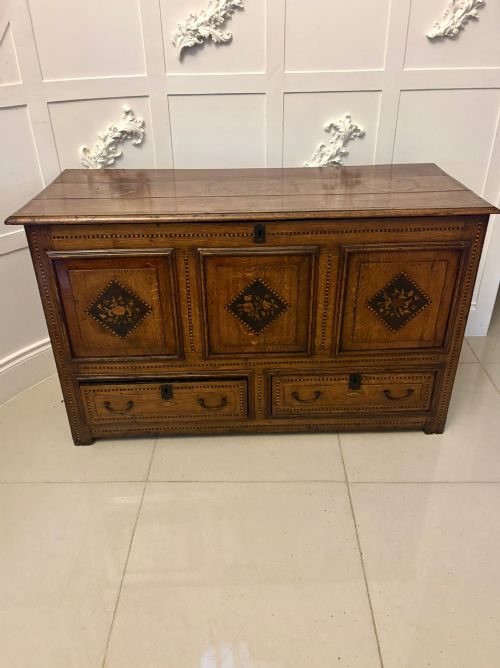
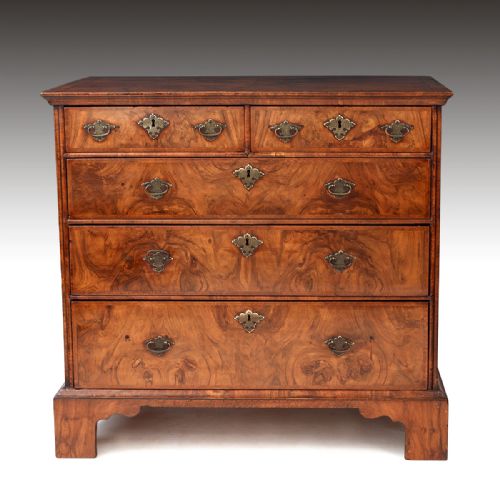
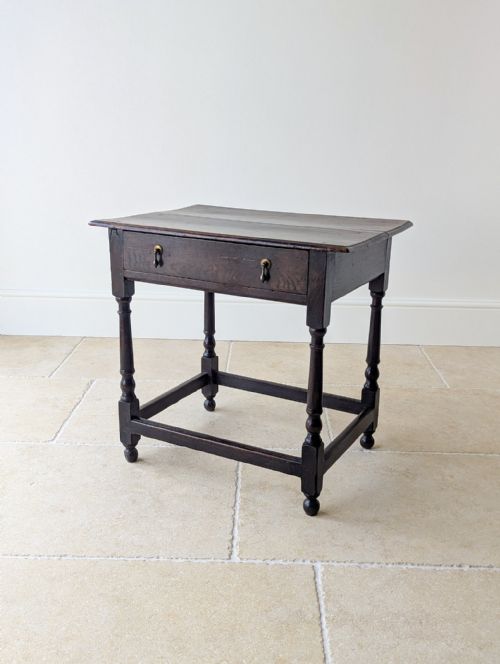
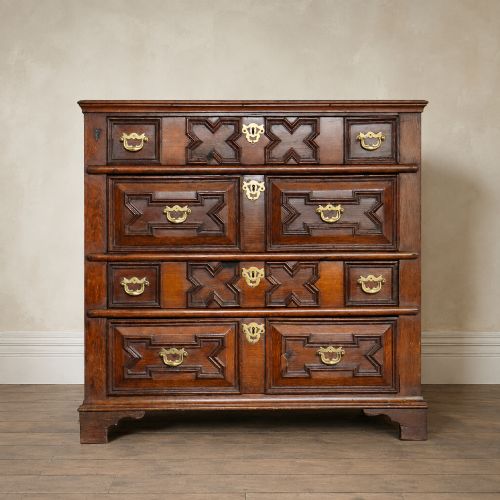
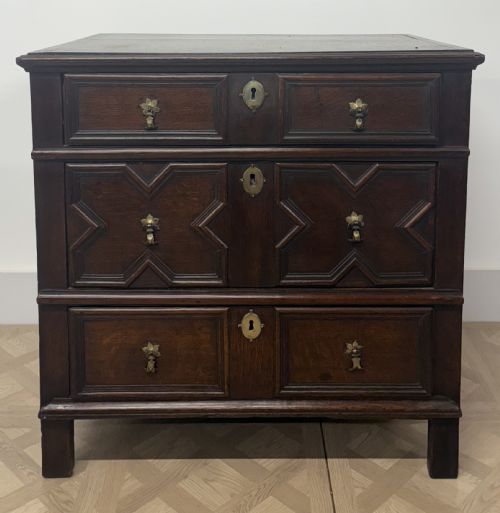
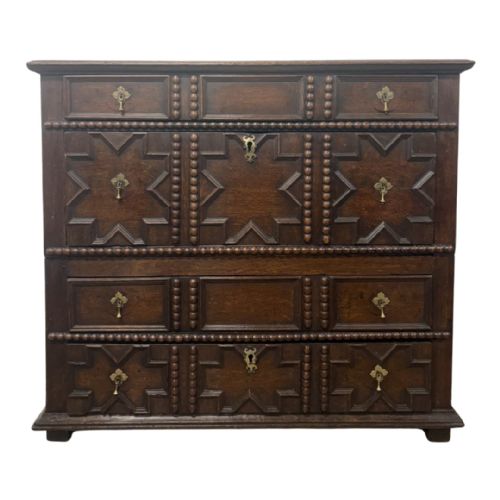
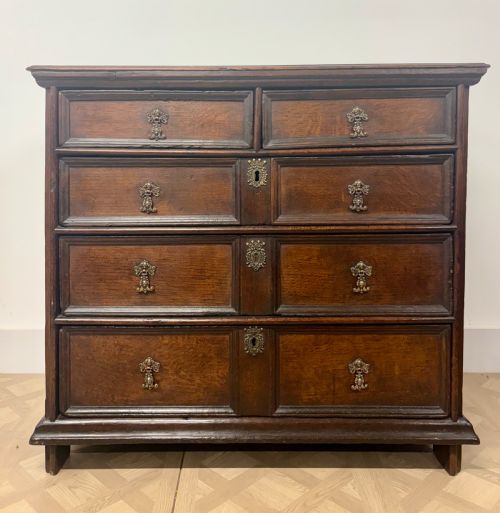
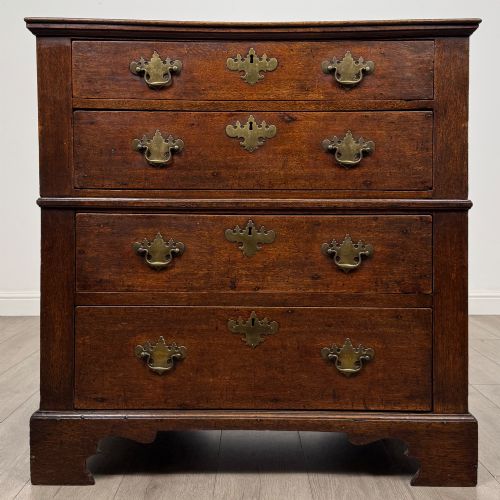
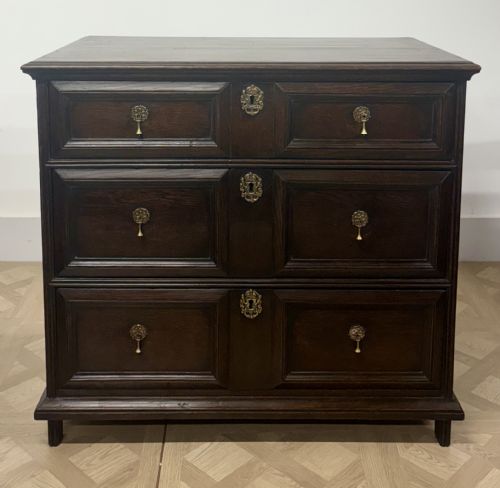
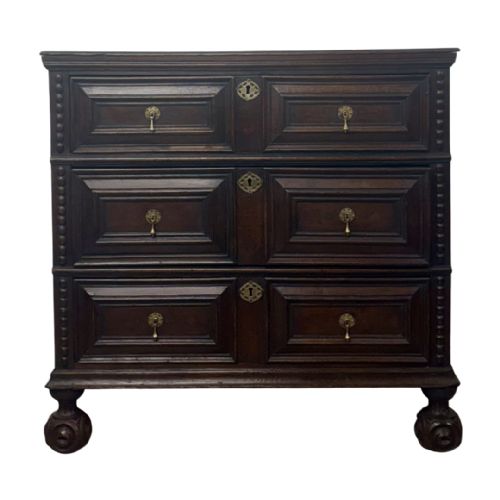
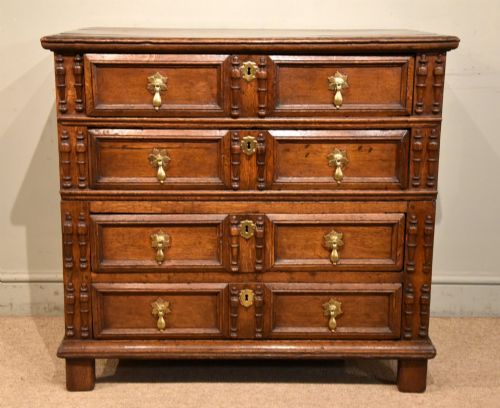
When searching for 17th century drawers, collectors encounter primarily solid oak and walnut forms built during the Jacobean, Charles II, and William and Mary periods. The selection on this page centres heavily on chests of drawers featuring geometric mouldings, panelled fronts, and substantial proportions.
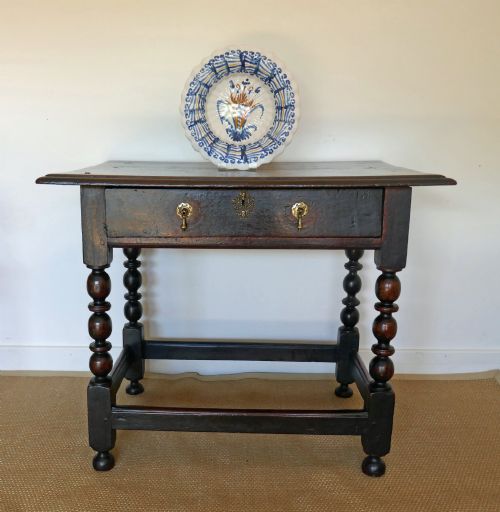
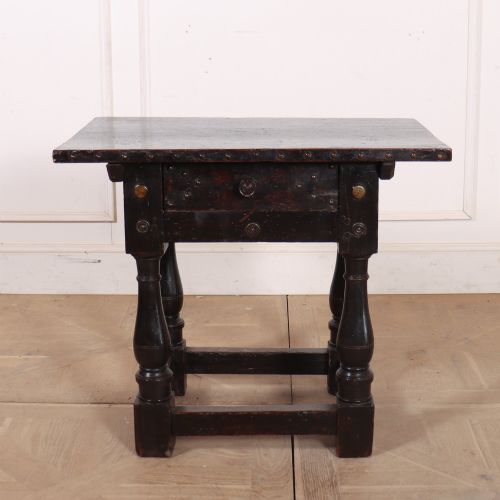
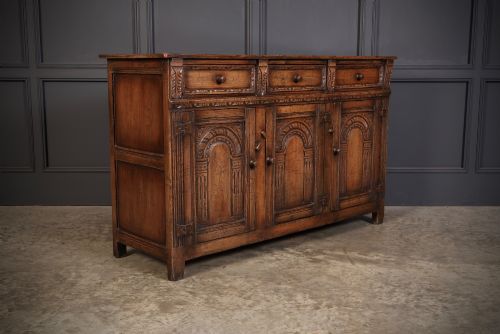
Beyond standard chests, buyers frequently meet related case furniture such as mule chests, cabinets on stands, and side tables incorporating internal or external drawer configurations. These pieces reflect the evolution of domestic storage, transitioning from simple boarded coffers to multi-drawer case pieces designed for clothing and valuables.
Most surviving examples date from the mid to late decades of the seventeen-hundreds, often displaying regional English craftsmanship alongside occasional continental walnut or marquetry imports. The variety ranges from austere geometric oak to highly decorative burr walnut and seaweed marquetry surfaces.
Indicators of superior quality
Quality rests heavily on the integrity of the timber surfaces and the depth of the natural patina accumulated over hundreds of years. Pieces retaining their original hardware, uncompromised drawer linings, and unaltered geometric mouldings command significantly higher regard among serious collectors.
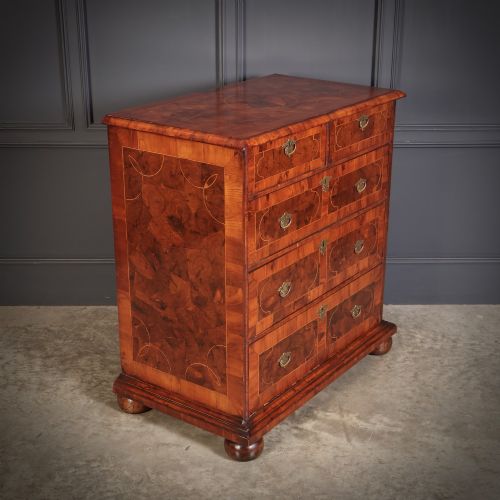
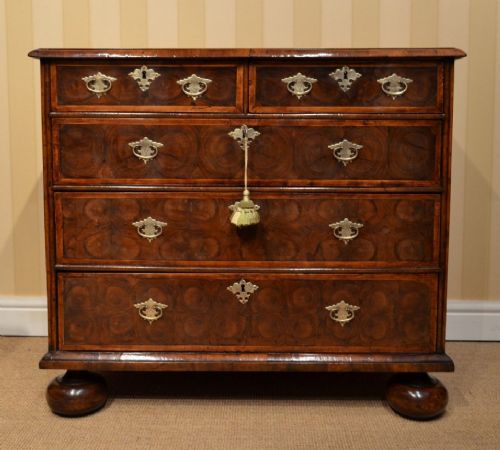
The sophistication of the decorative work further separates standard utility pieces from high-status commissions. Finely executed oyster veneering, complex arabesque marquetry, and precise cross-banding indicate master craftsmanship rather than provincial workshop output.
Geometric mouldings and oyster veneer dominate the decorative treatments across the surviving chests of drawers and side tables.
The 17th Century Drawers Glossary
- Oyster veneering
- Cross-section slices of small branches or shoots laid down to create a repetitive circular or swirling pattern across the drawer fronts. This technique gained immense popularity during the late seventeenth century on walnut and olive furniture.
- Geometric moulding
- Raised wooden bars applied in rectilinear, octagonal, or lozenge patterns to drawer fronts and door panels. It provides architectural depth and visual relief to otherwise plain timber surfaces.
- Cushion moulding
- A rounded, protruding drawer front profile resembling a stuffed pillow, frequently seen on Charles II period case furniture. This style emphasises the tactile qualities of the grain.
- Marquetry
- Elaborate veneer work using contrasting woods, metals, or ivories to picture floral, scroll, or seaweed motifs. Craftsmen cut these intricate designs from stacked sheets before gluing them to the carcase.
- Barley twist
- A structural turning technique resembling a spiralling rope, used extensively for table legs and stands. It reflects the growing influence of Flemish baroque design on English joiners.
17th Century Drawers: Frequently Asked Questions
How do I identify a genuine period piece?
Examine the timber shrinkage, hand-cut dovetails or lack thereof, and the consistency of the tool marks inside the drawer carcase. Genuine early pieces display period-appropriate secondary woods and hand-wrought iron or brass fixings.
Look closely at the backboards and drawer bottoms to ensure they show appropriate age, oxidation, and wear patterns consistent with centuries of handling.
Were these drawers used in bedrooms?
Most early case pieces served public reception rooms, halls, or parlours rather than private sleeping quarters. Storage for clothing was largely handled by chests and coffers before multi-drawer case furniture became common.
As domestic privacy evolved towards the end of the century, these chests migrated into bedchambers to hold linens, garments, and personal valuables.
How should I care for antique oak surfaces?
Maintain a stable room environment away from direct heat sources and drastic humidity shifts to prevent timber splitting. Apply a microcrystalline wax sparingly to nourish the dry grain and protect the historic patina.
Avoid silicone-based polishes or wet cloths, using instead a soft, dry brush or cloth to gently remove dust from deep mouldings and carvings.
What is the difference between Jacobean and William and Mary styles?
Jacobean furniture leans toward heavy, solid oak construction featuring geometric mouldings, panelled fronts, and austere architectural lines. It represents the earlier decades of the seventeenth century.
William and Mary pieces introduce lighter proportions, exotic veneers like walnut and olive, trumpet legs, and elaborate marquetry influenced by continental migration and trade.