



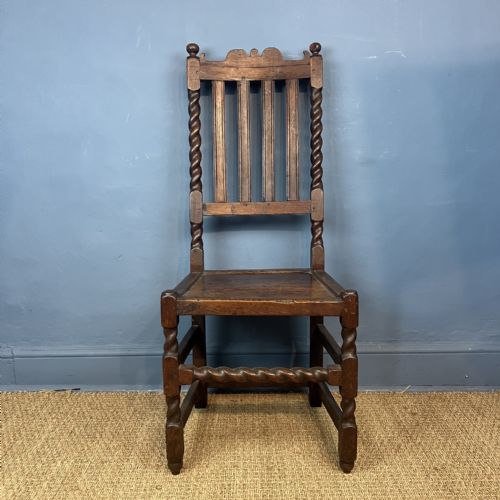
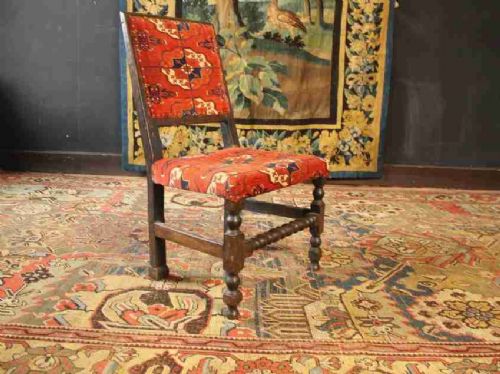


17th Century Dining Chair
A 17th century dining chair brings heavy timber frames, high backs and historic regional character to the table.
17th Century Dining Chair
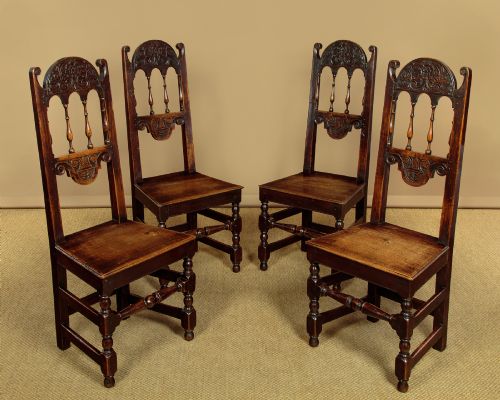
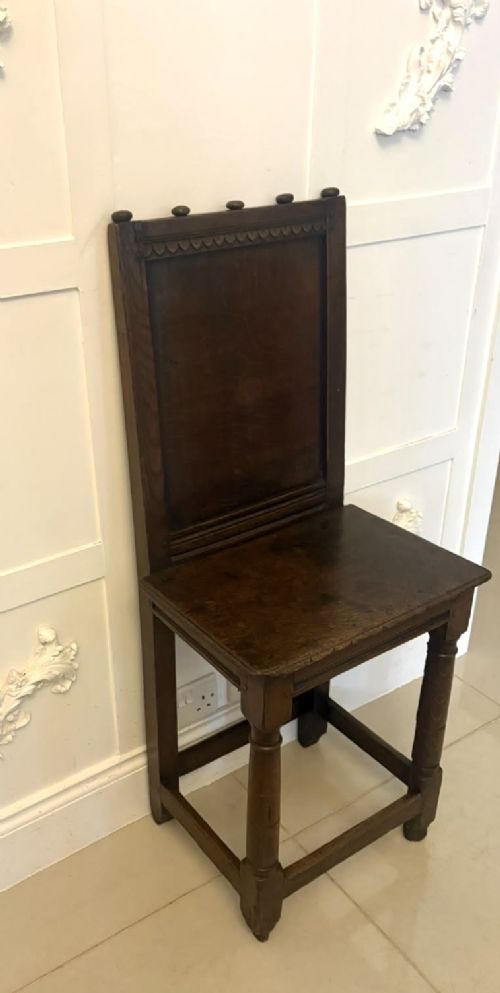
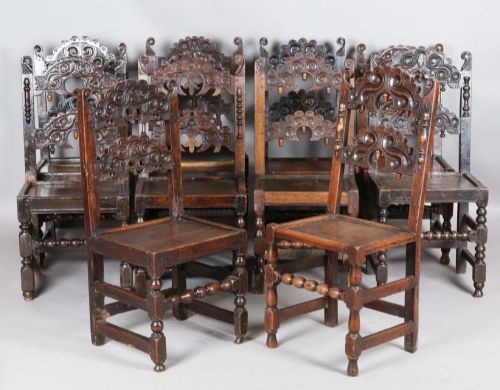
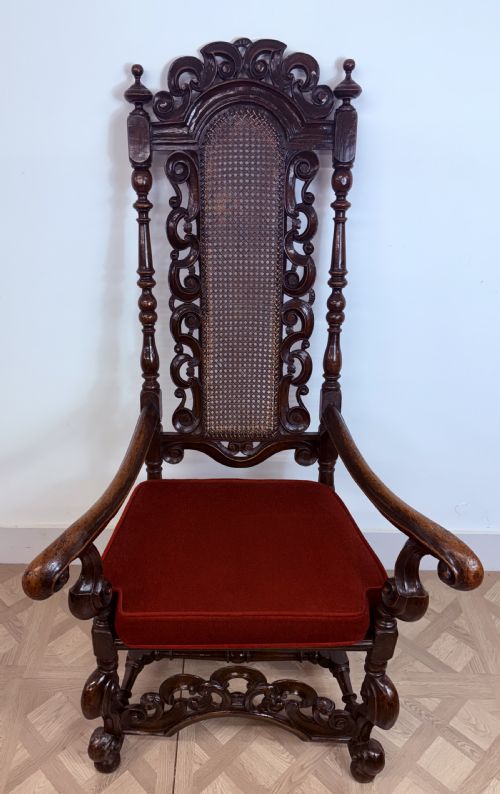
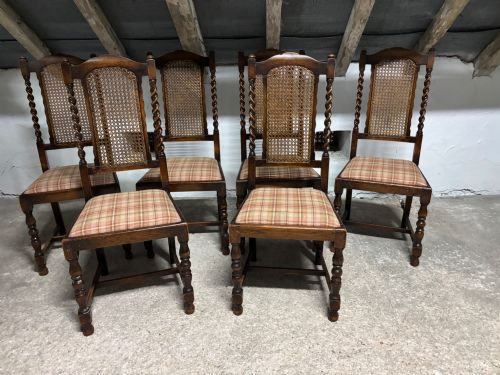
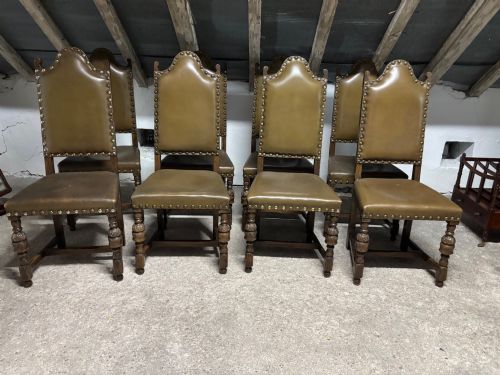
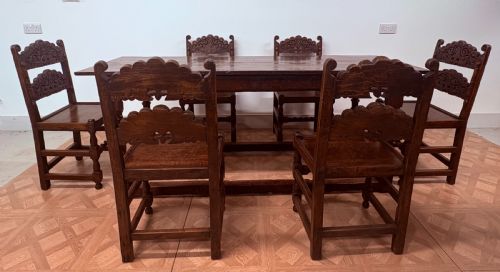
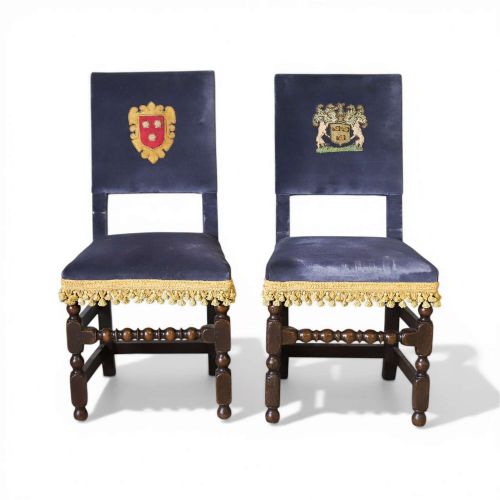
When searching for a 17th century dining chair, buyers encounter robust wooden seating that includes high-back dining chairs, sturdy armchairs, low backstools, and matched sets from period workshops or later revivals.
The versions met most frequently on this page span genuine seventeenth-century examples in oak and walnut alongside later revival sets produced in the nineteenth and early twentieth centuries.
Regional variations such as Yorkshire, Derbyshire, Lancashire and Scottish designs appear alongside broader styles like Jacobean, Carolean and Charles II period pieces.
Construction and materials
These pieces rely heavily on solid oak and walnut, joined using traditional pegged mortise and tenon construction to build rigid rectangular frames.
Seating surfaces and back panels incorporate woven cane, turned wooden spindles, carved splats, or leather and fabric upholstery secured with brass studs.
17th Century Dining Chair Retail Price Guide 2026
Typical asking prices for 17th century dining chair among the pieces listed under this phrase on Sellingantiques today, from the lower quarter to the upper quarter. They describe what is for sale here now, not the wider market.
Listings on this site feature oak and walnut frames combined with cane, leather, and brass detailing across multiple centuries.
Factors in quality
Quality rests upon the crispness of hand-carved ornamentation, the integrity of the original frame joints, and the survival of authentic surface finishes rather than later replacements.
Sets matching in timber grain and turning uniformity command greater attention than assembled harlequin groups gathered together over time.
The 17th Century Dining Chair Glossary
- Backstool
- A chair without arms, essentially a stool fitted with an upright back for dining use. These often feature carved wooden panels or upholstered inserts.
- Wainscot armchair
- A heavy wooden chair constructed with panelled backboards and solid armrests, typical of early seventeenth-century domestic interiors.
- Carolean
- Pertaining to the reign of King Charles II from 1660 to 1685, a period noted for rich scrollwork, cane panels, and dynamic baroque carving.
- Splat
- The vertical central strip of wood set into the middle of a chair back, frequently shaped, pierced, or carved with heraldic and floral motifs.
- Farthingale chair
- An upholstered, armless chair with a wide seat designed to accommodate the wide skirts worn by women during the early seventeenth century.
17th Century Dining Chair: Frequently Asked Questions
How do I spot a revival chair?
Revival chairs, often produced in the nineteenth or twentieth centuries, show machine-sawn timber marks and uniform wear patterns that differ from period tool marks.
Examine the construction joints and underside timber for signs of age consistency and genuine oxidation matching the claimed era.
Were these used around dining tables?
Original period examples served aristocratic and wealthy merchant households around long refectory tables, often arranged as sets of armchairs and side chairs.
Many survived as sets of six or eight, though smaller pairings and single hall chairs also appear in the record.
How do regional styles differ?
Regional pieces from places like Yorkshire and Derbyshire exhibit distinct turned spindles, crest rails, and carved back panels characteristic of local woodworking traditions.
Scottish and Welsh pieces introduce specific heraldic motifs and regional carving patterns distinct from London workshop output.
How should I care for leather upholstery?
Historic leather and hide upholstery require careful conditioning to prevent drying and cracking in modern centrally heated environments.
Avoid direct sunlight and harsh chemical cleaners, relying instead on stable indoor humidity levels and professional conservation advice.