


17th Century Caryatid
These carved wooden figures bring architectural strength and historical character to a room.
17th Century Caryatid
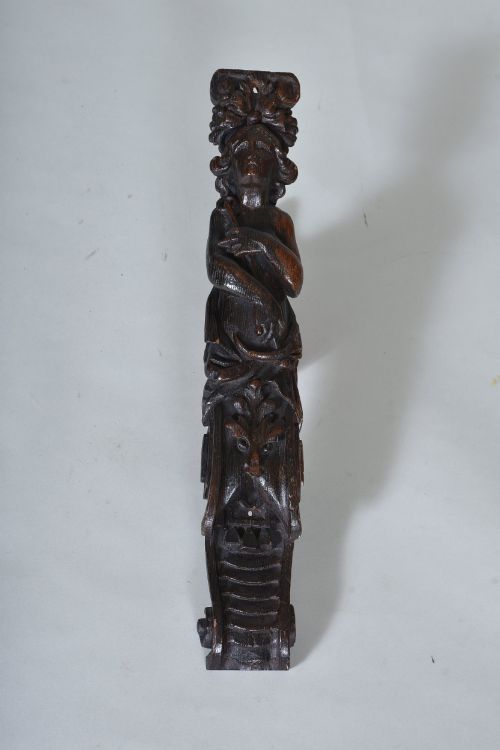
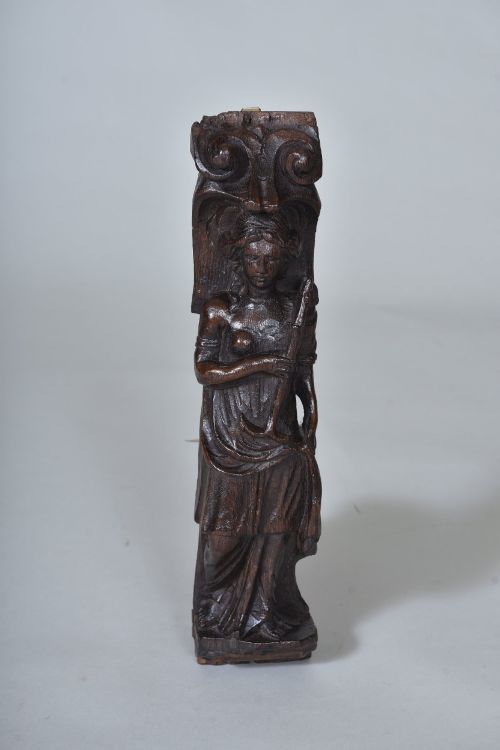
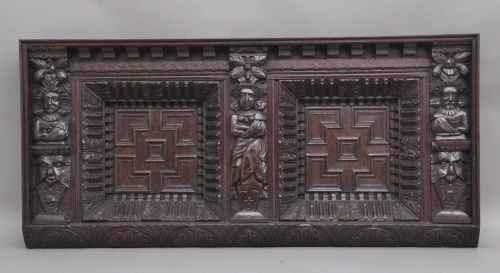
A 17th century caryatid is a carved architectural support taking human or figural form, most commonly found in oak within this collection. Pieces range from single standing figures to pairs, panels, corbels, and pilasters integrated into furniture and woodwork.
The objects appear as architectural salvage, wall reliefs, wood carvings, and components of side cabinets or overmantles. Figures include ladies with folded arms, saints, cherubs, angels, and specific subjects such as Hippocrates, Archangel Michael, or figures playing bagpipes.
Origins span English, Scottish, and continental European workshops, particularly Flemish traditions of the period. Surviving examples demonstrate how structural timberwork doubled as sculptural art during the seventeenth century.
How they were made
Carvers shaped these figures primarily from solid oak, utilising both dark oak finishes and natural timber depending on age and treatment. The wood was worked using traditional hand chisels and gouges to achieve deep relief and detailed facial expressions, drapery, and fishtails.
Some carvings incorporate additional materials such as fabric or metal elements alongside the primary wood structure. Surfaces often show the natural grain of the timber developed through centuries of handling and atmospheric exposure.
Object forms include architectural salvage, wood carvings, side cabinets, table lamps, and wall reliefs.
What varies in quality
Condition and completeness matter greatly, particularly whether figures survive as symmetrical pairs, integrated panels, or standalone fragments. The richness of the oak patina and the survival of original surface texture further elevate certain examples above standard structural salvage.
The 17th Century Caryatid Glossary
- Caryatid
- A sculpted human figure serving as an architectural support instead of a column or pilaster. They often appear on furniture, overmantles, and wall panels.
- Pilaster
- A rectangular vertical architectural element that projects slightly from a wall or cabinet side. In these pieces, caryatids frequently form the decorative front of the pilaster.
- Corbel
- A structural piece of stone or wood projecting from a wall to carry a weight. Examples from this period often take figural or grotesque forms.
- Overmantle
- A decorative framework situated above a fireplace mantelpiece. Surviving seventeenth-century examples frequently incorporate carved panels and figural supports.
- Flemish Baroque
- An artistic style prevalent in Flanders during the seventeenth century characterised by robust forms and dramatic movement. This influence appears in several of the continental carvings.
17th Century Caryatid: Frequently Asked Questions
How were caryatids used in seventeenth-century interiors?
These figures functioned primarily as structural supports on large pieces of furniture like side cabinets, or as decorative elements within architectural settings such as overmantles and wood-panelled rooms.
They also appeared on hall tables, pilasters, and architectural salvage panels, combining practical load-bearing roles with symbolic or decorative figural sculpture.
Are these carvings English or continental?
The collection includes pieces attributed to English, Scottish, and continental European origins, with Flemish Renaissance and Flemish Baroque styles well represented.
Specific regional characteristics appear in the costume, facial types, and handling of the oak timber by different workshops.
What subjects do these figural carvings depict?
Subjects range from classical and religious figures to allegorical representations, including saints, cherubs, angels, madonnas, and specific historical or mythological personages.
Other variations feature ladies with folded arms, figures with fishtails, and musicians playing instruments like bagpipes.
How do I display a wooden caryatid at home?
Standalone figures, single panels, and pairs can be mounted directly on walls as architectural reliefs or placed on suitable surfaces as sculptural objects.
Their solid oak construction allows them to integrate well into both traditional period rooms and contemporary interiors as focal points.