
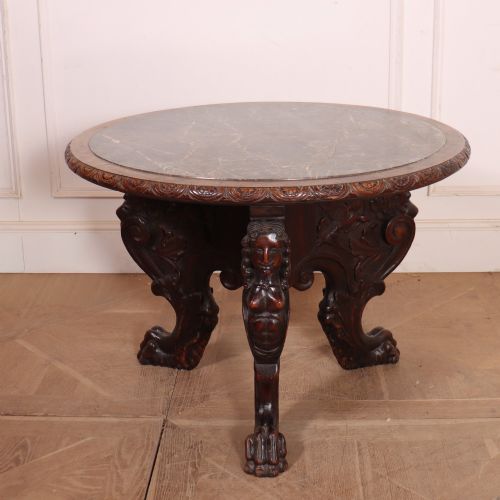
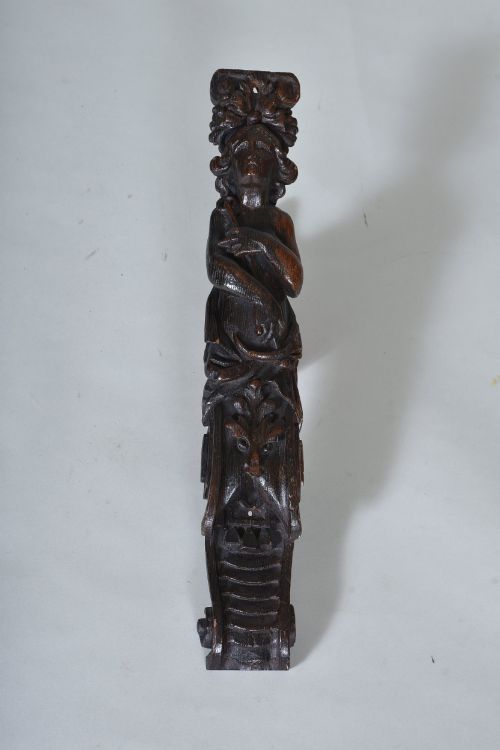
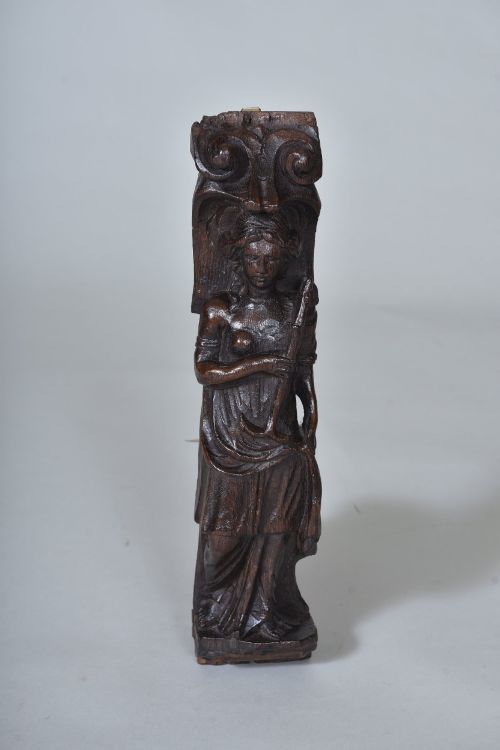
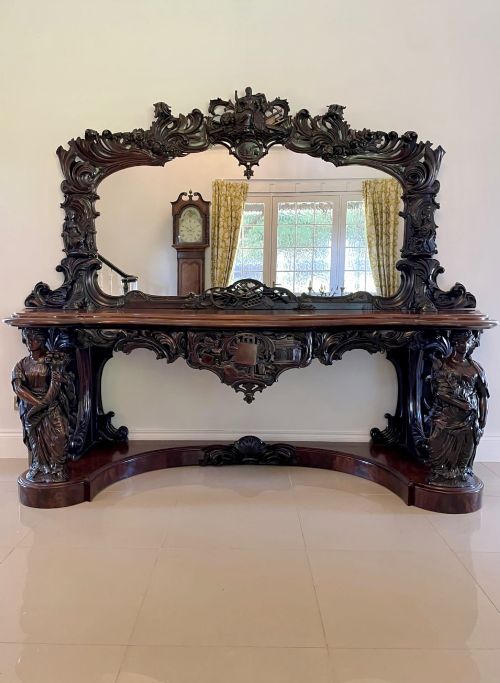
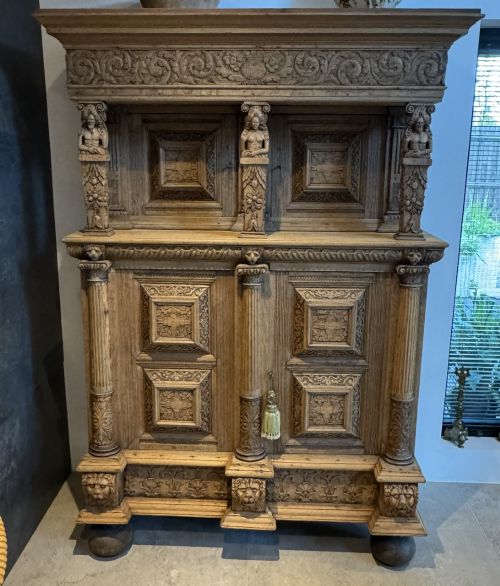
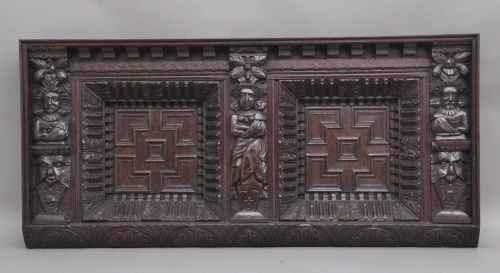


Carved Wooden Caryatid
These carved wooden caryatid pieces bring architectural dignity and sculpted human form into an interior, offering a direct link to historic craftsmanship.
Carved Wooden Caryatid
A carved wooden caryatid functions as a structural or decorative support shaped as a human figure, appearing frequently across this selection as architectural salvage, wall carvings, pedestals, and console tables. These works draw upon classical and Renaissance traditions where sculpted figures replace traditional columns or pilasters.
The pieces span multiple eras, with seventeenth-century oak examples sitting alongside nineteenth-century revivals, Victorian consoles, and Continental cabinets. Buyers encounter both standalone figural sculptures and integrated architectural fragments salvaged from historic buildings.
Forms vary widely from single female figures with folded arms to crouching figure stands, cherubic terms, and twin herms carved from chestnut or walnut. Each object displays the distinct aesthetic priorities of its period, shifting from early Flemish and English oak carvings to elaborate Victorian and Italian revival furniture.
Materials and construction methods
Secondary materials such as glass, metal, and marble occasionally integrate with the woodwork, particularly in mirror frames, pedestals, and heavy sideboards. Surface treatments range from original painted details and polished dark oak finishes to patinated waxed timber that highlights the grain.
Materials span native European oak and walnut alongside exotic amboyna and African hardwood.
Distinctions in quality
The standard of a carved wooden caryatid rests on the depth of the carving, anatomical precision, and the confidence of the chisel work in the facial expressions and drapery. Superior pieces display fluid movement and sharp detail that mark the hand of a skilled sculptor rather than a routine workshop production.
Integration with the host object also dictates the tier of the piece, whether it functions as a primary sculptural console table, a monumental overmantle, or a smaller architectural fragment. Age, material choice, and the preservation of original surface patination further elevate the status of individual examples.
The Carved Wooden Caryatid Glossary
- Caryatid
- A sculpted female figure serving as an architectural support in place of a column or pilaster. These figures often appear on fireplaces, furniture corners, and building facades.
- Herm
- A sculpted bust or figure atop a tapered pillar, originating in ancient Greece as boundary markers. They frequently incorporate male figures supporting cornices or tabletops.
- Term
- A pedestal or pillar that narrows towards the base, usually surmounted by a bust or carved figure. The term derives from Terminus, the Roman god of boundaries.
- Corbel
- A structural piece of stone or wood projecting from a wall to support a weight. In historic interiors, these often take carved figural or animal forms.
- Overmantle
- A decorative framework or panel positioned directly above a fireplace mantel. They frequently house mirrors or intricate wood carvings.
Carved Wooden Caryatid: Frequently Asked Questions
What is a caryatid?
A caryatid is a sculpted human figure used structurally or ornamentally as a column, pillar, or support. In furniture and architecture, they take the weight of a cornice, shelf, or tabletop with draped garments and carved expressions.
These figures appear across European and global traditions, shifting from classical architectural elements into Renaissance and Victorian cabinetwork and pedestals.
Where were caryatids used?
Historic caryatids appeared on grand architectural facades, fireplace surrounds, and heavy furniture such as buffets, cabinets, and console tables. They served to elevate functional joinery into classical art.
Smaller examples function as wall brackets, pedestals, or mirror frames designed for domestic display in reception rooms and hallways.
How do I date a wooden carving?
Dating relies on the wood species, tool marks left by the carver, and stylistic markers associated with specific periods like the seventeenth century or the Victorian revival. Oak was standard for early European work, while later nineteenth-century pieces utilised exotic woods and more eclectic revivals.
Examining the back and joints helps determine whether a piece is an intact period object, an architectural salvage fragment, or a later nineteenth-century interpretation.
How do I live with antique wood carvings?
Historic wood carvings suit placement on sturdy consoles, walls, or dedicated pedestals where their sculptural depth can be appreciated from multiple angles. They require stable indoor humidity away from direct heat sources to prevent timber movement.
Dusting with a dry soft cloth maintains the surface, avoiding harsh polishes that can build up on aged patinated timber.