


17th Century Carved Sculpture
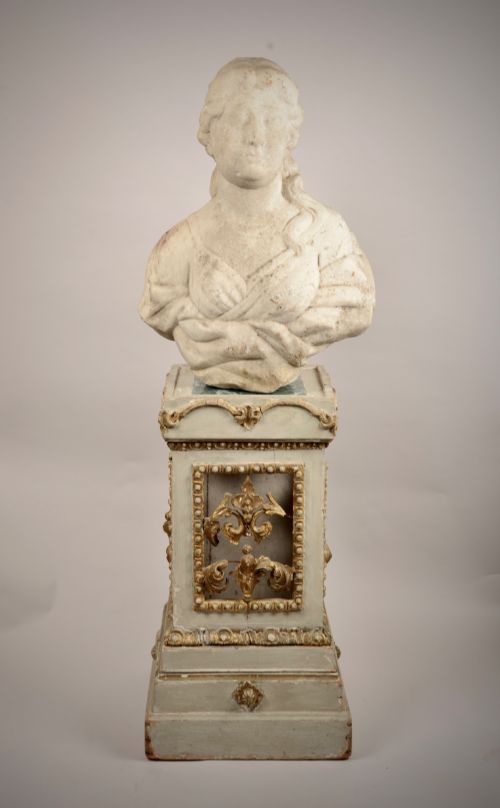
These 17th century carved sculpture works span architectural panels, religious figures and classical marble heads carrying the robust weight of Baroque and Jacobean craftsmanship.
17th Century Carved Sculpture
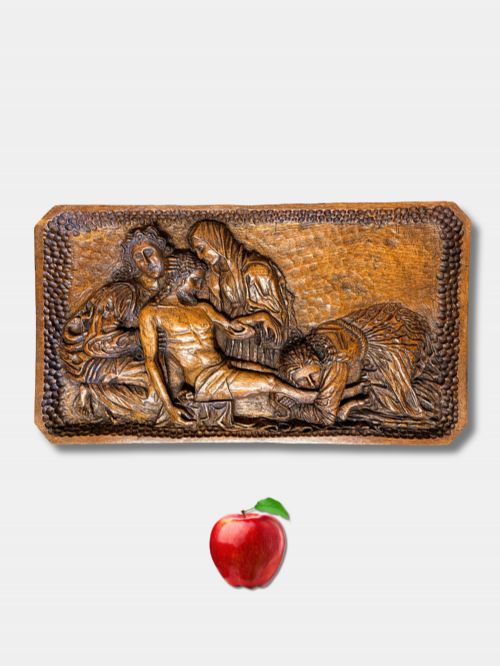
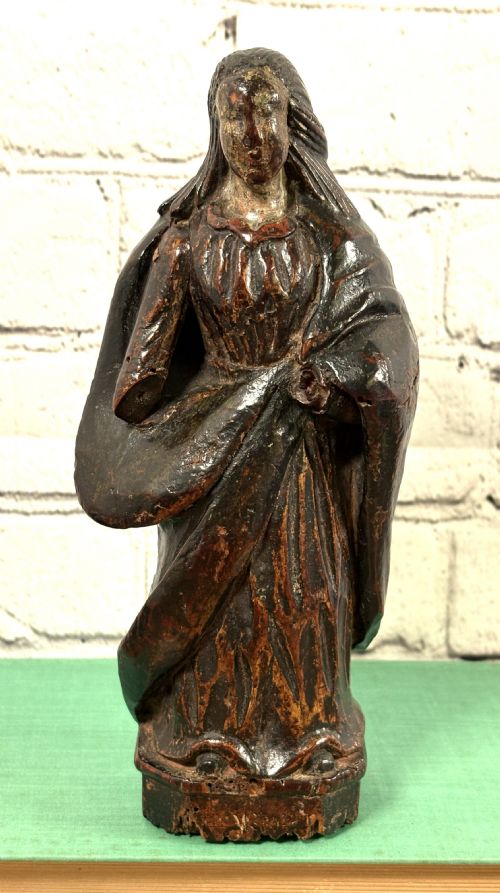
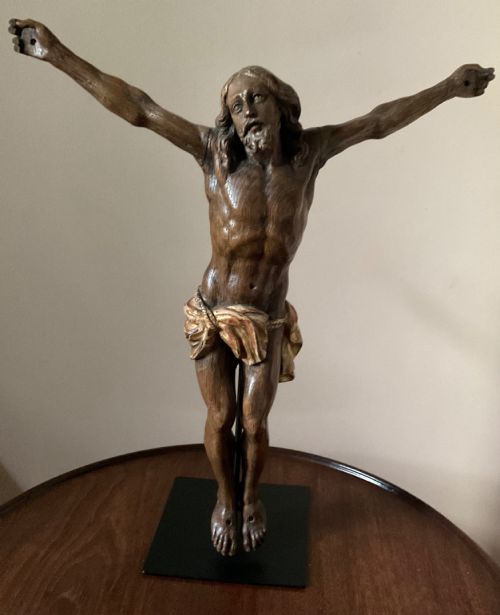
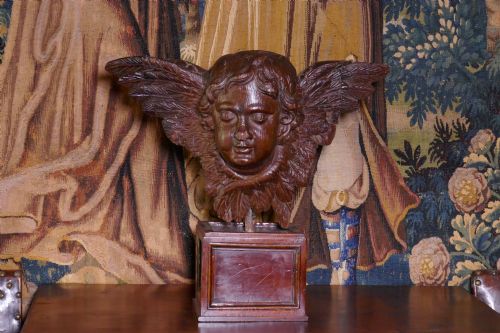
A 17th century carved sculpture search brings up an eclectic mix of wooden architectural fragments, religious saints, and stone figures originating from Britain, Flanders, Germany, France, Italy, and Spain. Buyers encounter architectural salvage like overdoor panels and corbels alongside devotional objects such as Corpus Christi figures, polychrome saints, and putti.
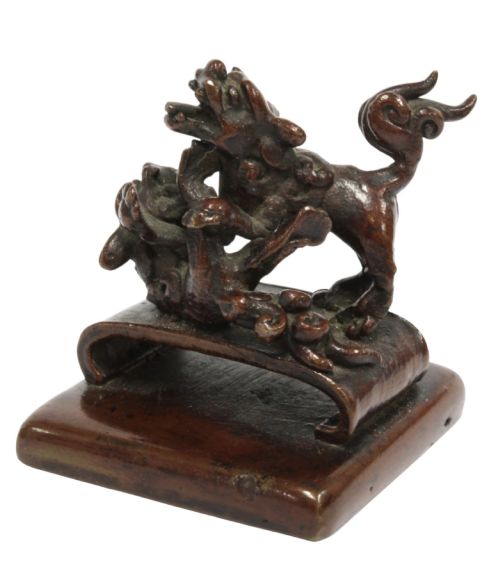
The objects take many forms, including wall reliefs, caryatids, marble busts, and occasional bronzes like a Chinese scholar seal. Oak and walnut dominate the wooden items, while limewood, applewood, boxwood, and chestnut appear in specific regional carvings.
Judging the work
Quality rests on the depth of the carving and the vitality of the form, separating competent workshop production from master carver execution. The articulation of drapery, facial expression, and anatomical accuracy dictate the visual strength of each surviving fragment.
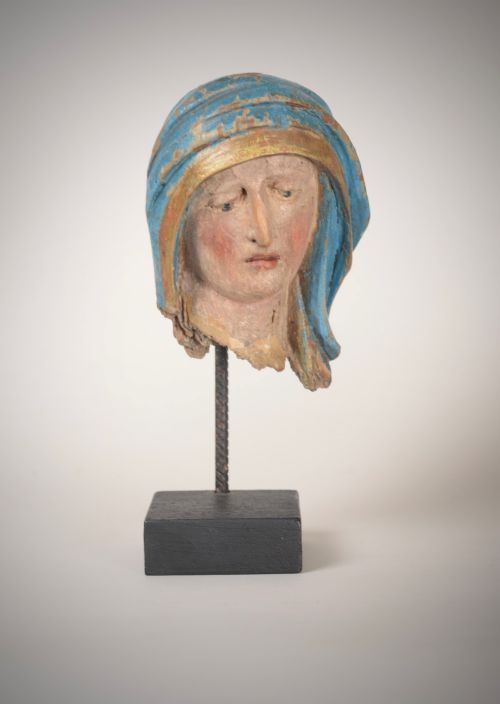
Preservation of original surfaces, such as surviving polychrome pigment on wood or the crispness of edges on architectural stone reliefs, distinguishes superior examples from heavily worn or later-adapted pieces.
A stone Roman helmet waits quietly among the saints, proving that even classical soldiers needed a place in the seventeenth-century room.
Edward Pearce
The 17th Century Carved Sculpture Glossary
- Corpus Christi
- The body of Christ depicted on a cross. These figures appear frequently in wood across European pieces from the period.
- Polychrome
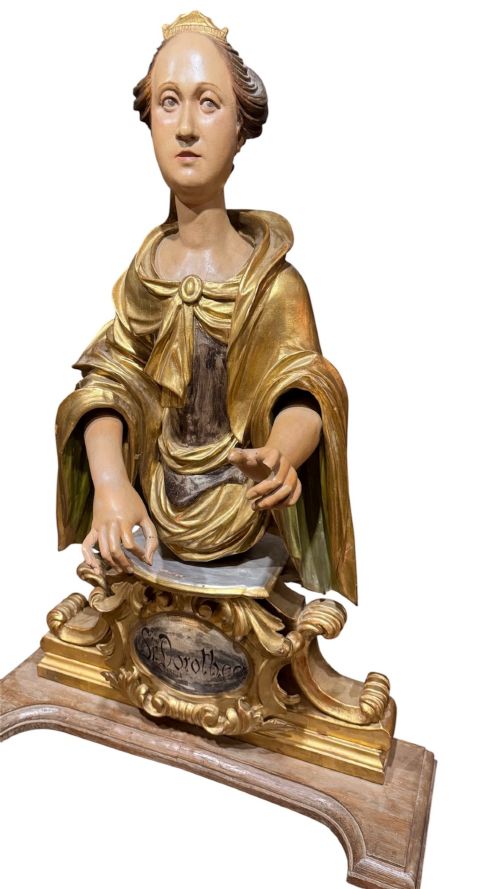
- Painted in several colours. This finish is often found on wooden religious figures of saints and holy figures.
- Corbel
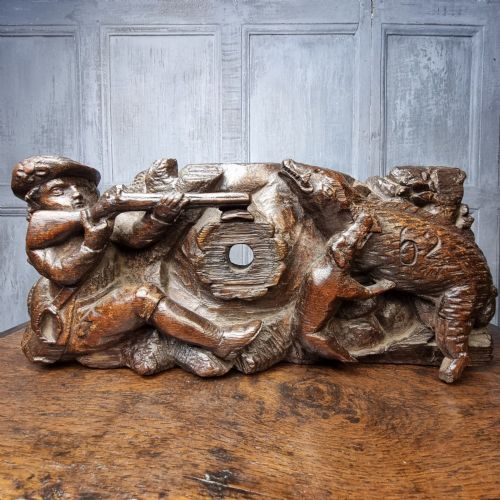
- A structural piece of stone or wood projecting from a wall to carry a weight. Examples take the form of figures or decorative brackets.
- Caryatid
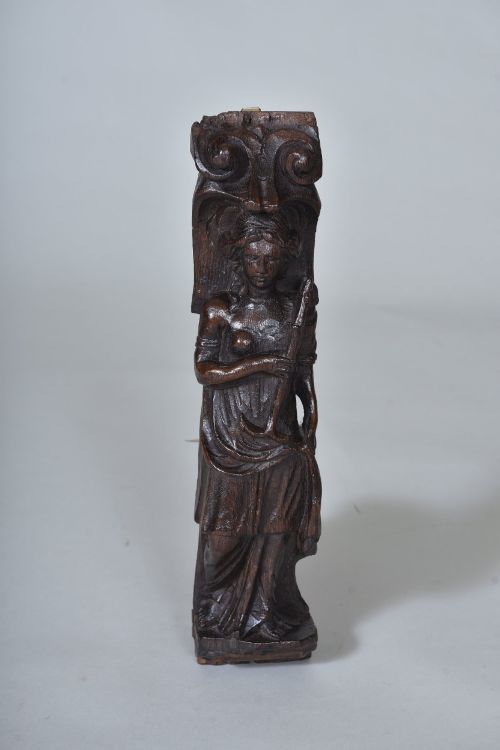
- A sculptured female figure serving as an architectural support. These appear in oak as architectural elements.
- Putto
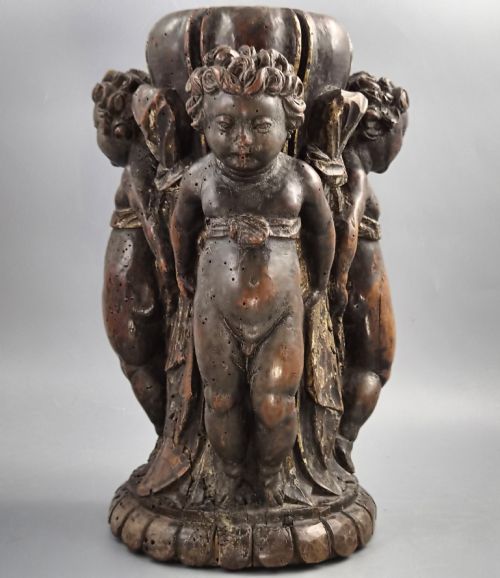
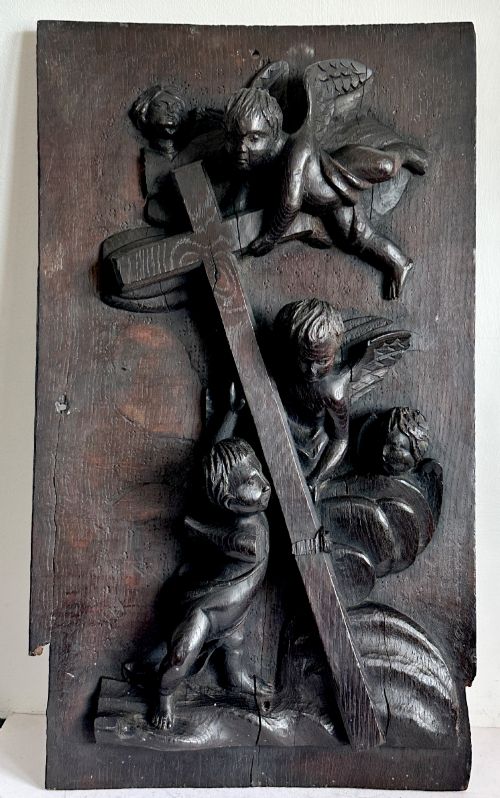
- A figure of a small chubby male child, often winged. They occur frequently in pairs or groups on continental carvings.
- Torchiere
- A tall stand or pedestal for a torch or candelabrum. Surviving bases from this era are carved in walnut.
17th Century Carved Sculpture: Frequently Asked Questions
What woods were used for these sculptures?
Carvers utilised dense timbers like oak and walnut for structural panels and larger figures. Softer woods including limewood, applewood, boxwood, and chestnut allowed for finer detail in smaller devotional objects.
Regional preference often dictated the choice of material, with northern European workshops frequently selecting oak while continental makers employed fruitwoods.
How do I identify Italian Baroque pieces?
Italian Baroque works often display dynamic movement, theatrical emotion, and classical motifs. Walnut and marble are common materials for these sculptures.
Figures frequently exhibit dramatic poses, swirling drapery, and anatomical exaggeration characteristic of southern European ecclesiastical and domestic commissions.
Where were these carvings originally displayed?
Many wooden reliefs and corbels served as architectural salvage from churches, palaces, and substantial townhouses. Smaller figures functioned as private devotional objects or cabinet pieces.
Overdoor panels and architectural fragments were integrated directly into the fabric of period interiors before being removed as salvage.
What is a polychrome finish?
A polychrome finish involves applying multiple colours of paint and sometimes gilding to wood or plaster surfaces. This technique added realism and devotional impact to religious sculptures.
Traces of original pigment often survive beneath later layers or bare timber, providing evidence of how the pieces originally appeared.