



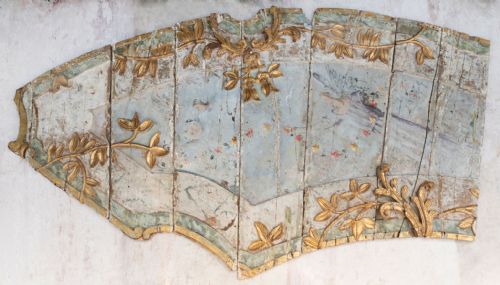


18th Century Venetian Carving
These 18th century venetian carving items bring theatrical Italian flair to a room, combining rich gilding with exuberant Rococo and Baroque forms.
18th Century Venetian Carving
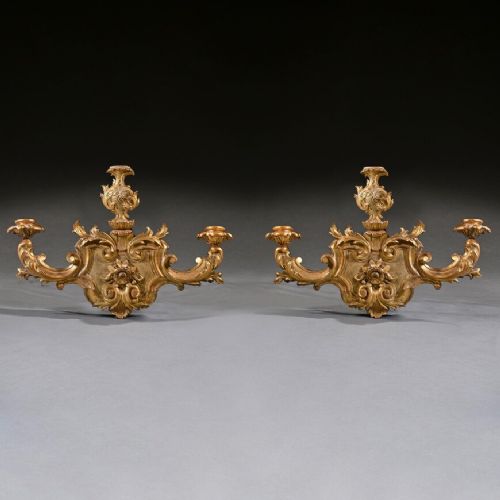
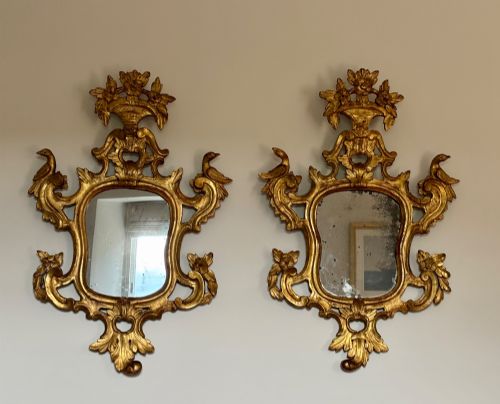
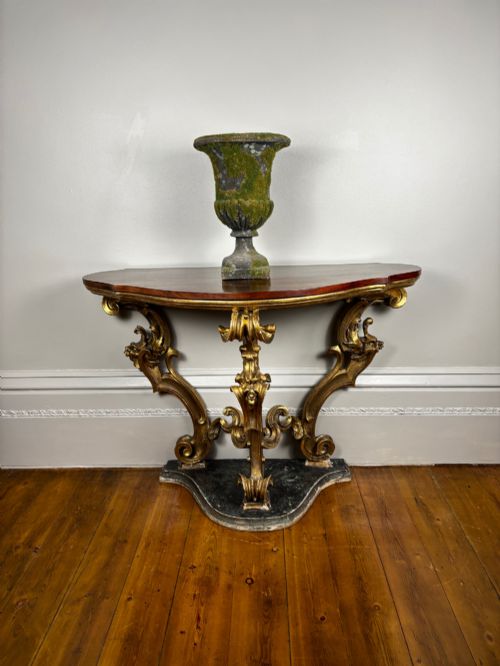
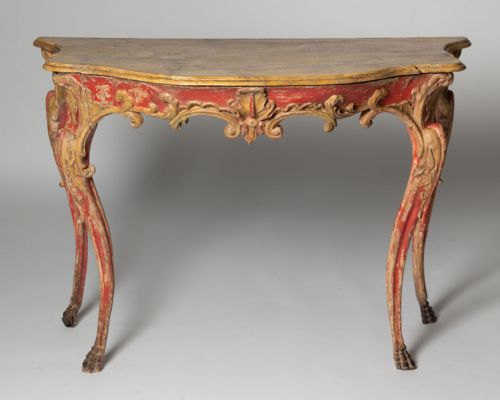
When you search for 18th century venetian carving, you encounter ornate furnishings and decorative objects created in northern Italy during the height of the Baroque and Rococo periods. The selection on this page centres primarily on wall mirrors, console tables, armchairs, and architectural elements originating from Venice.
The most common forms you meet are giltwood wall mirrors, console tables with marble tops, and carved wooden seating such as armchairs and gondola chairs. These pieces reflect the lavish aesthetic of historic Venetian palazzos, where intricate woodwork served to project status and wealth.
How these carvings were made
Artisans carved softwoods and hardwoods directly, creating deep undercuts and complex scrollwork typical of the Venetian style. They then applied layers of gesso to smooth the wooden surface before finishing it with gold leaf, silver leaf, or paint.
Giltwood and painted wood dominate the construction methods seen in these listings. Gilding techniques often involved burnishing the metal leaf to achieve contrasting matte and shiny surfaces across the intricate relief patterns.
Materials documented across the available inventory include giltwood, gesso, glass, marble, and fabric.
What varies in quality
The depth and crispness of the chisel work distinguish superior examples from simpler ones. Master carvers achieved a fluid, organic movement in foliage and human figures that lesser workshops failed to capture.
The quality of the surface finish plays a major role in the overall impact. Original layers of gold leaf or silver leaf applied over gesso show a warmth and depth that modern or heavy-handed restorations simply lack.
The 18th Century Venetian Carving Glossary
- Giltwood
- Wood that has been coated with thin sheets of gold leaf. This finish protects the carved surface underneath while providing a brilliant reflective quality.
- Gesso
- A plaster mix applied to carved wood to create a smooth base for gilding or painting. It holds fine detail remarkably well.
- Torchiere
- A tall stand or candlestick designed to hold a light source. Baroque examples often feature carved figures such as putti.
- Console table
- A table supported by wall brackets or decorative legs rather than four independent legs. These often feature elaborate carved skirts.
- Putti
- Depictions of chubby male infants, frequently used as decorative motifs in Baroque art. They appear in wood carvings supporting lanterns or bases.
18th Century Venetian Carving: Frequently Asked Questions
How do I clean giltwood?
Dust giltwood surfaces gently with a soft dry brush or feather duster.
Avoid using water, chemical sprays, or abrasive cloths which can damage the delicate gold leaf layers.
Where were console tables placed?
Console tables stood against drawing room walls, often beneath large pier mirrors.
They served as decorative display surfaces rather than heavy working tables.
What is a girandole mirror?
A girandole mirror incorporates attached candle sconces into its carved frame.
This design amplified candlelight to brighten dark Venetian salons.
How do I date these carvings?
Dating relies on stylistic shifts between Baroque symmetry and Rococo asymmetry.
Tool marks and the composition of the underlying gesso also help determine age.
Are these items structurally fragile?
Carved wooden frames require careful handling due to the protruding nature of the relief work.
Changes in room humidity can also affect the gesso and wood beneath the gilding.