

17th Century Carved Chair
Solid timber frames and deeply carved panels define a 17th century carved chair, prized by collectors for its architectural presence and tangible connection to early domestic life.
17th Century Carved Chair
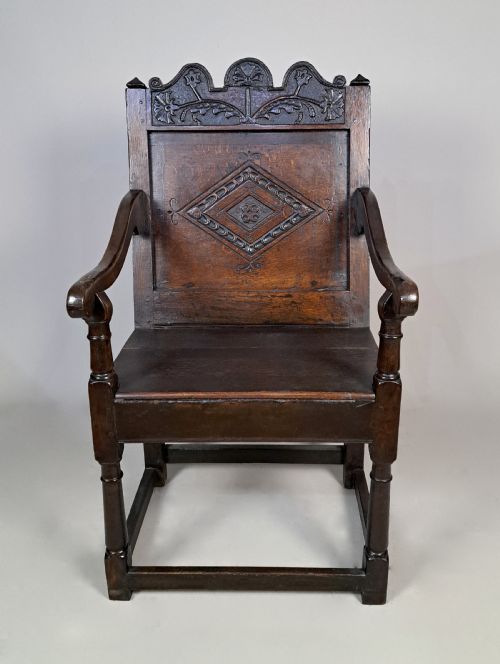
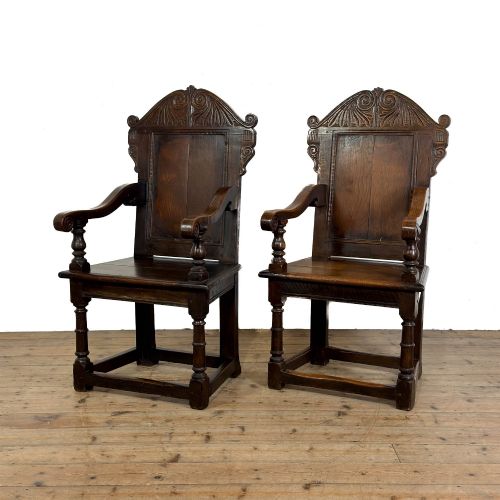
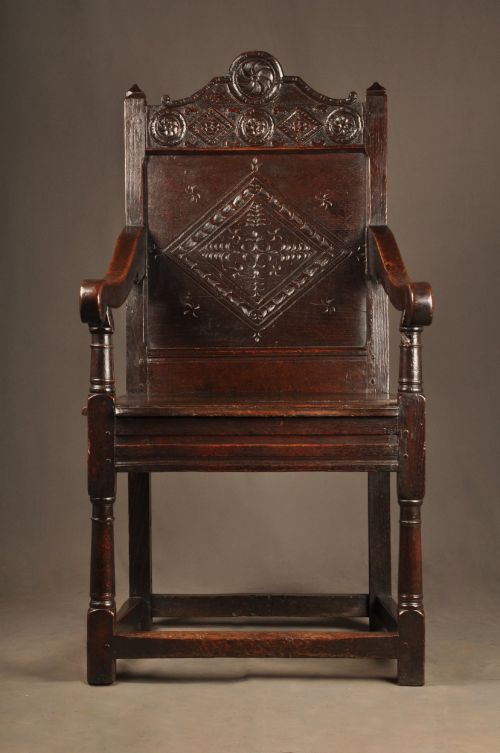
A 17th century carved chair encompasses sturdy armchairs, wainscot forms, side chairs, and high-backs originating from English regions like Lancashire, Yorkshire, and Cheshire, alongside continental European workshops.
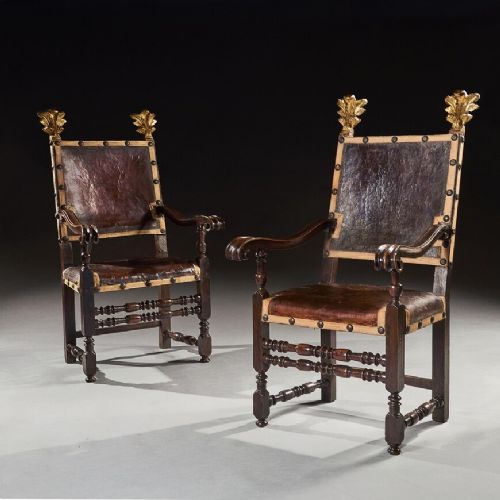
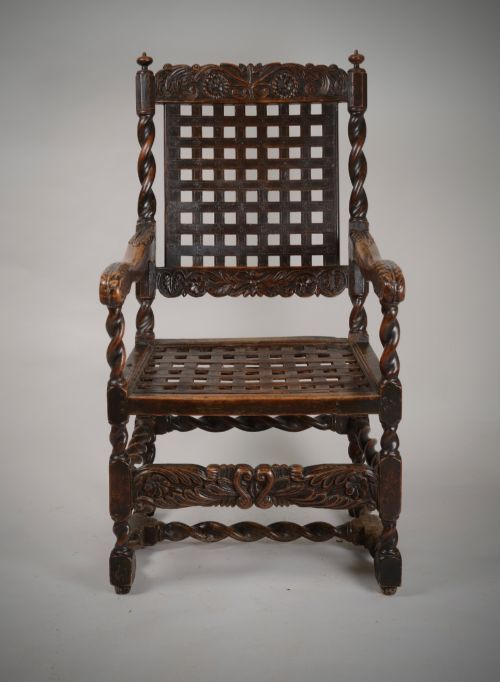
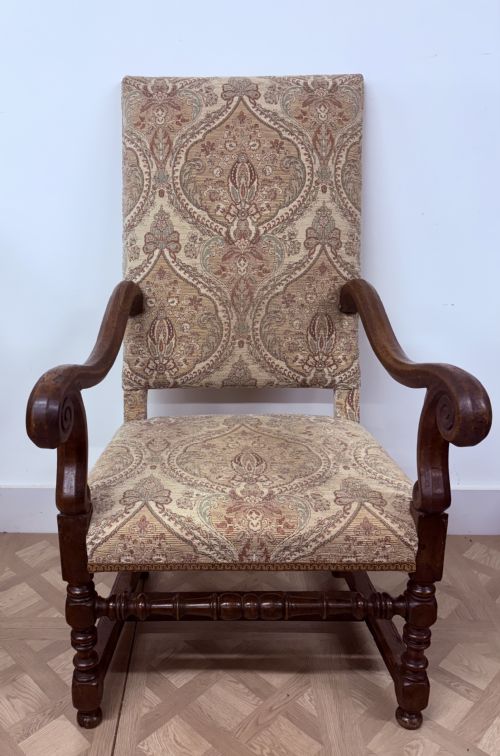
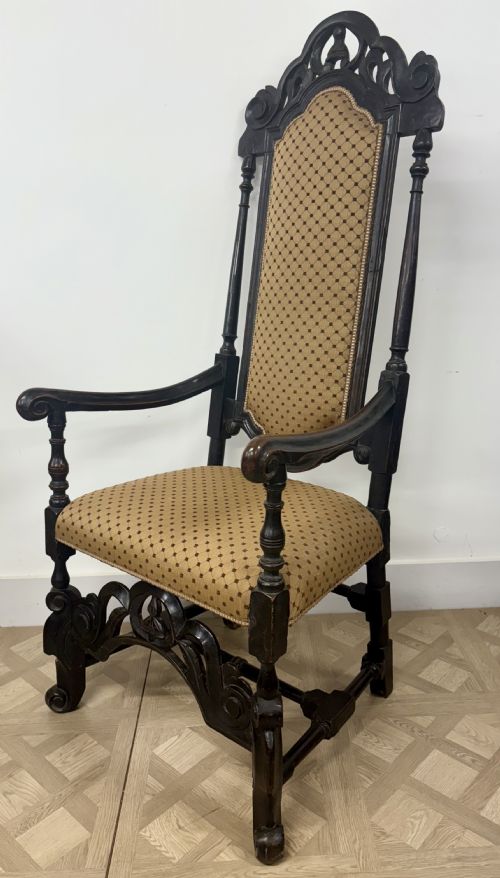
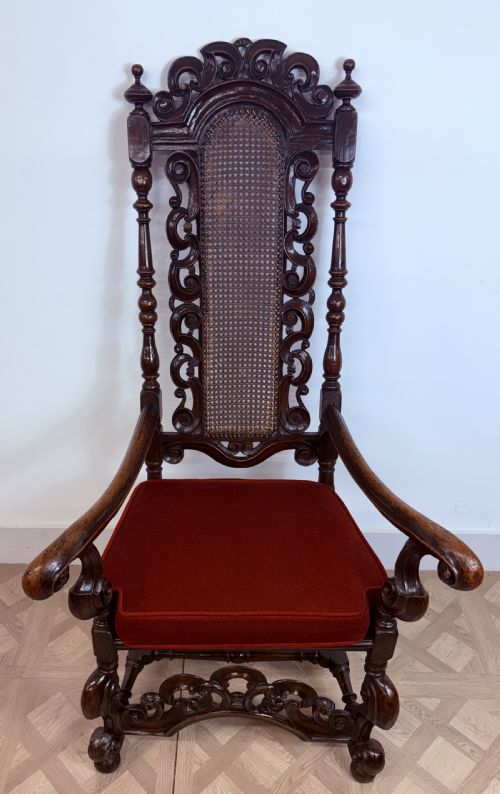
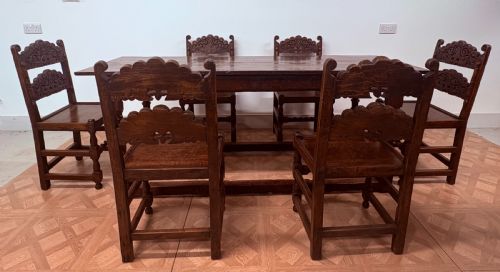
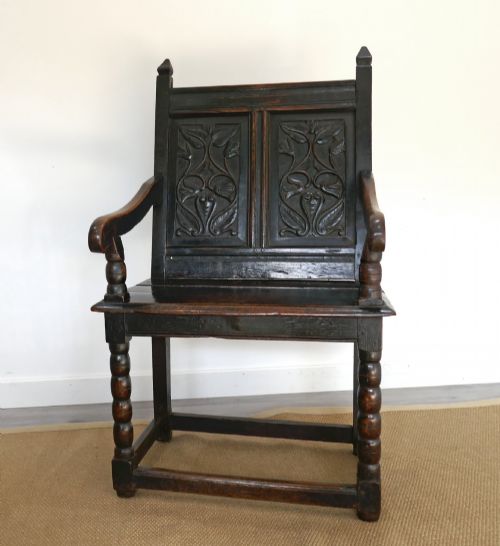
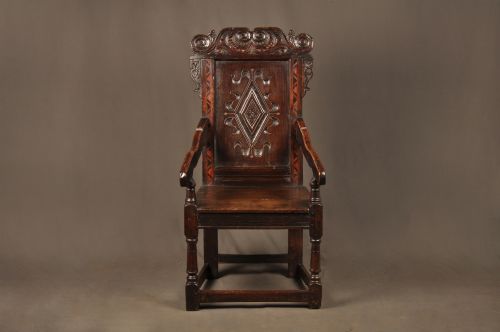
The dominant forms on this page include heavy timber wainscot armchairs with panelled backs, alongside walnut elbow chairs and later revival pieces created in the 19th century.
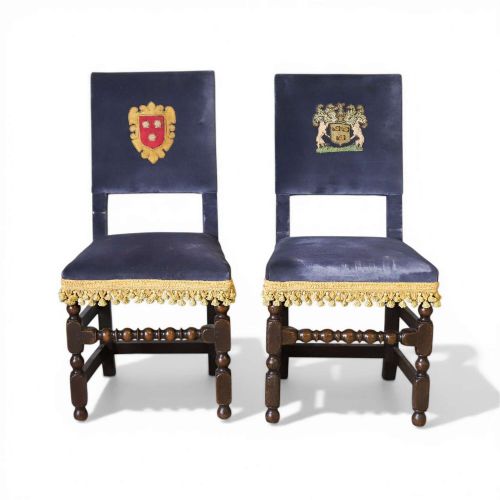
Makers utilised regional styles, incorporating heraldic crests, strapwork, and bold geometric mouldings into chairs designed for domestic halls and dining spaces.
Materials and Construction
Cabinet makers built these frames primarily from native oak and walnut, joined using traditional pegged mortise and tenon construction to ensure structural rigidity.
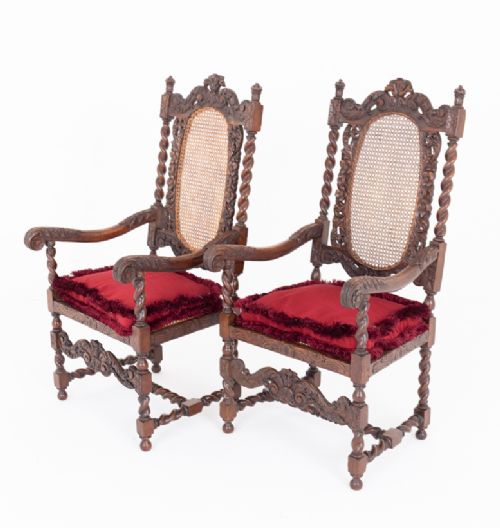
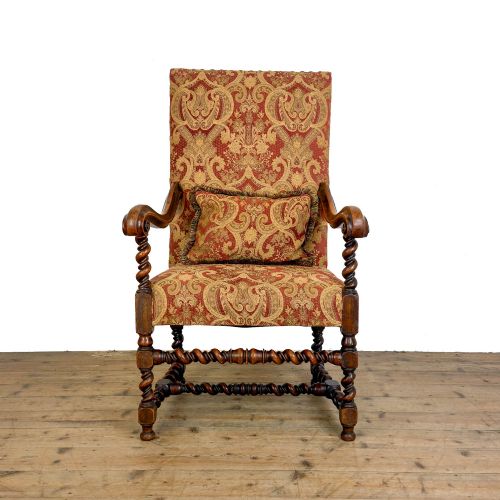
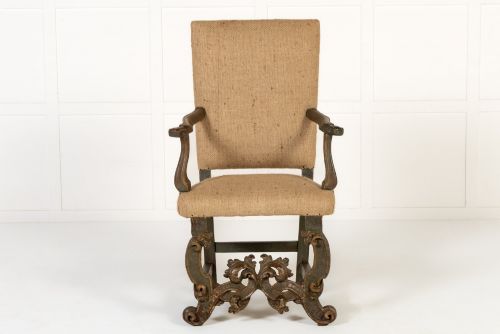
Surfaces received elaborate chip carving, gouge work, and relief detailing, sometimes complemented by applied parcel-gilt highlights, cane seating, or upholstered leather panels fastened with brass tacks.
Distinguishing Quality
Depth and crispness of the chisel work separate superior examples from routine production, as master carvers achieved sharp undercut details and balanced symmetrical motifs rather than shallow, mechanical scoring.
The integrity of the timber, preservation of original joinery, and survival of early upholstery elements or surface patination determine the historical weight of an individual piece.
Daniel Marot
The 17th Century Carved Chair Glossary
- Wainscot chair
- A heavy wooden armchair constructed primarily from oak with a panelled back, reflecting the joinery techniques used for wall panelling.
- Carolean
- Pertaining to the reign of King Charles II, a period noted for rich baroque carving, scrolling woodwork, and the introduction of cane seating.
- Strapwork
- Ornamentation consisting of interlaced bands or ribbons, frequently carved in low relief across the horizontal rails and crestings.
- Back stool
- An early form of chair without arms, essentially serving as a padded or panelled seat elevated on turned legs.
- Parcel-gilt
- Woodwork partially decorated with gold leaf or gilt highlights, often accentuating specific carved details against a darker timber ground.
17th Century Carved Chair: Frequently Asked Questions
How do I identify a genuine 17th century chair?
Examine the construction methods beneath the seat and along the frame, looking for hand-cut peg joints, timber shrinkage, and tool marks consistent with early period manufacture.
Compare the style of carving and wood species against documented regional examples from English counties or continental workshops to confirm the period.
Where were wainscot chairs originally placed?
These heavy armchairs occupied positions of authority in the great halls of manor houses, typically reserved for the head of the household or esteemed guests.
Their solid wooden panels protected occupants from cold draughts in uninsulated stone or timber-framed rooms.
Can I use these antique chairs for daily dining?
Many solid oak and walnut chairs retain sufficient structural strength for regular seating, provided the frame joints remain tight and secure.
Placing them around a dining table requires care to protect fragile antique textiles, leather, and cane components from excessive wear.
What is the difference between 17th century and revival chairs?
Period pieces display the tool signatures, natural timber oxidation, and structural wear accumulated across centuries of actual domestic use.
Revival pieces, often produced during the 19th century, utilise historic styles and motifs but typically exhibit machine-cut elements and standardised joinery.