



Carolean Caned Throne Chair
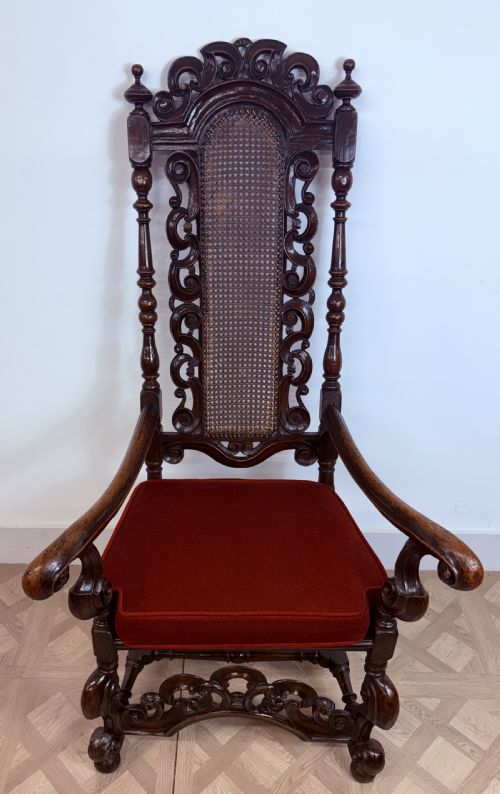
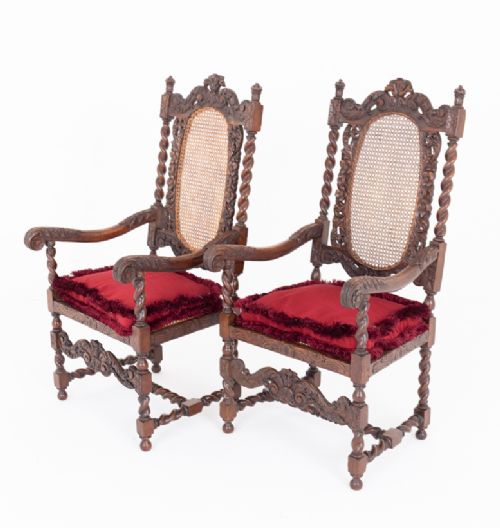
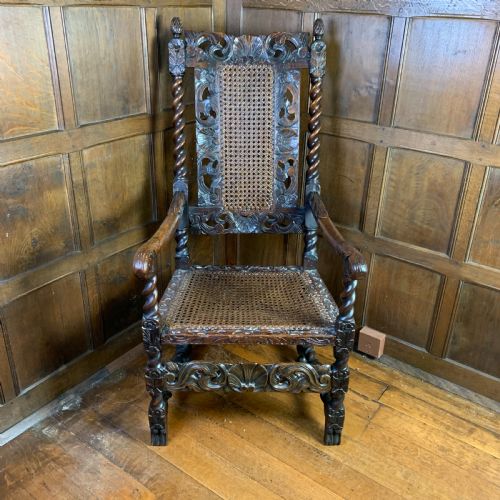
A carolean caned throne chair brings commanding seventeenth-century presence into a room through carved walnut or oak and open woven seating.
Carolean Caned Throne Chair
A carolean caned throne chair represents a grand form of seating rooted in the seventeenth century, built to project authority and status. When searching for a carolean caned throne chair, buyers encounter genuine seventeenth-century examples alongside later nineteenth-century revivals.
The pieces listed on this page span the seventeenth century, the nineteenth century, and the early twentieth century, showing both original period execution and revival interpretations. Walnut and oak form the structural framework for these armchairs, frequently displaying heavy carving.
Original seventeenth-century walnut armchairs sit alongside nineteenth-century pieces executed in the carolean revival, jacobean revival, and charles ii styles. These armchairs function visually as dominant focal points in an interior, combining rigid timber frames with resilient woven seating.
How they were made
Construction relies upon native hardwoods, predominantly walnut and oak, shaped into robust upright frames with substantial armrests. Woodworkers utilised heavy carving techniques to cover stiles, crest rails, and stretchers with elaborate floral, scroll, and crown motifs.
The seating areas and backs incorporate cane and rattan cane, woven tightly to create a supportive yet flexible surface. Upholstery elements in velvet and fabric appear on select examples, softening the rigid architectural lines of the carved timber.
What varies in quality
Depth and crispness of the timber carving separate superior pieces from simpler productions, with master carvers achieving high relief and sharp detail. The integration between the rigidity of the carved walnut or oak and the tension of the woven cane determines the structural integrity.
Age and period execution dictate the standing of a piece, distinguishing seventeenth-century originals from later nineteenth-century revival interpretations. The choice of primary timber also influences the character, with figured walnut commanding greater visual complexity than standard oak.
The Carolean Caned Throne Chair Glossary
- Cane
- The peeled bark of the rattan palm, woven into open mesh patterns for chair seats and backs. This material provides breathable strength and lightweight flexibility.
- Carolean
- Pertaining to the reign of King Charles II, spanning the mid to late seventeenth century. The style is characterised by lavish ornamentation, scrollwork, and rich carving.
- Revival
- A nineteenth-century movement that recreated historical design idioms such as carolean and jacobean styles. Makers utilised older decorative vocabularies on nineteenth-century furniture frames.
- Stretcher
- A horizontal timber connecting the legs of a chair to provide structural stability. On these armchairs, stretchers often feature elaborate matching carvings.
Carolean Caned Throne Chair: Frequently Asked Questions
Are all these chairs from the seventeenth century?
The inventory includes pieces from the seventeenth century alongside nineteenth-century and early twentieth-century revivals.
Craftsmen in later eras recreated these forms using period techniques and heavy timber carving.
What is the difference between walnut and oak versions?
Walnut examples often display finer grain patterns and a smoother finish suited to intricate seventeenth-century carving.
Oak versions provide a denser, heavier presence that aligns with jacobean and revival aesthetics.
How do I care for the cane panels?
Cane requires moderate humidity to prevent the natural rattan fibres from becoming brittle and snapping.
Avoid placing these armchairs near direct heat sources and clean the mesh gently using a damp cloth.
What defines the carolean style?
The style emerges from the restoration period, featuring exuberant carving, scrolls, and crown motifs.
Throne chairs use these decorative elements to project power, status, and royalist sympathies.