
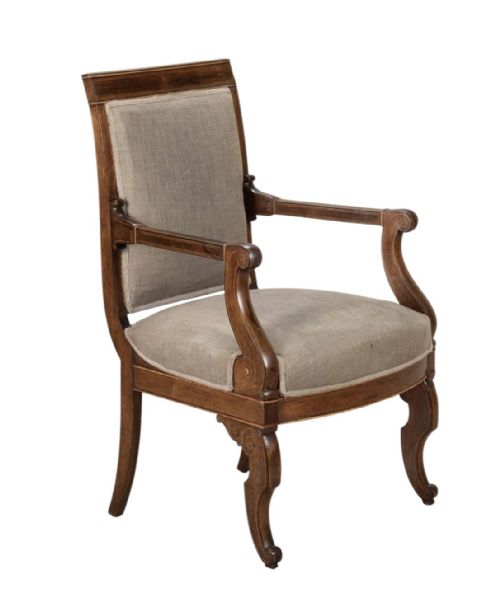


Restoration Period Armchair
A restoration period armchair brings robust seventeenth-century craftsmanship and walnut timber into a room, offering both historical depth and a commanding seat.
Restoration Period Armchair
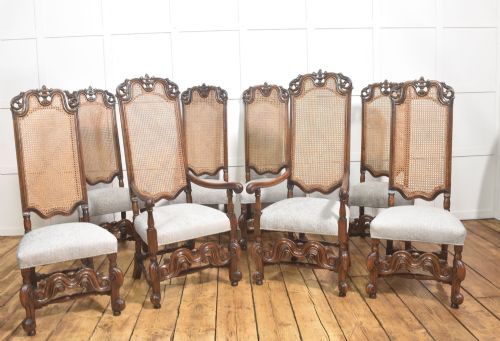
A restoration period armchair encompasses seating dating from the seventeenth century alongside revival interpretations, capturing the substantial proportions and carved details typical of the era. Buyers browsing this selection encounter pieces spanning original Charles II examples to later nineteenth-century revivals and French Restauration forms.
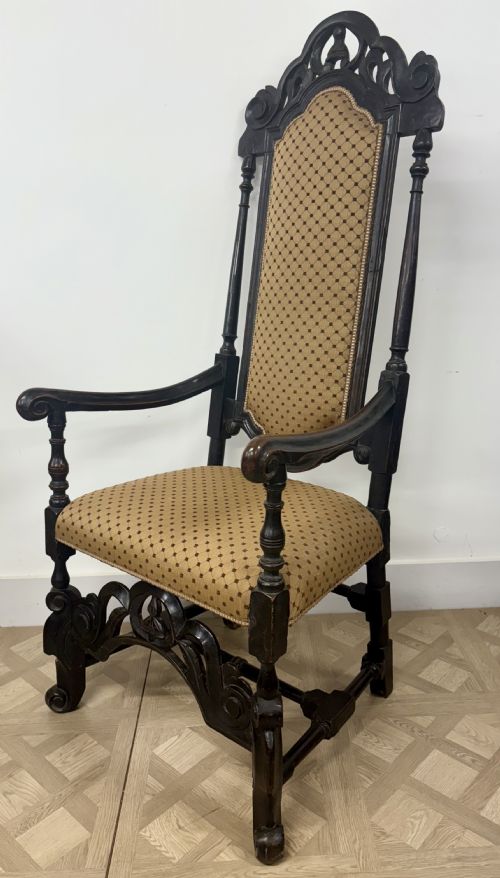
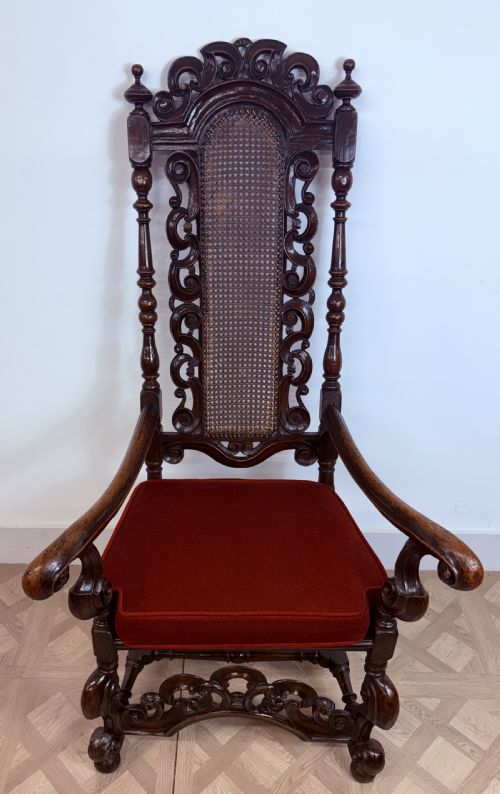
The dominant material visible across these examples is walnut, often paired with cane seating or upholstered panels. Forms range from high-back dining chairs and elbow chairs to barrel backs and open armchairs influenced by Carolean taste.
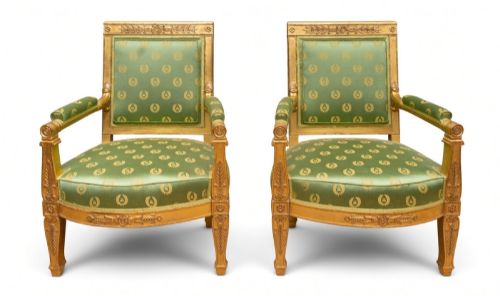
Origins vary between English workshops and continental makers, including notable French pieces carrying attribution to Jacob-Desmalter. The selection also includes interesting regional variants such as possible American interpretations and laburnum timber constructions.
How they were made
Carpenters utilised native hardwoods like walnut and laburnum, turning and carving the timber to create striking structural frameworks. Joinery relied on traditional pegged mortise and tenon joints to bear the weight of high backs and sweeping arms.
Seating surfaces frequently incorporated woven cane or luxurious textiles including silk, linen, and upholstery fabric. Giltwood finishes and painted treatments appeared on continental pieces, adding decorative surface splendour to the structural frame.
One armchair has spent time rubbing shoulders with history inside the Palais de Tuileries before finding its way to the market.
What varies in quality
The distinction between ordinary and exceptional chairs rests upon the crispness of the carving and the integrity of the timber. Deeply undercut foliage, finely turned stretchers, and the original retention of scarce woods like laburnum elevate a piece.
Provenance and documented origin play a decisive role in the standing of a chair. Pieces retaining documented connections to royal residences or prominent makers display a refinement in proportion and execution that lesser workshop copies lack.
Jacob Desmalter
The Restoration Period Armchair Glossary
- Carolean
- Pertaining to the reign of Charles II, characterised by lavishly carved woodwork, scroll legs, and rich textures. This style forms the foundation of many seventeenth-century designs.
- Cane
- Woven rattan split into thin strands, utilised for chair backs and seats to provide lightweight resilience. It requires careful maintenance to prevent snapping over generations.
- Fauteuil
- An open-armed upholstered armchair of French origin, typically featuring exposed wooden framework. These pieces emphasise decorative carving and comfort.
- Giltwood
- Timber coated with a thin layer of gold leaf or powder over a prepared ground. This treatment brings luminous warmth and status to continental seating forms.
- Laburnum
- A dense, hard timber known for its dark heartwood and contrasting light sapwood. It was frequently used in seventeenth-century joinery for striking figured veneers and solid elements.
Restoration Period Armchair: Frequently Asked Questions
How do I identify a true seventeenth century armchair?
Examine the timber closely for the deep oxidation and tool marks characteristic of period hand-working methods. Genuine seventeenth-century examples display construction methods such as pegged joints and walnut frames consistent with the era.
Compare the carving depth and stretcher placement against documented museum examples. Alterations to feet or replacement cane panels often occur, so checking the uniformity of the wood ageing is essential.
What is the difference between Carolean and Restauration styles?
Carolean design belongs to seventeenth-century England, featuring vigorous scrollwork, cane panels, and heavily turned walnut stretchers. The emphasis lies on robust structure and ornate carving.
French Restauration furniture dates to the nineteenth century, focusing on clean architectural lines, rosewood or giltwood surfaces, and refined comfort rather than seventeenth-century exuberance.
How should I care for cane seating?
Keep cane panels away from direct heat sources and intense sunlight to prevent the natural fibres from drying out and snapping. Light dusting with a soft brush helps maintain the material.
Occasional gentle dampening of the underside with a sponge can restore moisture to older cane, helping it retain flexibility under normal sitting weight.
Can I use an antique armchair daily?
Most seventeenth and nineteenth-century armchairs handle normal seating provided the frame joints remain tight and stable. Assessing the structural rigidity of the arms and legs prevents unexpected strain on ancient timber.
Consider having a professional conservator check the internal framing and upholstery webbing before placing the chair into heavy everyday rotation.